
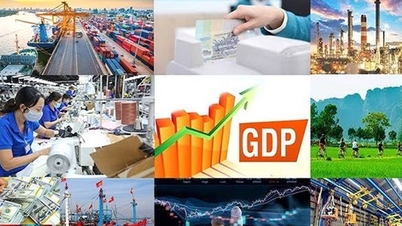
By 2025, bilateral trade is projected to exceed US$290 billion, with agricultural trade being one of the standout growth areas. China is currently Vietnam's largest export market for agricultural, forestry, and aquatic products. Vietnam continues to maintain its position as China's second-largest supplier of fruits and vegetables, accounting for 22.55% of the market share. In 2025, fruit and vegetable exports to this market are expected to reach US$5.5 billion, representing 64% of Vietnam's total fruit and vegetable exports. Durian exports alone are projected to reach 941,000 tons, valued at over US$3.4 billion.
New opportunities for Vietnamese agricultural products.
(PLVN) - According to information presented at the first Vietnam-China Agricultural Trade Forum recently held in Ho Chi Minh City, agricultural cooperation between Vietnam and China is developing strongly and achieving many positive results.
 Báo Pháp Luật Việt Nam•28/06/2026
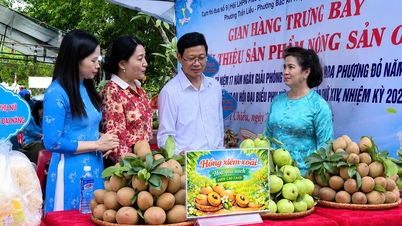
Currently, Vietnam has more than 20 types of fruits and vegetables, including pomelo, coconut, chili peppers, etc., that are allowed to be officially exported to China. This not only creates a stable and long-term market for Vietnamese farmers but also meets the growing demand for high-quality tropical fruits from Chinese consumers.
Agricultural cooperation between the two countries is gradually shifting from mere agricultural trade to the development of a comprehensive supply chain. Along with strengthening infrastructure connectivity, both sides are transforming geographical advantages into competitive advantages in cross-border transportation, gradually forming a multimodal logistics network with road transport playing a leading role, combined with rail, sea, and air transport. At border crossings, the fast customs clearance mechanism, the "green lane" for agricultural products, and the modern cold storage system have contributed to improving transportation and customs clearance efficiency. As a result, many types of fresh fruit can reach consumer markets on the same day or even just one day after transportation.
You may also like

Women from Cao Bang and Guangxi strengthen friendship and join hands to fight drug trafficking.Through a series of exchange activities, women from Cao Bang and Guangxi (China) have strengthened the exchange of experiences in drug prevention and control, promoted cooperation, and contributed to consolidating friendship and building a peaceful, stable, and developed border region.
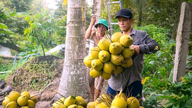
Many types of fruit in the Mekong Delta have seen sharp price drops, leaving farmers disheartened.The Mekong Delta is entering the harvest season for many types of specialty fruits. Compared to previous years, the prices of many fruits have dropped sharply this year, making them unprofitable to sell.
Reorganizing the membership of the Price Management Steering Committee.Prime Minister Le Minh Hung signed Decision No. 1156/QD-TTg to reorganize the members of the Steering Committee for Price Management, appointing Deputy Prime Minister Nguyen Van Thang as its Chairman.
Digital transformation is creating new momentum for the development of green agriculture. Digital technology effectively connects producers and markets, while enhancing transparency in the supply chain. Furthermore, the development of smart customs and smart border crossings between the two countries has significantly shortened processing times. Currently, customs clearance time has decreased by approximately 30%, while inspection and quarantine time has decreased by 40% compared to before. Traceability technology using QR codes is also being widely applied to many exported agricultural products such as durian and bird's nest, ensuring traceability throughout the production process, improving product quality, and strengthening consumer confidence.
Regarding quarantine and technical standards for agricultural products, the Chinese market is particularly interested in traceability and product quality standards. For some shipments that did not meet technical requirements, the Chinese side coordinated with relevant agencies and Vietnamese businesses to identify the causes and implement corrective measures. Some of the identified causes included farming practices, soil and water quality, as well as the use of fertilizers and pesticides in production. Based on this, both sides have collaborated on numerous solutions to improve product quality according to established standards. To date, the basic shortcomings have been addressed, and product quality is gradually improving.
Given the above facts, agricultural cooperation between Vietnam and China will certainly be elevated to a new level.

Vietnam encourages US businesses to expand investment in high technology.On the morning of June 26th, at the Government Headquarters, Deputy Prime Minister Ho Quoc Dung received Mr. Jeff Place, Supply Chain Director of Coherent Group (USA). During the meeting, the Deputy Prime Minister affirmed that Vietnam encourages US businesses to expand investment, especially in high-tech, innovation, and semiconductor industries.

Encourage U.S. businesses to expand investment in high-tech sectors.Deputy Prime Minister Ho Quoc Dung said that Vietnam welcomes US businesses to continue expanding their operations in Vietnam, especially in high-tech industries and sectors with high added value.

Vietnam and the United States strengthen cooperation in addressing the consequences of war.VTV.vn - On June 22, General Secretary and President To Lam received Acting Secretary of the US Navy Hung Cao.
Source: https://baophapluat.vn/co-hoi-moi-cho-nong-san-viet.html






















































News






Political System






Destination





Product





The billionaire village of the Xoi Dang ethnic group in Tra Linh commune.

Conquer your dreams
