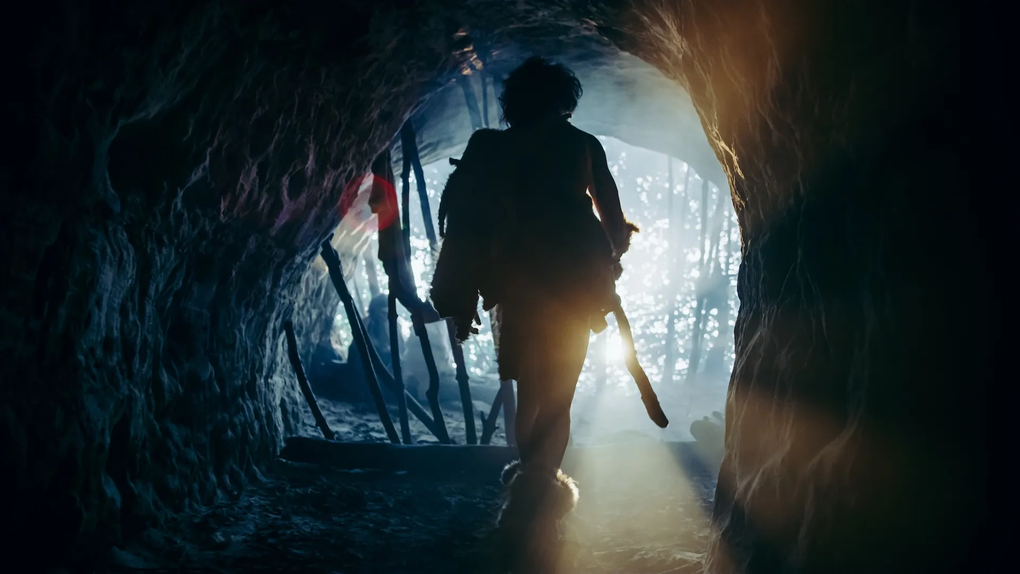
In fact, many people alive today share up to 4% of their DNA with Neanderthals.
This genetic breakthrough has provided crucial new information about the evolutionary history of Neanderthals and modern humans (Homo sapiens), but it also raises a new question: Could we bring Neanderthals back to life?
George Church, a professor of genetics at Harvard University, answered this question confidently in an interview with Der Spiegel in 2013. He stated that cutting the Neanderthal genome into thousands of fragments and reassembling them in a human stem cell "would allow you to create a copy of a Neanderthal."
In 2025, Colossal Biosciences, the company co-founded by Professor Church, caused a sensation by "reviving" the ferocious wolf through cloning and gene editing, creating genetically modified "wool mice," and announcing plans to revive the dodo. Their ultimate goal is to revive the woolly mammoth.
But while Professor Church was confident a decade ago that the Neanderthal revival was a near possibility, other experts say it is now an extremely difficult task. They argue that even if we could bring them back, there are still many reasons why we shouldn't.
"That's one of the most unethical things I can think of—period," Jennifer Raff, a biological anthropologist at the University of Kansas, said of the idea of bringing Neanderthals back.
Is it possible to bring a Neanderthal back to life?
Reviving a Neanderthal is not a simple technological task. "You can't just put Neanderthal genes into a human egg," Raff said. "That wouldn't work."
One problem with this process is the potential incompatibility in the immune system, which often leads to the failure of interspecies pregnancies, as the host uterus rejects the fetus.



Scientists are still debating whether modern humans and Neanderthals can be considered two separate species.
Although modern humans and Neanderthals successfully interbred in the past, today only a maximum of 4% of Neanderthal DNA remains in some human groups. "That other DNA may not have been beneficial and has therefore been gradually eliminated from the genome," Raff said.
Furthermore, experts have discovered that the human Y chromosome lacks Neanderthal DNA, which may indicate a fundamental incompatibility of the immune systems between Neanderthal male fetuses and Homo sapiens female fetuses carrying them, even in the past.
And a genetic variant in red blood cells in mothers of Neanderthal-modern human descent may have led to higher rates of miscarriage, according to other studies.
Ms. Raff stated that reintroducing Neanderthal genes, which had been eliminated by natural selection over thousands of years, into modern human eggs could have many unintended consequences.
Another approach is cloning, but to clone one of our extinct cousins, "we need a living Neanderthal cell," says Hank Greely, director of the Center for Law and Biological Sciences at Stanford University, USA .
This is something we don't have because Neanderthals became extinct more than 30,000 years ago.
With today's CRISPR genome-editing technology, scientists can edit the genome of modern human cells to make it more similar to the genome of Neanderthals. This is exactly what Professor Colossal did when he edited certain genes in gray wolves to make them look more like ferocious wolves.
But in reality, they weren't ferocious wolves, just as a Homo sapiens with some Neanderthal genes wouldn't be a Neanderthal.




Furthermore, CRISPR is not absolutely perfect, and it is difficult to integrate many genetic changes at once.
"Right now, you can make 20 to 50 changes," Greely said, but "at some point, you'll be able to change the whole thing."
Although CRISPR technology can be used to cut and modify DNA sequences, a new technique called base editing, in which scientists change individual letters in the DNA code, could make precise genome editing easier and faster in the future.
"I think that if you really wanted to do it, within 20 years you could very well have a child born with a completely Neanderthal genome," said Greely, director of the Center for Law and Biological Sciences at Stanford University. "But I don't think we're going to do it, even if it were possible, for both ethical and legal reasons."
Source: https://dantri.com.vn/khoa-hoc/co-the-hoi-sinh-nguoi-neanderthal-khong-20251027020431870.htm