

Will the "downturns" of once-glorious European industry be like a fleeting "headache"?
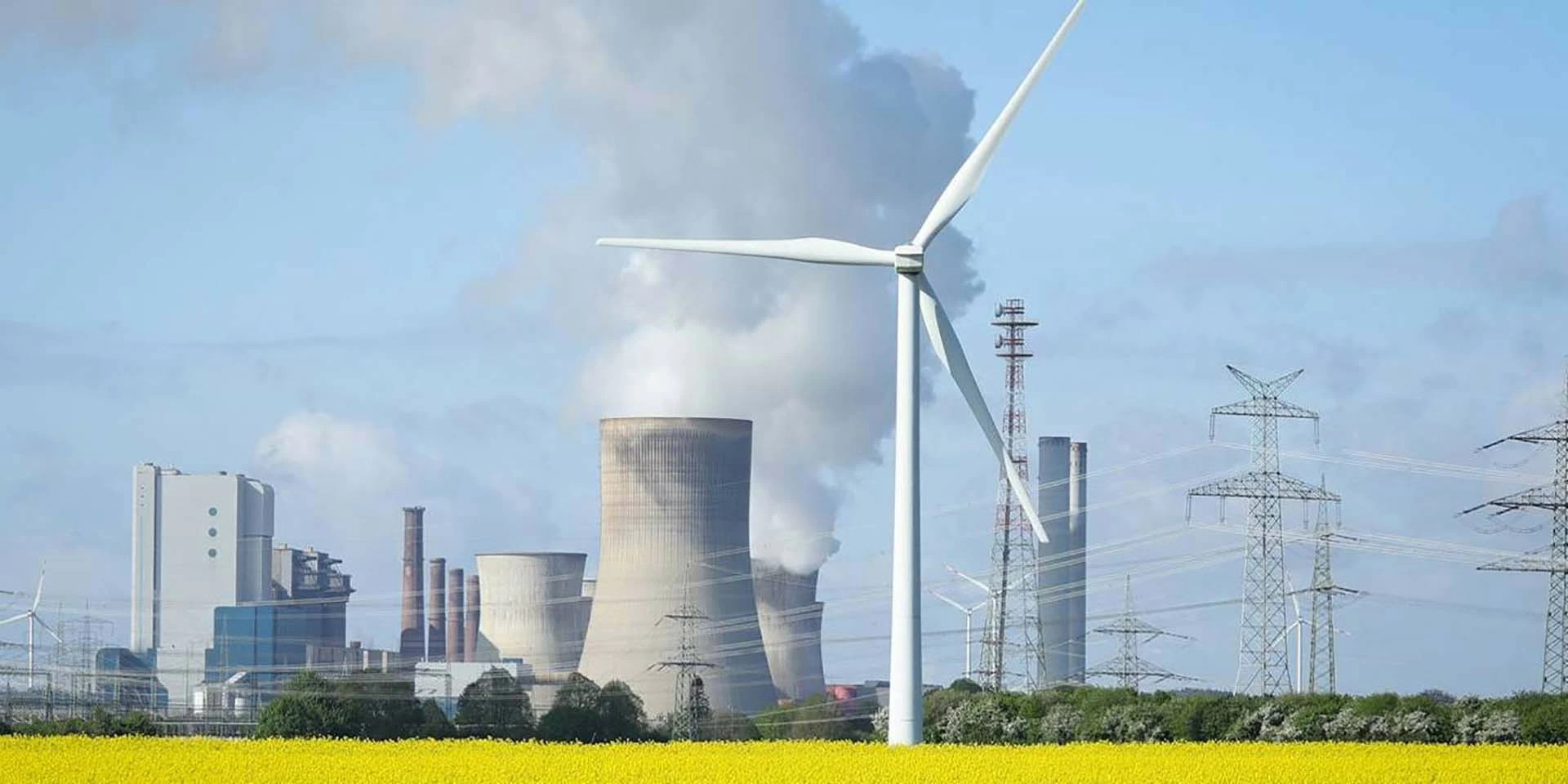 |
| The good news is that the EU already has a roadmap for sustainable industrial modernization through the Green Deal. (Source: Getty Images) |
International media outlets are commenting that the automotive industry – which once produced many European brands – is in "free fall." Volkswagen and many other renowned European car brands are considering closing their factories.
The reality is that not only the German "giant" Volkswagen, but even the luxury car factory of Audi in Belgium is facing the risk of closure; the French car manufacturer Renault and the Italian automotive group Stellantis, comprising 14 different brands, are both struggling with product sales and operating below capacity.
"Self-condemnation"?
Warning of a decline in manufacturing in most European Union (EU) member states, an updated report on EU competitiveness submitted to the European Commission (EC) in early September by former European Central Bank (ECB) President and former Italian Prime Minister Mario Draghi stated that the EU is “falling behind” China and the US, and that the EU-27 is condemning itself “slowly and painfully” if it does not change.
Mr. Draghi called for decisive action to prevent the regional economy from stagnating, as the recession reflects the lack of competitiveness of European industry in the face of the dominance of the US, China, and Asia.
This signal is both noteworthy and worrying, as industrial output in Europe's four largest economies is declining. According to the latest data released by the European statistical agency Eurostat on September 13th, Germany, France, Italy, and Spain all recorded year-on-year declines in capital goods and durable consumer goods production. This trend appears to be spreading to other countries and impacting the entire continent.
Accordingly, from July 2023 to July 2024, industrial output decreased by 2.2% in the Eurozone and by 1.7% in the EU. However, during this period, the sharpest declines recorded by Eurostat were in Hungary (-6.4%), Germany (-5.5%), Italy (-3.3%), and France (-2.3%). On the other hand, a few countries saw growth, such as Denmark (+19.8%), Greece (+10.8%), and Finland (+6.4%).
European producers are experiencing a period of sluggish domestic demand, a shortage of skilled labor, and above all, an energy crisis caused by the Russia-Ukraine military conflict (since February 2022), which has ended their advantage in accessing cheap Russian gas.
“The EU is facing average energy prices that are almost double those of the US and China. This is a major structural obstacle in terms of competitiveness and industrial productivity,” analyzed Raphaël Trotignon, head of the Energy-Climate Center at the Rexecode Institute for Economics.
Le Monde reports on the domino effect occurring east of the Rhine, with industrial recession affecting Central European countries such as Romania, Czechoslovakia, and Bulgaria – economies that rely heavily on the German automotive industry.
Meanwhile, another European powerhouse, France, is falling further and further behind, recording disappointing figures in per capita growth, international trade, and public finance deficits. The country's re-industrialization process, which began years ago, has slowed considerably in recent months – posing a major challenge to the government of new Prime Minister Michel Barnier.
We need both the "stick" and the "carrot."
Project Syndicate commented that the choices EU leaders make for the coming years will determine whether European industry has a long-term future. If the EU fails to reverse the current decline, Europeans may lose the industries that have been the backbone of their economies for decades.
Meanwhile, rival economic powers have all made significant strides in industrial modernization. Two decades of aggressive industrial strategy have given China a dominant position in most clean technology supply chains. The US has also made considerable efforts in its own industrial policy with the CHIPS and Science Act, the Inflation Reduction Act (IRA), and others.
The main reason why EU productivity lagged behind the US in the mid-1990s was its failure to capitalize on the first wave of the digital revolution driven by the Internet – both in the creation of new technology businesses and in the widespread adoption of digital technology in the economy. In fact, if we exclude the technology sector, EU productivity growth over the past two decades has essentially been on par with the US,” this is an excerpt from Mario Draghi’s report on European competitiveness, highlighting a core aspect of the EU’s future agenda if it wants to achieve “strategic autonomy.”
For nearly 20 years, the EU has favored the “stick”—emissions trading—over the “carrot,” or positive incentives for decarbonization. Consequently, the EU’s broad and stringent regulatory environment sometimes becomes a byproduct, stifling innovation. Businesses bear higher restructuring costs than their competitors, putting them at a significant disadvantage in highly innovative sectors where “winners take all.”
Andrew McAfee, a respected expert from the Massachusetts Institute of Technology (MIT), observes that the state of EU industry is very precarious. However, the problem is not a lack of funding – EU governments currently spend an amount (and a percentage of GDP) nearly equivalent to that of the US government on research and development. While this spending is dispersed among member states, that is not the core issue.
"That's government intervention in this ecosystem, not through subsidies or incentives, but through laws and regulations, as well as other constraints, restrictions, and burdens on businesses," the expert argued.
Meanwhile, the Financial Times offers another piece of the puzzle regarding the challenges of the digital revolution. It argues that it's also unreasonable to suggest that the EU lacks capital for attractive technology opportunities, even though reforms to the capital markets would contribute to the development of a stronger venture capital industry in the region. However, the fact that venture capital investment in the EU is only one-fifth of that in the US in 2023 is not due to a lack of resources, but rather to a failure to create the necessary technology ecosystem.
The report by the former ECB President acknowledges the EU's problems: “We have said many times that industrial growth is slowing in Europe, but until two years ago we ignored it, thinking everything was going well.” At the same time, the report emphasizes: “The good news is that the EU has a roadmap for sustainable industrial modernization through the Green Deal – a broad set of policies aimed at transforming the EU into a modern, resource-efficient and competitive economy… Unfortunately, however, this is not an easy solution and we still have many challenges to overcome before we succeed.”
Fortunately, EU history shows that in exceptional periods, they have overcome many obstacles with political will.
Source: https://baoquocte.vn/nganh-cong-nghiep-chau-au-con-dau-dau-thoang-qua-289568.html


![[Photo] The courage of new recruits of Brigade 144 on the training ground.](https://vphoto.vietnam.vn/thumb/1200x675/vietnam/resource/IMAGE/2026/05/27/1779881651341_anh-man-hinh-2026-05-27-luc-18-32-52.png)


![[Photo] The heat at the fireworks display site on the opening night of the Da Nang International Fireworks Festival 2026](https://vphoto.vietnam.vn/thumb/1200x675/vietnam/resource/IMAGE/2026/05/27/1779889741485_ndo_br_z7872039145157-fecaba5112f39e8352544099d7ef4738-5140-jpg.webp)

































































![[Photo] The courage of new recruits of Brigade 144 on the training ground.](https://vphoto.vietnam.vn/thumb/402x226/vietnam/resource/IMAGE/2026/05/27/1779881651341_anh-man-hinh-2026-05-27-luc-18-32-52.png)




























Comment (0)