Active community
Over nearly 60 years of development, the region has formed a dynamic ASEAN economic community comprising 700 million people amidst the rapidly changing global economy, driven by three fundamental trends.
Firstly, it can be said that, despite increasing global economic pressures, ASEAN remains a rapidly developing region with a GDP growth rate of approximately 5-6%. Over the past decade, intra-ASEAN trade has reached approximately US$750 billion, accounting for over 20% of the region's total trade. With total trade exceeding US$3 trillion, ASEAN has become the fourth largest trading region in the world, after the EU, China, and the US. Total FDI inflows into ASEAN have increased from US$108 billion in 2010 to nearly US$200 billion, making ASEAN the third largest recipient of FDI globally, after the US and China. ASEAN also boasts countries among the top performers in terms of productivity and competitiveness worldwide.
Secondly, the increasingly important geopolitical position of the South China Sea in the context of shifting global supply chains has affirmed ASEAN's central position in the Indo -Pacific regional economic integration (Regional Comprehensive Economic Partnership - RCEP and the Indo-Pacific Economic Framework - IPEF). Currently, ASEAN, within the regional integration, has proactively and effectively managed common challenges such as economic crises, climate change, conflicts, epidemics, and natural disasters. Thirdly, two emerging trends in the region will shape the future of ASEAN integration and community-building efforts, the most prominent of which are digital transformation (ASEAN's digital economy is projected to reach US$1 trillion by 2030) and the urgent need to consider sustainability (biological environment and increasing development disparities between countries). Both are on the ASEAN economic integration agenda. A whole-community approach is necessary due to the cross-pillar nature of these critical issues.
Development direction
In Vietnam, with the policy of strengthening bilateral diplomacy and elevating multilateral diplomacy, the Party's 13th National Congress documents affirmed Vietnam's proactive participation and role in multilateral mechanisms, especially ASEAN and the United Nations.

In that process, Vietnam has now become the Vice President of the United Nations General Assembly. Besides close cooperation with the Northeast Asian region, Vietnam has become an active member of the friendly neighboring ASEAN region. ASEAN is also a major trading partner of Vietnam, after China, the US, and South Korea. In recent years, Vietnam's exports to ASEAN have undergone a strong shift from agricultural, aquatic, and mineral products to processed industrial goods and high-tech products…
The Fourth Industrial Revolution is unfolding rapidly, and the advantage of abundant and cheap labor is gradually diminishing. Instead, new resources for growth are labor productivity and quality, creativity, and scientific and technological potential. Although Vietnam's average labor productivity growth rate between 2011 and 2020 reached 5.4% per year, higher than the average growth rates of Malaysia, Singapore, Thailand, the Philippines, Indonesia, and South Korea, its labor productivity remains low. In 2022, it was only 12.2% of Singapore's, 63.9% of Thailand's, 94.2% of the Philippines', 24.4% of South Korea's, and 58.9% of China's. This is perhaps one of the biggest challenges affecting Vietnam's sustainable development and long-term viability.
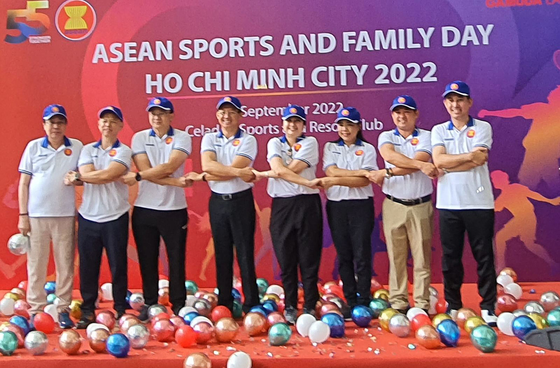 |
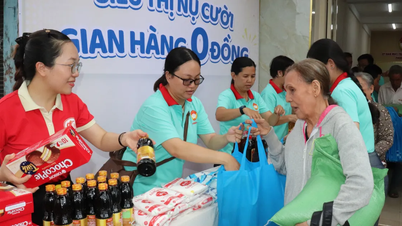
Consuls General of ASEAN countries in Ho Chi Minh City and leaders of the Ho Chi Minh City Department of Foreign Affairs at the ASEAN Family and Sports Day 2022. Photo: THUY VU |
According to economic strategists, improving labor productivity and gaining national competitiveness will bring sustainable prosperity. To successfully implement the State's policy in line with positive trends in the ASEAN region, aiming for a long-lasting and prosperous nation, it is necessary to research and implement four important areas: an integration vision, government, businesses, and building a sustainable culture, supporting and promoting innovation.
Specifically, priority should be given to developing friendship and economic cooperation with neighboring countries in Northeast Asia and ASEAN, clearly defining this as the foundation of the country's sustainable integration policy and the basis for the comprehensive and robust development of the country's bilateral and multilateral international economic cooperation strategies. In this process, it is necessary to proactively coordinate with ASEAN countries to build and improve positive cooperation institutions (laws, Code of Conduct, etc.) with ASEAN's expanded strategic partners such as ASEAN-China, ASEAN-India, ASEAN-US, etc., as well as regional cooperation initiatives such as RCEP, IPEF, etc., ensuring the principles of transparency, equality, and win-win for all participating parties.
To achieve this, the government plays a crucial role in developing a national business environment that fosters healthy competition under the law, encourages investment, and promotes innovation, research, and development among businesses so that they can both gain and enhance their competitive advantages. It is necessary to identify the nation's position in production factors, such as skilled labor or infrastructure, essential for competitiveness in a given industry. Through this, it is possible to identify industries with the potential for breakthroughs and spillover effects in Vietnam's market economy, such as agriculture, logistics, energy, marine economy, and high technology…



Furthermore, business cooperation and the selective use of alliances offer numerous benefits to enterprises. At its simplest level, it can be a way to save costs and avoid duplication of effort. Competition contributes to the smooth functioning of the market. In the long term, competition leads to increased productivity, ensuring the economy remains competitive and supporting sustainable economic growth.
Strategically, businesses need to build a solid domestic market share, gradually expanding regionally and internationally in line with the country's international economic integration programs. Finally, a culture of unity and equal cooperation facilitates the formation of a culture of innovation. Building a culture of creativity and innovation is a process that requires time, patience, and significant resources. Therefore, if we want to strongly develop innovation, we need to build a sustainable culture in terms of economics, environment, and society, while also adapting to innovation in the context of rapid global change.
By identifying and implementing these contents effectively, Vietnam will certainly contribute positively to the development of the ASEAN community, which is moving towards the post-2025 vision, and contribute effectively to the prosperity and social progress of the region and the world.
Source