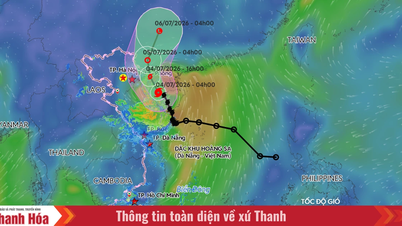
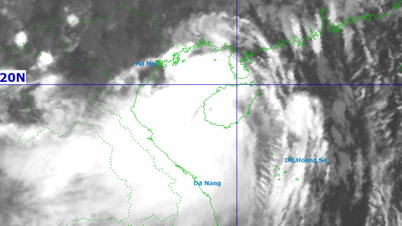
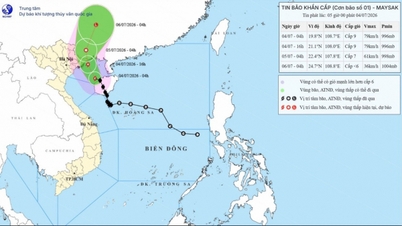
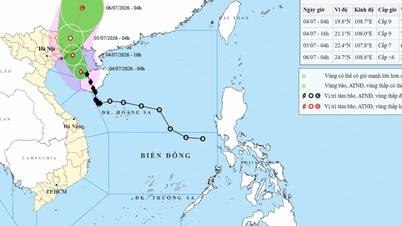
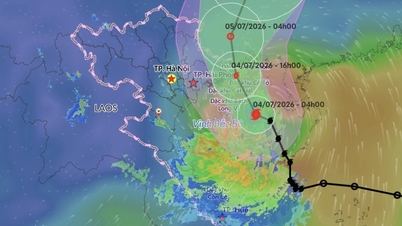
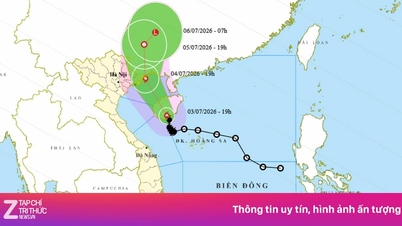
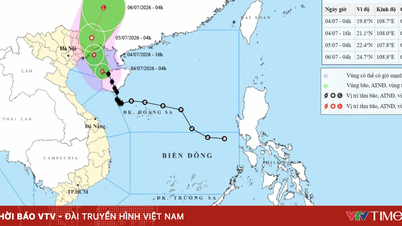
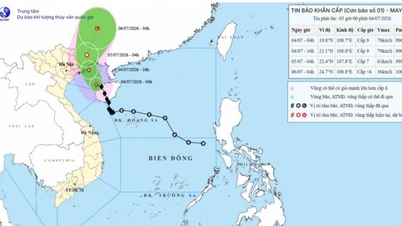
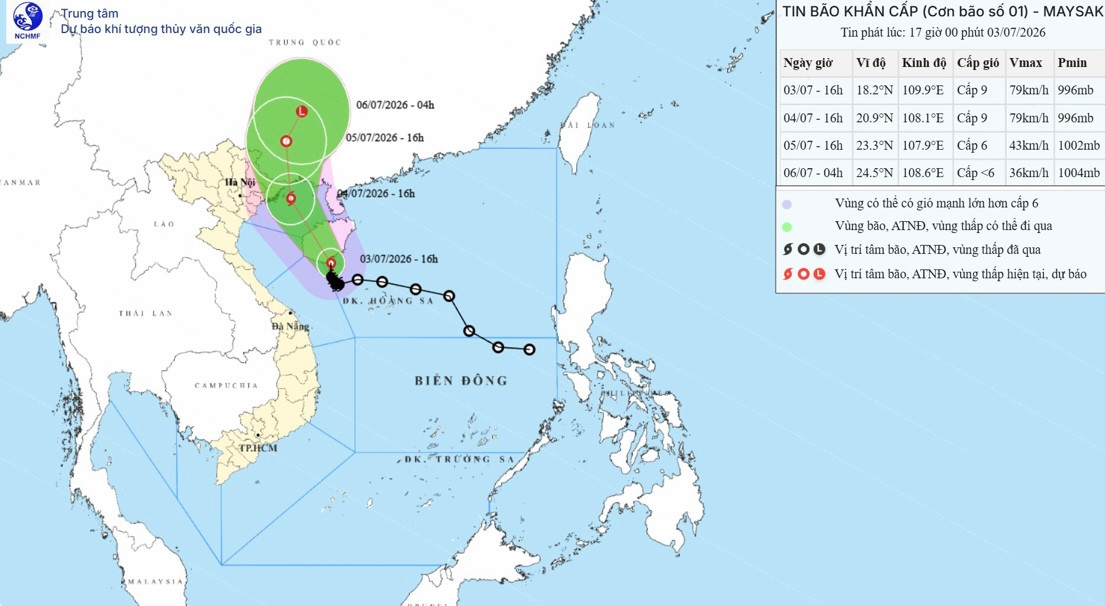
The official dispatch stated that early on July 3rd, the tropical depression strengthened into Typhoon No. 1 of 2026 (international name MAYSAK). At 4:00 AM on July 3rd, the typhoon's center was located at 17.3 degrees North latitude and 110.1 degrees East longitude, in the sea area northwest of the Hoang Sa Special Administrative Region, with an intensity of level 8, gusting to level 10. The typhoon is forecast to move into the Gulf of Tonkin and affect the Northeast region of Vietnam in the coming days.
From the night of July 3rd to the end of July 5th, the Northeast region and Thanh Hoa province are likely to experience heavy rainfall, generally ranging from 100-200mm, with the Northeast region receiving 150-250mm, and some areas experiencing over 350mm.
To proactively respond to storms and post-storm flooding, the National Steering Committee for Civil Defense requests that the People's Committees of provinces and cities, and relevant ministries and agencies, implement response measures.
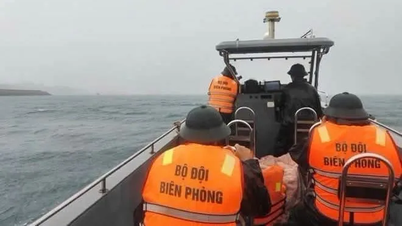
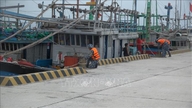
For maritime routes, continue to organize the counting and notification of vessel owners and captains of ships and boats operating at sea regarding the location, direction of movement, and development of the storm so that they can proactively take preventive measures, evacuate, avoid moving into dangerous areas, or return to safe shelters according to forecast bulletins; inspect and guide the anchoring of ships and boats at anchorage areas.
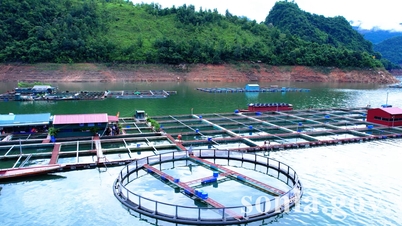
Simultaneously, implement measures to ensure the safety of people, vehicles, and property, especially at tourist destinations, aquaculture and fishing areas, and structures at sea, on islands, and in coastal areas predicted to be affected by the storm; based on the specific situation of the locality, proactively decide on prohibiting sea travel; and prepare forces and resources for rescue and relief operations when required.

For inland areas, particularly in the delta region, the Steering Committee requested a review and preparation for evacuating people from unsafe homes, areas at risk of deep flooding, and areas near river mouths and coastlines; and directed the ensuring of safety for sea dikes and river mouth dikes, especially at vulnerable locations or those under construction.
Local authorities are proactively draining excess water and preventing flooding to protect agricultural production, urban areas, and industrial zones at risk of inundation; organizing tree pruning; reinforcing and securing signs, houses, public works, industrial zones, factories, warehouses, and ongoing construction projects; inspecting, reviewing, and taking measures to ensure the safety of telecommunications systems and power grids to maintain uninterrupted operation before, during, and after the storm; and proactively organizing the harvesting of agricultural products and aquaculture areas according to the principle of "better to harvest early than late".
For mountainous areas, the Steering Committee requested the deployment of rapid response forces to inspect, review, and proactively organize the relocation and evacuation of people in areas along rivers and streams, low-lying areas at risk of deep flooding, flash floods, and landslides to safe locations; clear blockages in waterways; and have on-site forces ready to promptly assist people in overcoming the consequences if necessary.
Local authorities are prepared to organize forces to guard, control, and guide traffic to ensure safety at underpasses, overflows, deeply flooded roads, areas with strong currents, and areas where landslides have occurred or are likely to occur; they will resolutely prevent people and vehicles from passing through if safety cannot be guaranteed; and they will deploy forces, materials, and equipment to address incidents and ensure smooth traffic flow on major transportation routes.
At the same time, direct the inspection, review, and implementation of safety measures for mineral mining tunnels and shafts, reservoirs, and downstream areas, especially small hydropower reservoirs, small irrigation reservoirs, and critical reservoirs; deploy permanent forces to operate and regulate and be ready to handle any potential situations.
The National Steering Committee for Civil Defense also requested Vietnam Television, Vietnam Radio, Vietnam News Agency, the coastal information radio system, and mass media agencies from the central to local levels to strengthen the dissemination of information about the developments of the storm and floods to all levels of government, especially at the commune level, owners of vessels operating at sea, and the people so that they can proactively prevent and respond.

Ministries and agencies, according to their functions, responsibilities in state management, and assigned tasks, should proactively direct and coordinate with localities to respond to storms and floods.
At the same time, the Steering Committee requested that agencies and units organize serious duty shifts and regularly report to the National Civil Defense Steering Committee (through the Department of Dyke Management and Disaster Prevention and Control, Ministry of Agriculture and Environment).
Source: https://daibieunhandan.vn/cong-dien-khan-ung-pho-bao-so-1-maysak-10422538.html