
Sad memories and century-old infrastructure
Looking back, the railway industry has long been mired in complacency and conservatism. While other modes of transport have accelerated at a breakneck pace, the railway has fallen into stagnation, backwardness, and alienation from its customers.
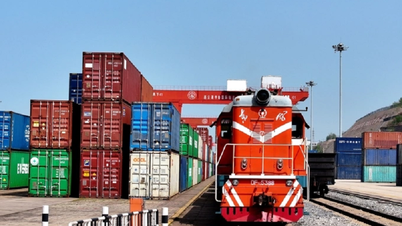
The weaknesses lie not only in the quality of service but also in the outdated infrastructure. Until recently, Vietnam's railway system mainly operated on a single-gauge 1,000mm track built over 100 years ago. The fact that trains in both directions had to share the same track made operation extremely challenging; every level crossing and train avoidance had to be meticulously calculated down to the minute. Even a small incident on the line could cause delays throughout the entire system. Furthermore, the dense network of level crossings with roads led foreign experts to conclude that Vietnam could not simply adopt automatic obstacle warning technology from Europe, as this would require trains to stop constantly, paralyzing the system.
Repositioning the leadership role

In recent times, Vietnam Railways Corporation (VNR) has undergone a rapid transformation, changing its service attitude, accepting losses to improve quality and attract customers back. More importantly, VNR is entering a strong and comprehensive restructuring phase, with a pivotal impetus from Resolution 79-NQ/TW of the Central Committee on the development of the state economy.

Mr. Nguyen Quoc Vuong - Deputy General Director of Vietnam Railways Corporation
This resolution not only removes bottlenecks in mechanisms and resources but also opens up a completely new development space for businesses. Analyzing this strategic shift, Mr. Nguyen Quoc Vuong, Deputy General Director of Vietnam Railways Corporation, said: "We determined that implementing Resolution 79 is a process of repositioning the role of state-owned enterprises in the essential infrastructure sector in a way that leads and connects the economy . Accordingly, when the Party and the State pay attention to investing in new and modern railway infrastructure, the transport market share will be rearranged with the North-South railway lines, connecting with China, connecting seaports, industrial zones, logistics centers… then railway transport will certainly return to its previous position."
According to Mr. Vuong, Resolution 79 has removed institutional bottlenecks, investment mechanisms, and decentralized management of public assets, providing businesses with a policy basis to prioritize resources and enhance their self-reliance. VNR is unlocking resources with determination: Smart governance, transparent regulations, seamless infrastructure, proficient operation, intelligent training, common industries, understanding cooperation, and seamless transportation. At the same time, Vietnam Railways is also aiming to play the role of "conductor" connecting and optimizing the entire national infrastructure system.
The aspiration to master the railway industry.
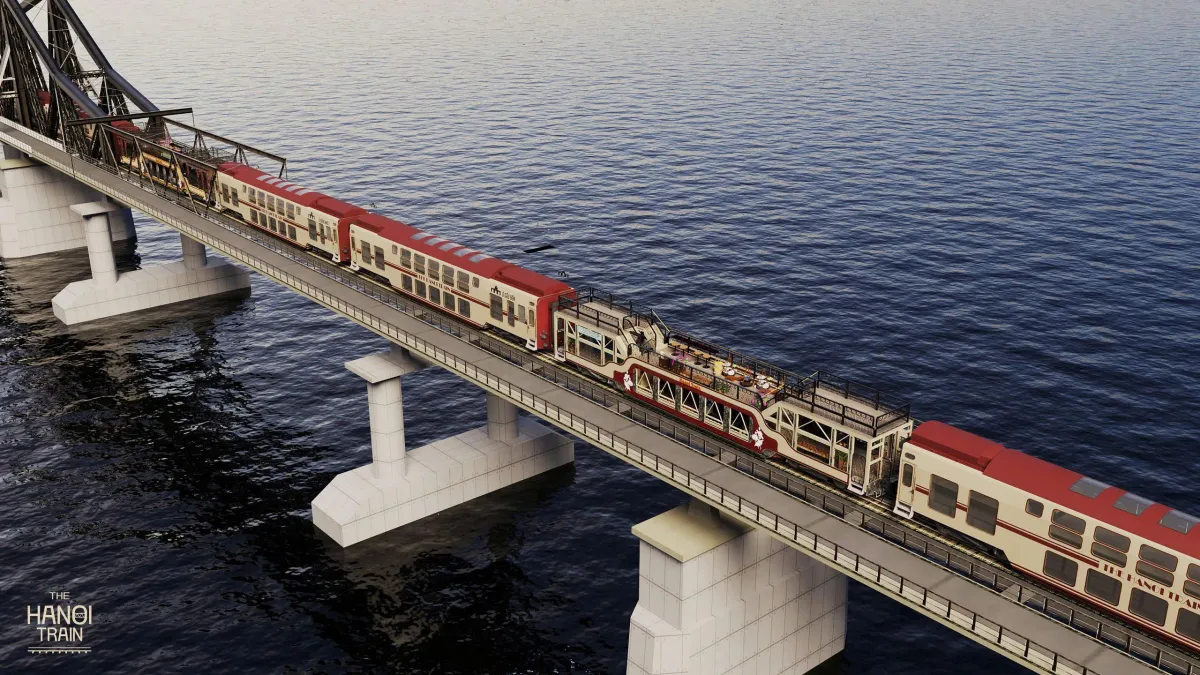
The biggest highlight in VNR's restructuring efforts is its aspiration to master the railway industry. VNR identifies Resolution 79 as a springboard for the enterprise to shift from a purely operational role to mastering core technologies, with innovation and digital transformation as its pillars.
The Corporation has proactively proposed the construction of a railway industrial complex – a core component – to form a modern railway industrial ecosystem. Affirming the strategic vision of this project, Deputy General Director Nguyen Quoc Vuong stated: "Based on this complex, we aim to attract private enterprises, technology partners, and domestic and foreign investors to participate in production, maintenance, R&D, training, and technology transfer. Through this, we will gradually build the self-reliance capacity of the railway industry, ready to receive and develop modern railway projects, including new railway lines and electrified railways."
To realize this, VNR has established "Team 57," a specialized unit in science and technology, aiming to achieve comprehensive digital transformation in 80% of its production and business activities by 2030, becoming a leading enterprise in technology application. Furthermore, VNR is proactively creating opportunities for private enterprises to participate in transportation, logistics, and tourism, forming a complete value chain.
Shifting from "employee" to "owner-of-employee"
Recently, at the 7th meeting of the National Steering Committee for Key Railway Projects, Prime Minister Pham Minh Chinh emphasized that the railway system development strategy must have a 100-year vision, ensuring unified and interconnected standards and regulations for nationwide use. The head of government specifically requested that the railway sector develop with a spirit of self-reliance and self-strength, resolutely transforming from a state of "subcontracting" to "mastering" technology, management, and production of equipment systems. According to the Prime Minister, the selection of appropriate technology and foreign partners must be closely linked to the requirement of technology transfer, moving towards self-reliance and proactively hiring foreign experts and scientists to work for Vietnam. At the same time, the reconstruction and modernization process of the railway system must adhere to the "5 transformations" orientation: digitalization, greening, efficiency optimization, smart governance, and harmonizing the interests of the State, the people, and businesses.
From a cumbersome and outdated machine, Vietnam Railways Corporation is demonstrating a powerful new vitality. With a long-term vision, proactive innovation, and a solid legal foundation from Resolution 79-NQ/TW, Vietnam's railway system is accelerating to regain passenger trust, ready to master technology and shoulder the mission of leading the national economy and transportation in the new era.
Source: https://vtv.vn/cu-but-toc-cua-duong-sat-viet-nam-100260324213728374.htm
































































































Comment (0)