

In response to new development demands, the province is continuing to reposition its maritime space, focusing on improving institutions, investing in infrastructure, promoting key industries in a green and sustainable direction, and making the marine economy a long-term development driver.
Movement stemming from a major policy
A highlight of the past eight years has been the significant shift in the awareness and actions of the entire political system regarding the development of the marine economy. While previously the marine economy was primarily viewed from the perspective of resource exploitation and traditional livelihoods, it has now been placed in a strategic position, becoming a crucial pillar in the province's long-term development orientation.
The implementation of Resolution 36 has been carried out synchronously from the provincial level to the grassroots. Action programs and implementation plans have been issued promptly, linked to the practical conditions of each locality. Propaganda efforts have been intensified, contributing to raising awareness among officials, Party members, and the people about the role of the marine economy in sustainable development.
Based on that foundation, key marine economic sectors have made remarkable progress. Coastal and island tourism is growing rapidly, with the number of visitors reaching approximately 20 million in the 2021-2025 period. Not only has the number of visitors increased, but the quality of tourism services has also gradually improved, forming products linked to the natural landscape and local culture.
 |
| Workers sort and process ocean tuna in a closed-loop process for export at a business in the South Phu Yen Economic Zone. |
According to Mr. Tran Hong Tien, Director of the Department of Culture, Sports and Tourism, Resolution 36 not only opens up new development directions but also requires restructuring tourism thinking towards spatial linkages and value enhancement. After expanding its development space, Dak Lak has a unique advantage: the convergence of two ecosystems, forest and sea, creating a foundation for the formation of integrated tourism products that are rich in experiences and possess a distinct identity. Therefore, in recent times, the province has not only developed more products but also gradually repositioned the role of tourism in the overall marine economy, aiming to become a key economic sector with widespread influence and sustainable contributions to development.
Furthermore, the fisheries sector continues to play a crucial role with over 2,500 fishing vessels, a stable catch of approximately 68,000 tons per year, ensuring livelihoods for tens of thousands of workers. The trend is shifting from inshore to offshore fishing, and from small-scale aquaculture to industrial-scale marine farming.
In the coming period, the province has identified the development of the marine economy as one of the important pillars of the economy, moving towards a modern, sustainable direction, based on science, technology, and innovation. Vice Chairman of the Provincial People's Committee Nguyen Thien Van |
Notably, the mindset regarding marine economic development has shifted from "exploitation" to "exploitation linked with protection and sustainable development." Resource management and marine environmental protection have been strengthened in a comprehensive manner across coastal areas; numerous tasks involving marine and island surveys and database development have been implemented, contributing to the stability of the coastal environment and creating a foundation for the development of tourism and related industries.
Furthermore, the South Phu Yen Economic Zone is gradually playing a driving role, attracting investment in industry, energy, and logistics; transportation infrastructure and seaports are receiving investment, improving connectivity and expanding development space. Not only is the economy growing, but social, environmental, and science-technology sectors are also experiencing positive changes, and the lives of coastal residents are improving.
Creating a growth breakthrough
It can be said that Resolution 36 has laid an important foundation for the development of the marine economy in Dak Lak. However, the results achieved are only the initial steps, not commensurate with the potential and requirements, demanding more groundbreaking, comprehensive, and long-term solutions.
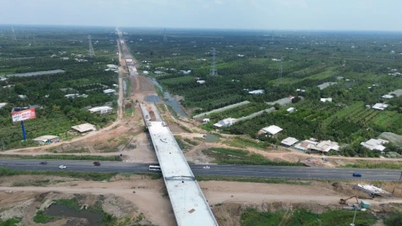
According to Huynh Lu Tan, Member of the Standing Committee of the Provincial Party Committee and Director of the Phu Yen Economic Zone Management Board: To date, the South Phu Yen Economic Zone and industrial parks have attracted 130 projects with a total registered land area of over 1,454 hectares. In the future, the goal is to expand and develop the economic zone and industrial parks into a driving force for growth, focusing on completing infrastructure, especially inter-regional transportation projects with high connectivity, a seaport system connected to the Bai Goc deep-water port, and resettlement areas to serve development.
 |
| Dak Lak province is aiming to shift from small-scale aquaculture to industrial-scale marine farming. |
According to the Department of Agriculture and Environment, in the coming period, the sector will finalize the marine spatial planning, promote digital transformation in resource and environmental management; develop high-tech marine aquaculture, offshore renewable energy, and high-quality marine tourism, aiming for sustainable growth in harmony with ecosystem protection. The sector also identifies the development of renewable energy and the green economy as a strategic direction, effectively exploiting the potential of wind and solar radiation, gradually forming offshore wind and solar power centers, creating new long-term growth drivers.
Vice Chairman of the Provincial People's Committee Nguyen Thien Van affirmed: Repositioning the marine space is not only an urgent requirement in the new context but also an opportunity for the province to make breakthroughs. Dak Lak will implement comprehensive and decisive solutions to implement Resolution 36; strengthen leadership, improve institutions and planning, improve the investment environment, remove procedural "bottlenecks," and build competitive incentive mechanisms to attract resources. The province prioritizes investment in synchronous and modern infrastructure, especially connecting transportation, seaports, and logistics; promote science and technology, innovation, and develop key sectors such as fisheries and tourism. Along with that, it will focus on protecting resources, the environment, and marine ecosystems, improving people's lives, and linking economic development with ensuring national defense and security, and sovereignty over the sea and islands.
Tuyet Huong - Ha My
Source: https://baodaklak.vn/kinh-te/202604/cu-hich-dua-kinh-te-bien-but-pha-3fe58fe/


![[Photo] General Secretary and President visit the China-ASEAN AI Application Cooperation Center](https://vphoto.vietnam.vn/thumb/1200x675/vietnam/resource/IMAGE/2026/04/17/1776404277677_vna-potal-tong-bi-thu-chu-tich-nuoc-tham-trung-tam-hop-tac-ung-dung-ai-trung-quoc-asean-8706616-2286-jpg.webp)










![[Photo] National Assembly Chairman Tran Thanh Man attends the policy seminar to promote Vietnam-Türkiye cooperation.](https://vphoto.vietnam.vn/thumb/1200x675/vietnam/resource/IMAGE/2026/04/16/1776351415367_vna-potal-chu-tich-quoc-hoi-tran-thanh-man-du-toa-dam-chinh-sach-thuc-day-hop-tac-viet-nam-tho-nhi-ky-8705791-jpg.webp)














































Comment (0)