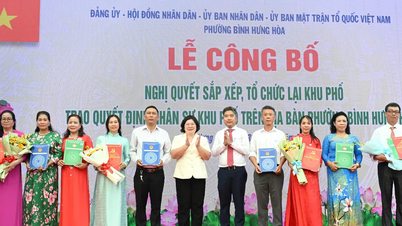
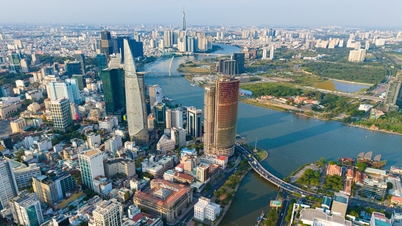
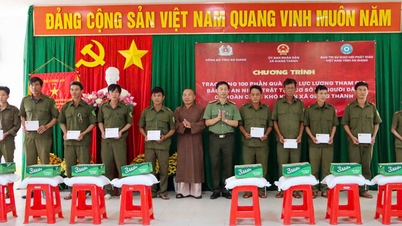
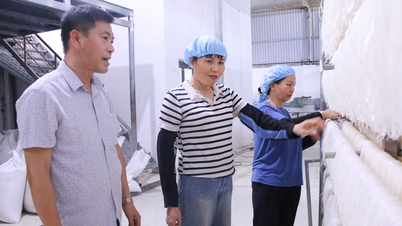
In mid-June 2026, Binh Thanh ward, Ho Chi Minh City, deployed 60 self-governing drug prevention teams, linked to the "3 no's - 3 yes's" model.
Accordingly, the "three no's" include: no illegal possession, use, or sale of narcotics; no creation of complex drug hotspots in residential areas; and no indifference or silence in the face of violations. The "three yes's" include: having self-governing groups to disseminate information to each household; educating and managing children within the family regarding their use of social media; and supporting those who have completed rehabilitation to reintegrate into the community. Each group has its own QR code or link for residents to sign online commitments.
The story in Binh Thanh is a vivid example of the effort to stop drug trafficking at the grassroots level. This is something that needs to be done in every neighborhood, alley, boarding house, apartment building, family, and school. When people are no longer indifferent, when there are channels for reporting, when there are specific commitments, and when there are self-governing groups nearby, it will be difficult for drugs to find loopholes to infiltrate people's lives.
On June 27th, Ho Chi Minh City organized a rally and run to support the 2026 Anti-Drug Action Month with the theme "Sharing a common determination to build drug-free communes, wards, and special zones." The spirit of the action day also serves as a reminder to translate that determination into disciplined implementation in each locality. Recent results show that Ho Chi Minh City is facing a very challenging front. In 2025, the Ho Chi Minh City Police arrested and prosecuted 5,790 cases involving 15,240 people related to drugs.


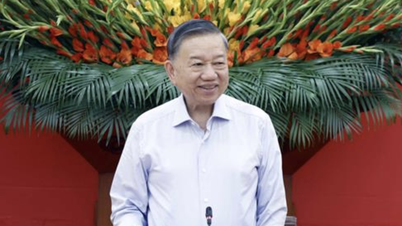
At the First Congress of the Ho Chi Minh City Party Committee, General Secretary and President To Lam tasked Ho Chi Minh City with building a drug-free city by 2030. Based on this requirement, the Ho Chi Minh City Police Party Committee coordinated with and advised the City Party Committee to issue a resolution of the Ho Chi Minh City Party Committee on improving the effectiveness of crime and drug prevention and control, striving to build a drug-free Ho Chi Minh City by 2030.
The city also established Steering Committee 26, chaired by the Secretary of the Ho Chi Minh City Party Committee , Tran Luu Quang . This division of responsibilities demonstrates a high level of political determination, placing the task of combating drug trafficking under the direct leadership responsibility of the political system.
The resolution demands a very high level of division of labor: "clear responsibilities, clear tasks, clear authority, clear deadlines, and clear results." Drug prevention and control efforts must closely integrate prevention and combat, linked to three reductions: reducing supply, reducing demand, and reducing harm; and five increases: increasing leadership effectiveness, increasing organizational implementation efficiency, increasing inspection and supervision, increasing resources, and increasing digital transformation. This is a more comprehensive approach, not simply delegating responsibility entirely to the police force, nor allowing the movement to remain merely slogans.
Ho Chi Minh City's roadmap is also clearly quantified. By 2026, 30% of communes will meet the criteria of being drug-free. By the end of 2027, this figure will reach 50%; by the end of 2028, 80%; and by the end of 2029, 100% of communes, neighborhoods, hamlets, and residential areas will meet the criteria of being drug-free; 100% of educational institutions, medical facilities, mass organizations, agencies, and businesses will be drug-free. By 2030, the city will continue to implement comprehensive tasks and solutions to sustain these results.
This roadmap places very specific responsibilities on the shoulders of local leaders. The Party Secretary and Chairman of the People's Committee at the commune/ward level must know how many drug addicts, recovering addicts, risk areas, lodging houses, and businesses needing inspection in their area. The specific tasks of the police, health, education, labor and social affairs, mass organizations, neighborhood committees, and hamlets must be clearly assigned.



The "fortress" against drugs cannot be built solely through suppression. To keep an area clean, we must do a good job of social prevention, rehabilitation, post-rehabilitation management, job support, and creating a foundation for those who have gone astray to reintegrate into the community. Each family must protect their children; each neighborhood must protect its area; each commune and ward must keep its promises to the people with tangible results. When the responsibility of leaders is properly placed, the "fortress" against drugs at the grassroots level will be strong enough to protect the peace and security of Ho Chi Minh City.
Source: https://www.sggp.org.vn/cung-co-phao-dai-chong-ma-tuy-post859674.html




![[Photo] Strengthening character and expertise: Intense training for artillery soldiers.](https://vphoto.vietnam.vn/thumb/1200x675/vietnam/resource/IMAGE/2026/06/30/1782815602541_lu-368-1875-4571-jpg.webp)