

The era of analog devices
At that time, news about storms and floods was the strength of television stations. People all over the country, especially those in the South, learned about floods and storms thanks to their evening television screens. One television journalist even came up with the idea of bringing a video player to the middle of Ben Thanh Market to show news about the plight of people in Central Vietnam during the floods, appealing for donations from the vendors.

The reporters and editors of the Thanh Nien Newspaper's Digital Content Development Center filmed an interview with the US Consul General in Ho Chi Minh City. PHOTO: DANG KHOA
Back then, to produce a television news report, reporters had to carry a bulky U-matic camera, like a small suitcase, weighing over 10 kg, along with extra batteries, cables, microphones, and a tripod. Later, Panasonic's M7 and M9000 cameras, which shot on S-VHS tape, were lighter, but reporters still had to worry about the camera getting damp in rainy or windy weather. After filming for a few minutes, the camera would sometimes freeze, requiring them to remove the tape, clean the magnetic head with alcohol, and dry the camera under a plastic sheet or with a hairdryer. Filming was arduous, but getting a news report broadcast involved many more steps, especially transferring the tape to the station and editing. Video tapes could only be transported by road, rail, or air. During the SEA Games held in Thailand and Indonesia, many reporting teams had to contact Vietnam Airlines to have passengers carry the video tapes back, and the station would send someone to pick them up at the domestic airport. When the tapes arrived at the station, the editing process was still a considerable challenge.
Those who worked on news reports and documentaries during the analog era will surely never forget the days spent "eating and sleeping" with the MX editing console, a symbol of a time of manual television production, meticulously crafted down to every frame. That editing console, seemingly simple at first glance, was an art form to operate smoothly, requiring skill, concentration, and sometimes boundless patience.
The MX editing console is a central control unit connected to a player, a computer (for graphics) as input, and a recorder as output. Every operation—cutting, inserting images, adding sound—had to be done manually. To cut a segment of footage, the technician had to carefully time each frame, manually rewinding the tape to the second. A single misstep would cause the image to slip and the sound to be out of sync. And magnetic tape couldn't be "undoed" like it is now—a single wrong cut meant losing the entire segment, sometimes requiring a complete re-editing. Film editors had to listen through headphones while constantly monitoring the screen, patiently timing the "in" and "out" cuts. In the early 2000s, non-linear editing systems were available, but video production was still on magnetic tape, so the process of converting tape data into files was also a challenging one.
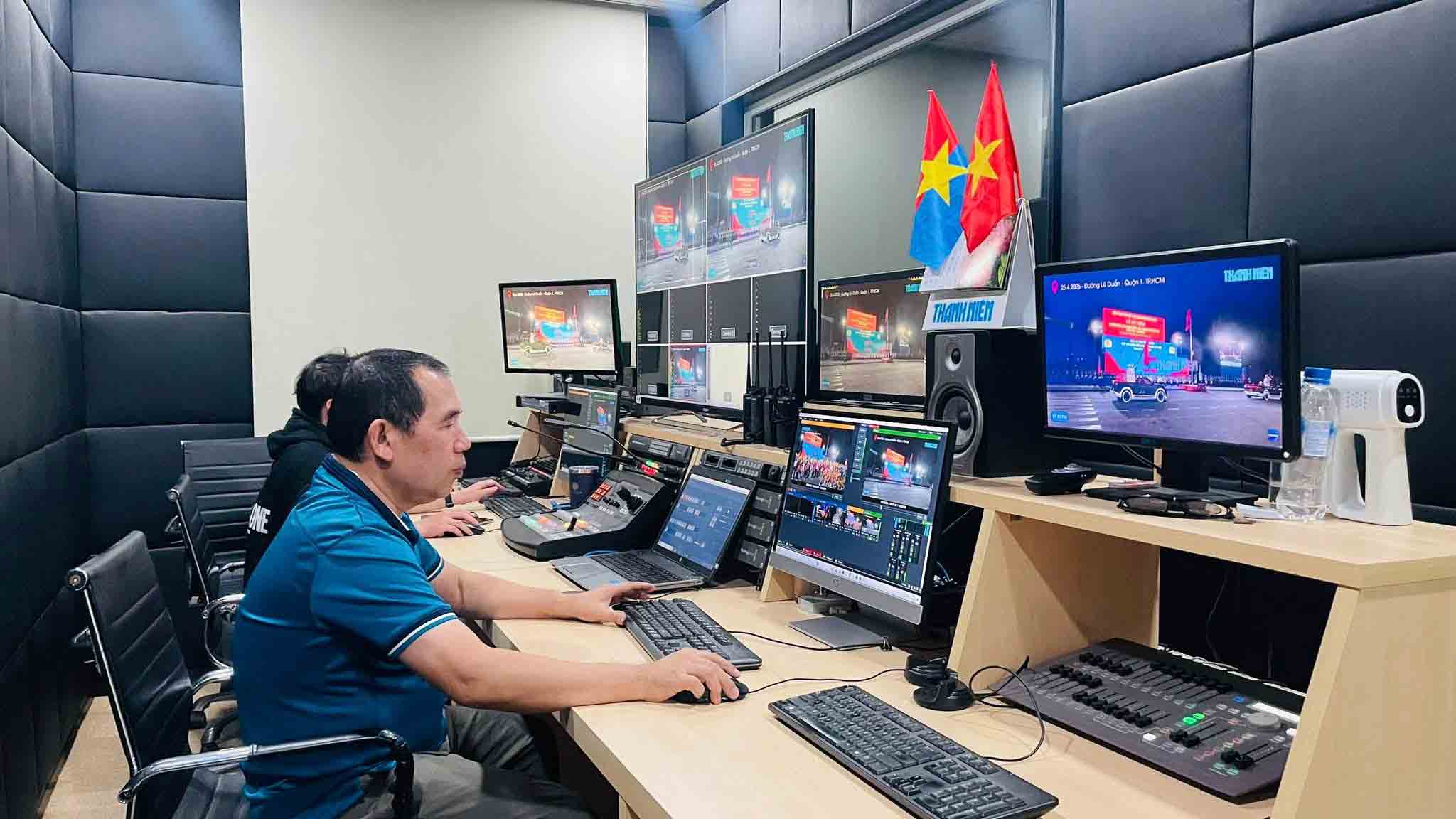
The Thanh Nien Newspaper's technical team live-streamed the A80 event on Thanh Nien's platforms. PHOTO: TRUNG HIEU
Many behind-the-scenes stories from the television industry back then are now unimaginable to young people, because Gen Z grew up with mobile phones, and from their middle school years, they were already able to film and produce videos to "broadcast" online!
A turning point for television journalism.
Digital technology has created compact, palm-sized devices that integrate all the functions of recording, editing, and transmitting signals to the station in an instant via 3G, 4G, and now 5G. Now, a young journalist can "operate" alone: filming, editing, writing, reporting from the scene, and broadcasting immediately from their phone. News is uploaded online just minutes after an event occurs.
With the development of the internet and social media, television journalism has changed dramatically in recent years. The trend of multi-platform journalism allows viewers to access content on demand across various devices and platforms. Televisions in living rooms and bedrooms no longer hold the sole role in disseminating television news. In this trend, news organizations have been forced to develop content on digital platforms. Some financially strong organizations have invested in building their own digital platforms. However, most newsrooms still utilize free platforms, which are popular with the majority of the population, to spread television content.
Thanh Nien Newspaper was also an early and successful pioneer in developing multimedia journalism on digital platforms. Thanh Nien 's channels quickly became a brand that attracted the public thanks to its quick grasp of the content production mindset relevant to the audiences of new platforms.

The event featured a live stream of the Exam Season Counseling program on Thanh Nien 's platforms . PHOTO: THANH HAI
Thanh Nien Newspaper's social media network is expanding and developing rapidly. As of November 2025, the Thanh Nien Newspaper Digital Content Development Center (formerly known as the Television Department) operates 5 YouTube channels, 5 TikTok channels, and numerous other video and podcast channels, with a total of nearly 16 million followers across the entire ecosystem.
For many years, Thanh Nien Newspaper's YouTube channel has consistently held the position of a leading news channel among Vietnamese media outlets, with nearly 6.3 million subscribers. Each year, Thanh Nien Newspaper's channels across all platforms attract nearly 2 billion views, becoming a reliable information channel system chosen by a large audience.
There have been quite a few changes in the model and methods of producing television news content in an era where the public only uses smartphones to watch, scroll, pause, and scroll again in a few seconds on TikTok, Facebook Reels, or YouTube Shorts – platforms where content must be short, vertical, and evoke immediate emotions.
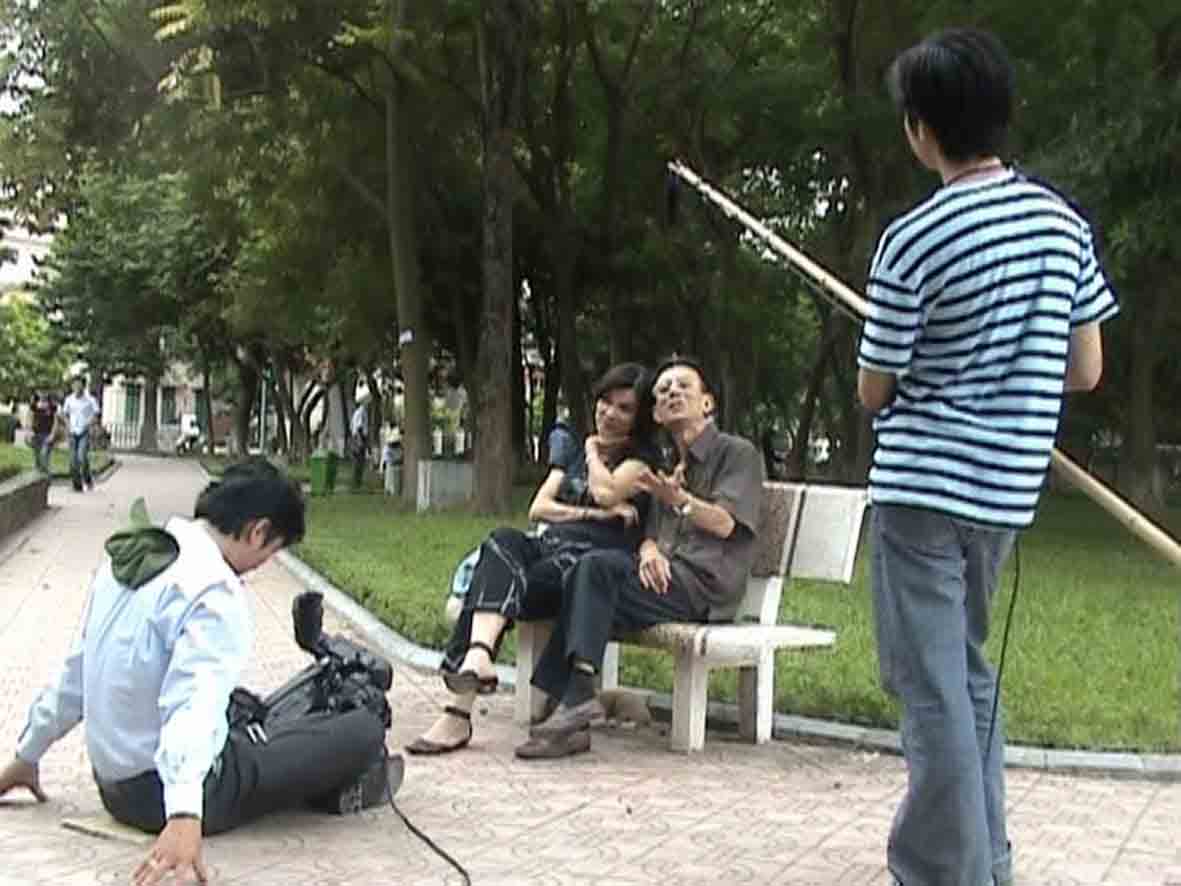
Filming a television skit on the shores of Hoan Kiem Lake (Hanoi) using a tape camera, the microphone cable had to be attached to a fishing rod to position it just above the character's head so that it wouldn't be in the frame. PHOTO: TGCC
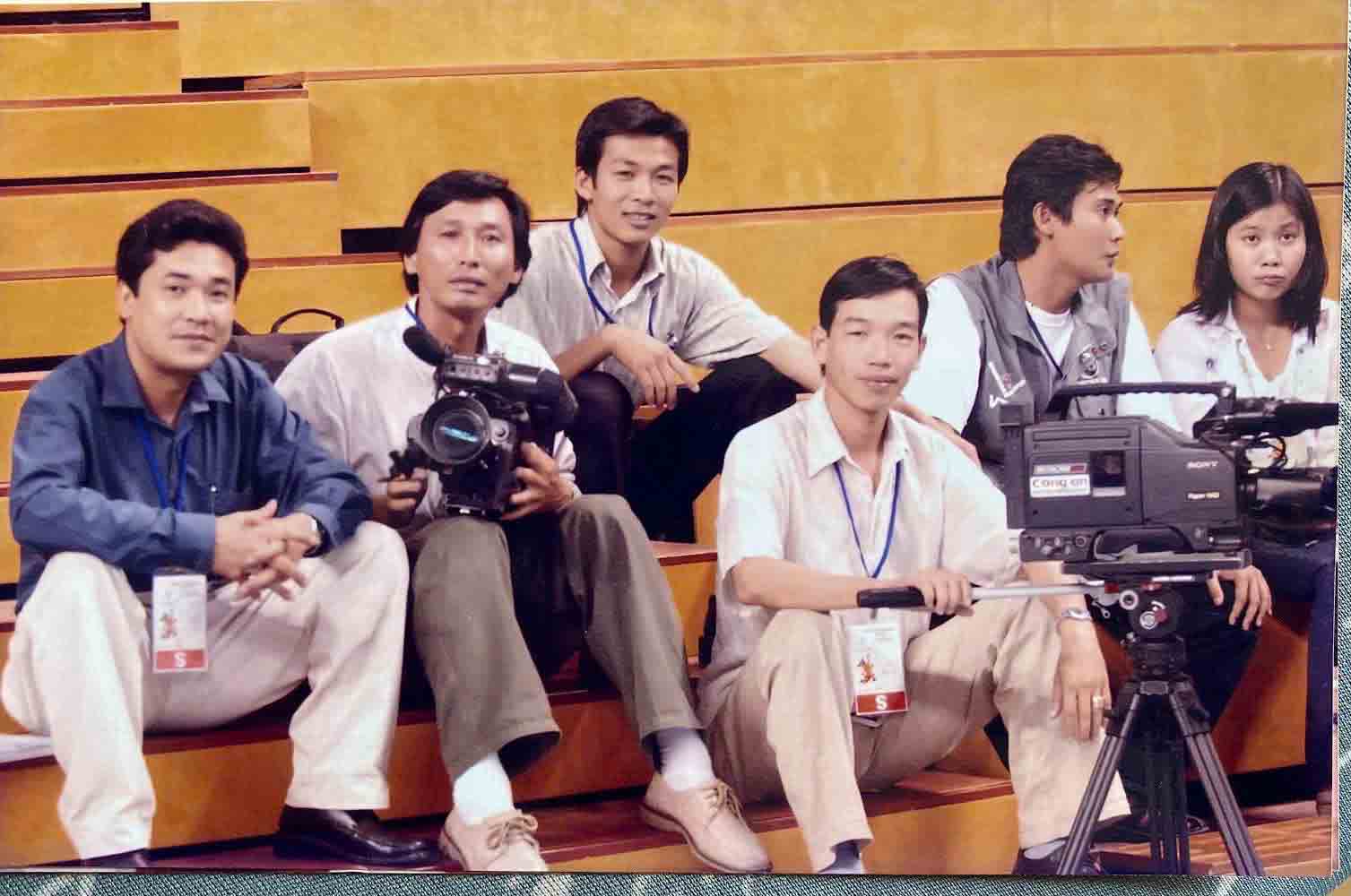
A group of Vietnamese television reporters during a break while covering the 22nd SEA Games (2003). PHOTO: TGCC
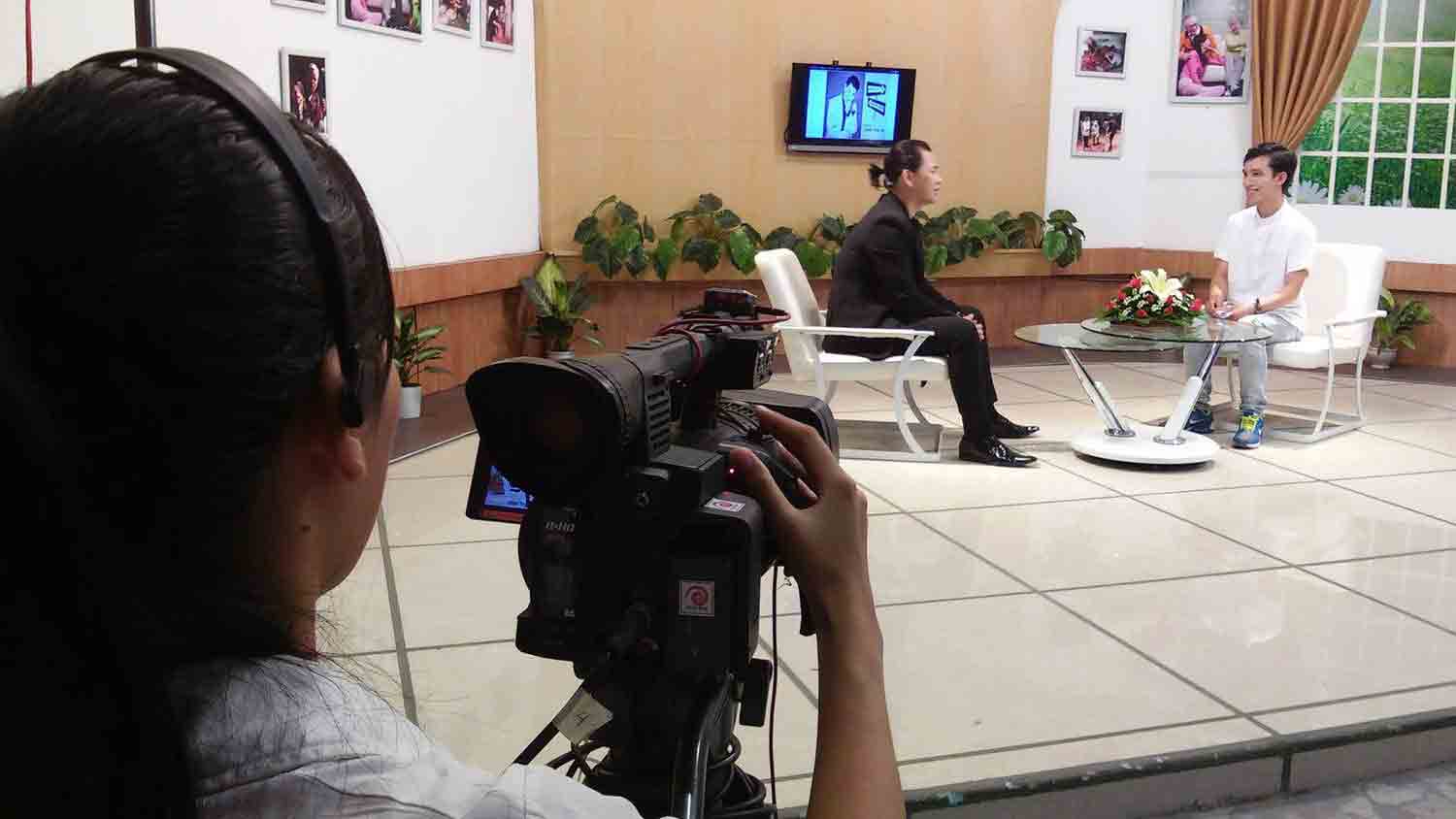
Doing talk shows in the age of analog technology. PHOTO: TGCC
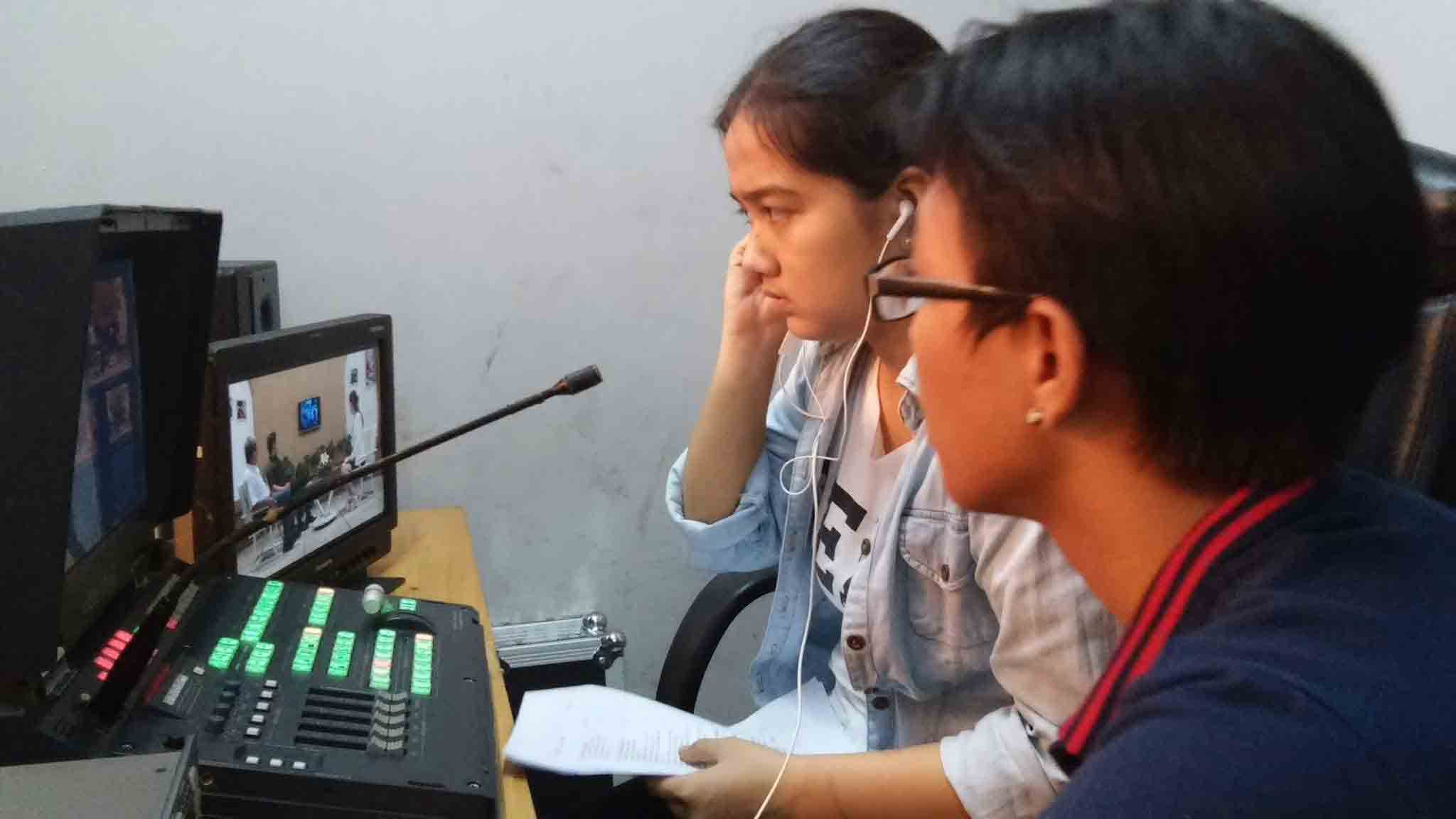
Doing talk shows in the age of analog technology. PHOTO: TGCC
One example of this shift is the adoption of vertical video formats. The 9:16 aspect ratio—once considered unprofessional—has become the standard in the mobile age. A 60-second vertical video on TikTok can reach millions of people in a few hours. Longer news stories and elaborate documentaries might be overlooked simply because they aren't in a vertical frame and lack a strong enough "hook" in the first 5 seconds.
Traditional television is built on strict journalistic principles: shots must be carefully selected, narration meticulously edited, and stories must adhere to a structure appropriate to the genre. Television reporters are storytellers, but also "rhythm setters," perfecting the work before broadcast. In this model, the audience is often a passive recipient.
Meanwhile, news videos on social media operate on a completely different logic. The story doesn't need to be complete; it needs to grab attention immediately. Professionalism doesn't lie in camera quality or post-production, but in intimacy, authenticity, and shareability. Vertical videos don't require perfect diction, but rather expressiveness. It's not about reading the news, but about speaking to the audience like a friend. In this environment, the audience is not just a viewer but also a co-creator, interacting, responding, sharing, and even remaking the video in their own way.
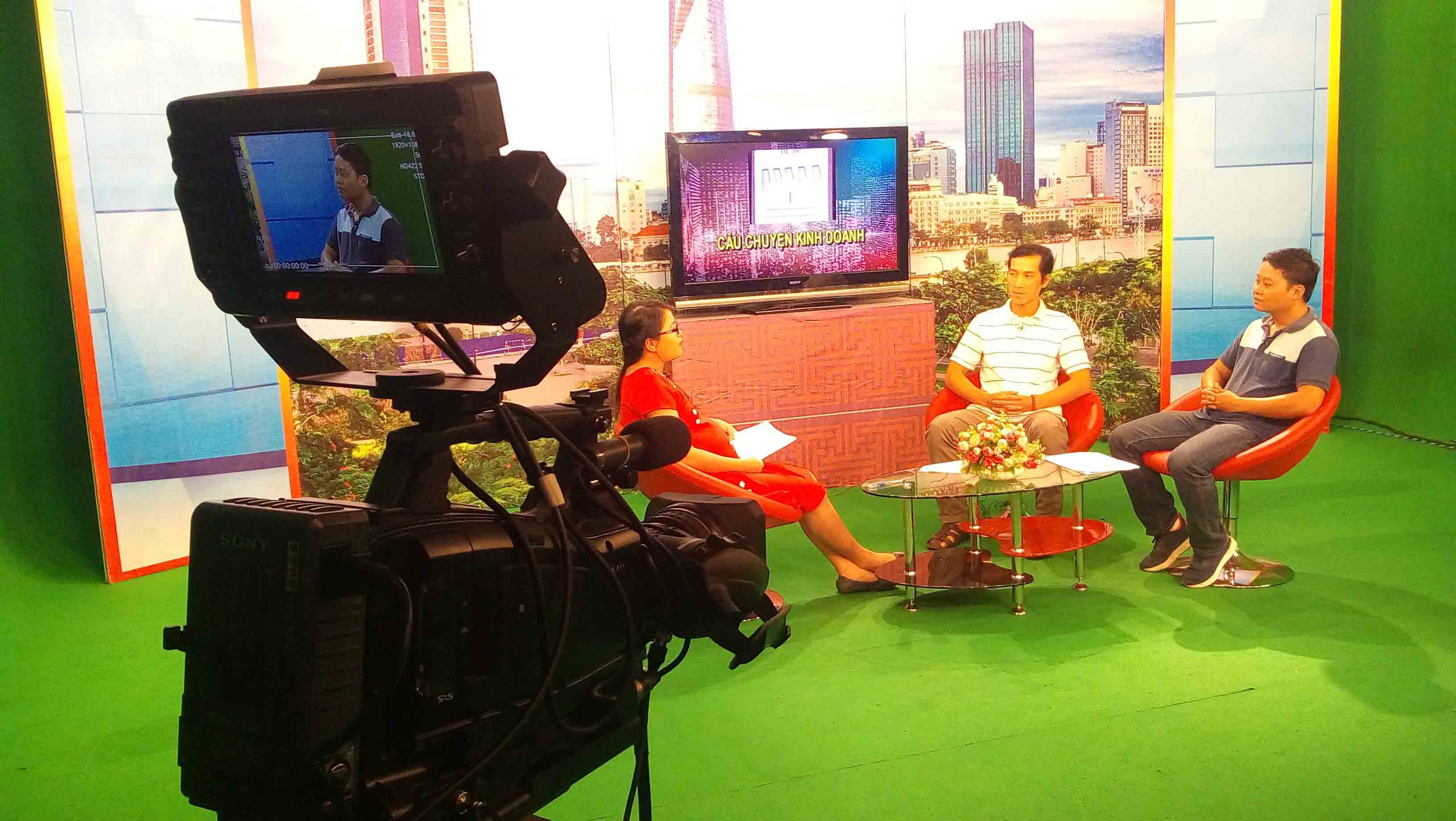
Doing talk shows in the age of analog technology. PHOTO: TGCC
This difference creates a significant gap between traditional television broadcasting thinking and social media journalism thinking. One side emphasizes careful planning, structure, and standardized presentation; the other embraces flexibility, responsiveness, vertical formatting, mobility, and a strong personal touch.
"Right - Enough - Beautiful" or "Fast - Really - Touch"?
Television journalism has been shaped over decades by almost unwavering principles: the images must be beautiful, the sound clear, the narration concise, and the information objective and verified. From the studio to the final edit, every element is controlled, and the television reporter is the "central storyteller," guiding the audience to access information in a linear fashion, with a beginning, a climax, and an end. However, the world of social media has overturned that logic. If television is the art of storytelling through images, then vertical video, with its structured and emphasized elements, is a new chapter in that art, with a new language, a new platform, and a new audience. The mindset of television journalism with its high discipline and control is clashing fiercely with the mindset of social media, where spontaneity, emotion, and real-time feedback prevail. On TikTok, producers can cut the first 3 seconds of a broadcast television news segment to create a meme. On Reels, users only need a fleeting glance to stop and watch a short video. In that world, linear thinking gives way to reflexive thinking, and individuality takes precedence over institutionalism. Audiences are more interested in faces, voices, and personal emotions than in the formal style of a news organization.
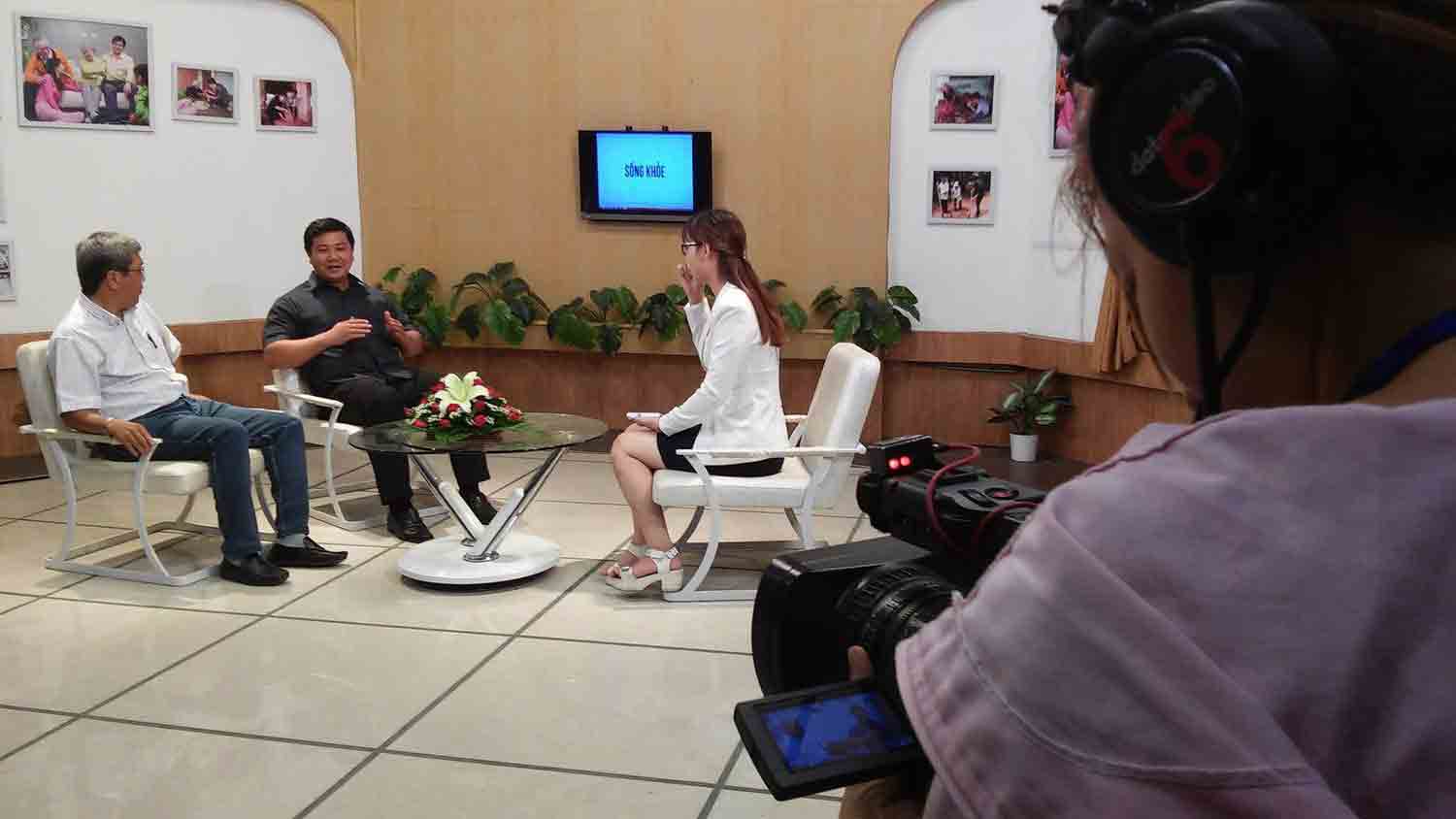
In the age of analog technology, when you can't find a virtual studio, you have to design a real backdrop! (PHOTO: TGCC)
In traditional television, reporters learn to control every frame, carefully select narration and commentary, meticulously edit footage, and always adhere to the script. Each frame has a purpose, each line of dialogue carries information. Accuracy, completeness, and aesthetics are the top standards. A news report or short documentary can take hours or even days to produce: from filming on location, writing the script, post-production, content review, and then broadcasting at the scheduled time. On social media, especially TikTok, viewers don't need a meticulously edited video. They need genuine emotion, a relatable situation, a gaze that can touch their hearts in just a few seconds. Those creating TikTok and YouTube Short content often say: If you can't hold the viewer's attention for the first 3 seconds, the content is a failure. The story doesn't need to start sequentially; it can jump straight to the climax. Instead of using voice-off in a noise-free studio, the presenter can look directly into the camera and speak directly to the viewers in their real voice and with genuine expression against a backdrop of live sound. The mindset behind video production for social media platforms emphasizes quick reflexes, conciseness, and a human connection. Videos shot with phones may be shaky or slightly off-angle, but if they are authentic and moving, they can have a far greater impact than even a meticulously produced news broadcast.
Although there are many differences from tradition, this does not mean that modern television journalists must abandon the principles and methods of journalism in general, and television journalism in particular. Journalists in the digital age must still master the principles of journalistic practice and the classic values of the profession, while also learning the "language of social media"—from storytelling, video editing, background music selection, graphic design, headlines, and scrolling text, to interacting with the audience—to adapt to their role in serving the public in this new context.
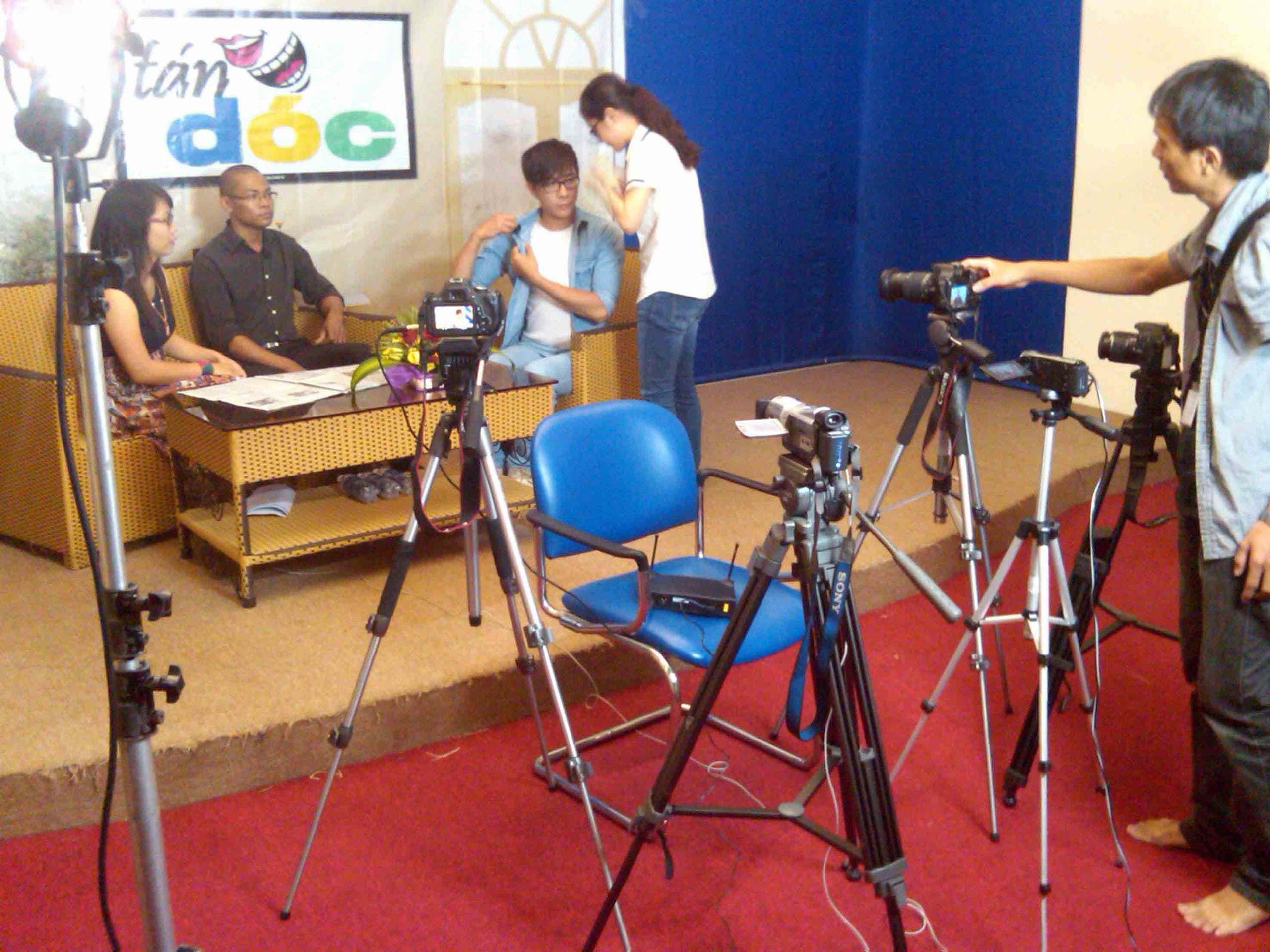
Student interns create talk shows in a "budget-friendly" style, utilizing all available equipment for filming and recording. PHOTO: TGCC
In short, television is not dead. It is being reborn in a new form. Television is learning to adapt to survive in a new media ecosystem. And television professionals, regardless of the era, remain seekers of truth, through their cameras, their voices, and their belief that a story told correctly, on any platform, can still move people. I see Thanh Nien (Youth) in that context.
Source: https://thanhnien.vn/cuoc-tai-sinh-cua-truyen-hinh-185251228152934164.htm




![[Photo] Bustling Election Day in Naval Region 5](https://vphoto.vietnam.vn/thumb/402x226/vietnam/resource/IMAGE/2026/03/15/1773560007786_1jjo5osf2-4dtcnb-jpg.webp)

![[Photo] Prime Minister Pham Minh Chinh casts his ballot with voters in Tay Ho ward, Hanoi.](https://vphoto.vietnam.vn/thumb/402x226/vietnam/resource/IMAGE/2026/03/15/1773544401565_dsc-4144-9718-jpg.webp)
![[Image] National Assembly through the terms](https://vphoto.vietnam.vn/thumb/402x226/vietnam/resource/IMAGE/2026/03/15/1773534202709_1-jpg.webp)
![[Photo] New recruits happily exercise their right to vote at their unit.](https://vphoto.vietnam.vn/thumb/402x226/vietnam/resource/IMAGE/2026/03/14/1773473286544_stug0337-6388-jpg.webp)






















































































Comment (0)