


Many men say they "find it hard to break their meat-eating habit," while others admit they fear becoming "less masculine" if they don't eat meat.
Meat has long been associated with strength, hunting, and power in Western culture. To delve deeper, a research team at the University of Exeter (UK) surveyed over 1,000 men about their eating habits and gender perceptions.
The results, published on The Conversation, show that those who agree with the "traditional masculine" standard tend to eat more red meat and poultry, and are less willing to reduce meat consumption or replace it with dairy and vegetarian options.
In online discussion groups, many men deny any connection between gender and food. They assert that "food is just food" and there is no distinction between "male" and "feminine" food.
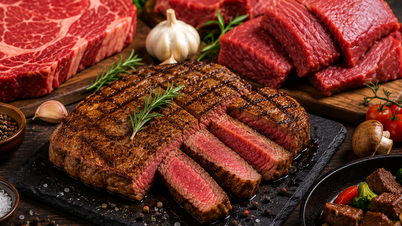
Others argue that meat is linked to social status. Many share that when dining with the "alpha males" in their group, they always feel pressured to order steak instead of salad or pasta so as not to "look less masculine."
In addition to social factors, the study also noted gender differences in eating habits. Many men admitted that the women in their families or partners were more likely to eat less meat, while they themselves found it "difficult to give up their meat-loving habits."
Another noteworthy finding was how men perceive plant-based food alternatives. Products like "vegan meat" are often judged as "unnatural," "not tasty," and "not nutritious enough." One young man commented that reading vegetarian food labels reveals a plethora of strange chemical compounds, while chicken is "simply chicken."
Many people also worry that a vegan diet may be nutritionally deficient or detrimental to their health, unless strictly prescribed by a doctor.
For some young men, eating meat is linked to lifestyle and fitness. One man in the 18-29 age group shared that his friends all go to the gym and consider meat their primary source of protein, and that giving up meat would mean he "would have to change his group of friends."
These findings reveal a complex relationship between gender, social perceptions, and eating behavior. While the survey indicates a clear link between masculinity and meat consumption, many men themselves are unaware of or unwilling to acknowledge this.
This poses a challenge to campaigns advocating for reduced meat consumption, which are seen as crucial for public health and the environment.
Source: https://tuoitre.vn/dan-ong-it-an-rau-vi-so-bot-dan-ong-20250929113549869.htm










































































































Comment (0)