

Go home and enjoy the warmth of home, instead of rushing out to eat.
Ms. Thu Huong, owner of the Aquarium restaurant, still remembers the early days of her online business venture in June 2012.
At that time, her main product was mushroom floss, and her customers were mostly friends, while the motorbike taxi drivers at the beginning of the street became her delivery people.

Ms. Thu Huong in the neat and orderly kitchen of the restaurant during the Mid-Autumn Festival.
PHOTO: PROVIDED BY THE SUBJECT
"Back then, each pack of mushroom floss weighed 200 grams, and in the first month I sold 50 kg of mushroom floss," she recalled vividly.
In the following months, she started selling fish sauce as well. Some skilled friends also contributed other items to sell, but they became busy and stopped. Only Huong continued on the path of social commerce (selling goods through social media) alone.
Ms. Huong shared that her initial idea was "just cook delicious food, without the hassle of serving," so she tried posting information and pictures of her home-cooked meals on Facebook every day, taking orders, and delivering food to friends through a network of motorbike taxi drivers at the beginning of the street.
"What seemed like just a fun experiment turned out to be a great way to connect 'kitchen to table' through social commerce, and it received strong support, especially from busy office workers and young families with daily home-cooked meal needs," Ms. Huong shared.


Authentic Hanoi dishes are prepared hygienically in a tidy kitchen.
PHOTO: PROVIDED BY THE SUBJECT
At that time, Ms. Huong clearly understood that, as an individual entrepreneur with a small scale and capital, the social commerce business model allowed her to optimize costs related to premises, on-site staff, and operating expenses not directly related to food quality. By reducing these costs, she could invest more in ingredients, culinary skills, and production processes.
The production workshop at the Aquarium Restaurant is beautiful. It's a kitchen designed by an architect in the shape of a vibrant red envelope. If it were a shop, that design would be eye-catching enough to create an unforgettable "look." But even with such a beautiful kitchen workshop, Ms. Huong still chooses to sell "purely online," something few food vendors do. Typically, food businesses want to "walk on two legs," combining both sales methods. This helps them increase customers and build trust.
Regarding why the Aquarium Restaurant doesn't sell offline, even with such a beautiful kitchen, Ms. Huong explained: "After two years of Covid-19 and entering my 14th year of selling online, I've noticed that the demand for eating at home to ensure health, save time and costs is increasing, and buying food online has become a lifestyle, an irreplaceable way of shopping for consumers."
Thu Huong's envelope-shaped kitchen, while beautiful, is designed more like a "kitchen workshop" than a restaurant. An offline model would entail a completely different operational logic: on-site service, prioritizing the spatial experience, speed of service, and a continuous flow of customers. This could alter the rhythm of a "home-made" kitchen, which requires tranquility and focus.

The envelope-shaped kitchen of the Aquarium restaurant.
PHOTO: PROVIDED BY THE SUBJECT
"Personally, I value family. I hope that instead of rushing out to restaurants for a meal, my customers will eat at home more often, fostering closer and more relaxed connections through meals with friends and family," said Thu Huong.
Hanoi cuisine, sold "purely online" in the Hanoi style.
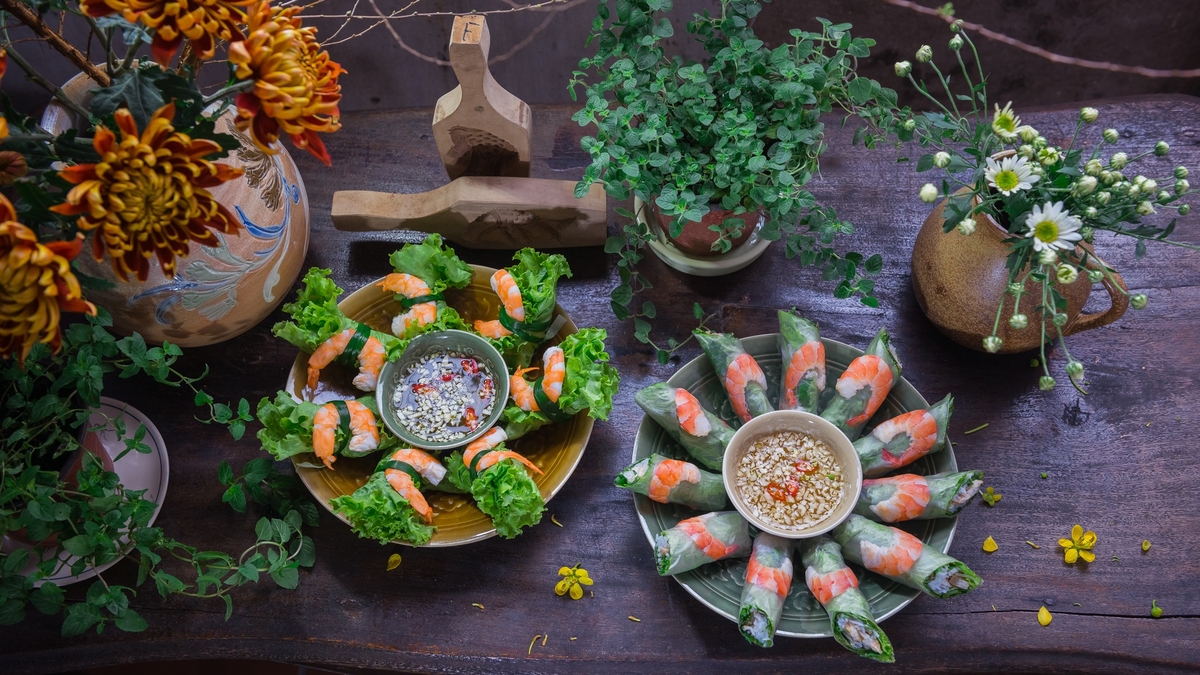
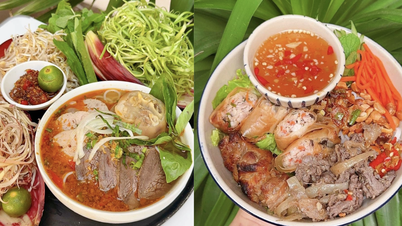
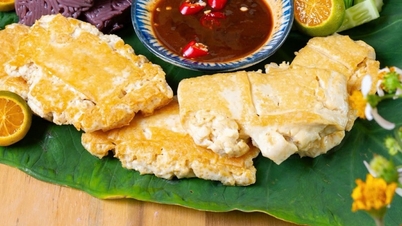
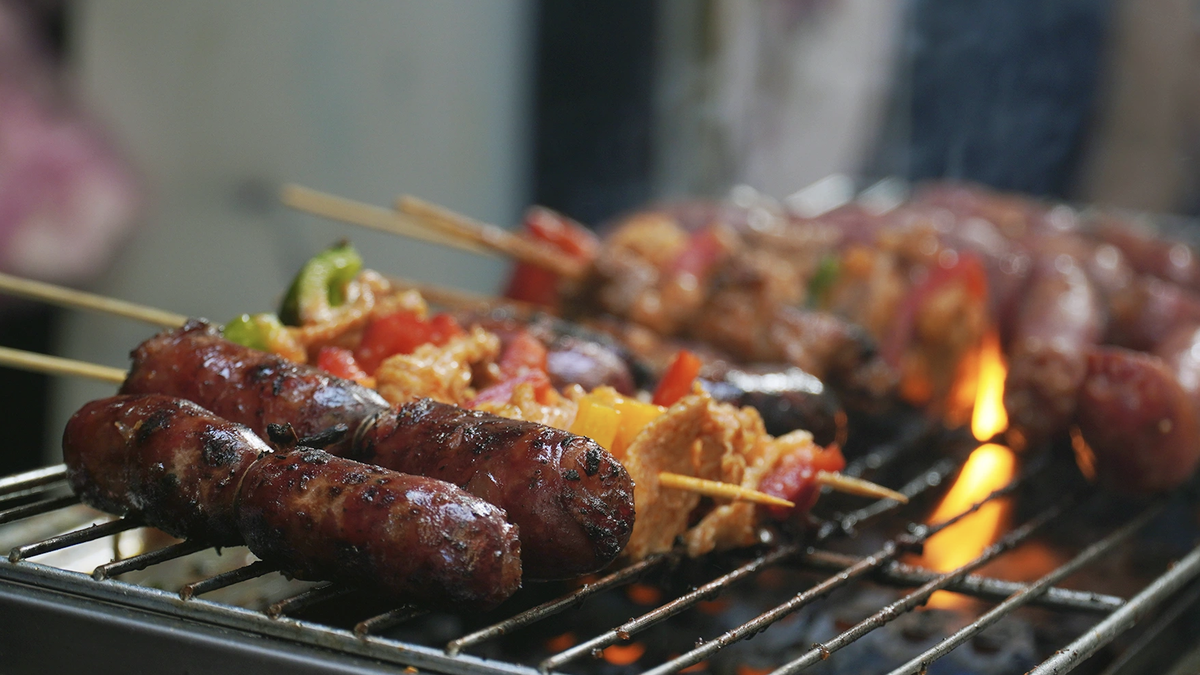
As the restaurant's "unbeatable" dishes continue to emerge, people find them truly so authentically Hanoian. The red sausage makes Hanoi banh mi different from Saigon or Hoi An banh mi. The famous lettuce wraps. The refreshing broth, the deep, sweet stewed bird. Two famous dishes from the Bat Trang feast – bamboo shoots with squid and stir-fried kohlrabi with squid – are always available. Mooncakes with a traditional flavor. And the candied rosehip fruit, which customers eagerly anticipate each season…
But Huong never forgot that providing service requires sincerity and striving to do the best for the customer. And for online customers, that means when they have a slight concern, you don't see that frown.
"Gaining the trust of first-time buyers is always a challenge for online kitchens when there's no face-to-face interaction. Text messages can sometimes be dry and easily lead to misunderstandings."
"For first-time customers, I usually ask staff to call and provide direct consultation. A sincere voice, honest content, quick and professional handling, along with small encouragements, helps customers trust me more during their first transaction," Thu Huong said.

Delicious dishes for Tet (Vietnamese New Year)
PHOTO: PROVIDED BY THE SUBJECT
This past Tet holiday, a customer inquired about purchasing a large quantity of banh chung (traditional Vietnamese rice cakes) as gifts, but was concerned about whether the cakes would be "beautiful and delicious enough to give as presents." This question was related to personal criteria, so there was a high risk of having to return the order. Ms. Huong offered to call and provide clear advice: the banh chung would be delicious, made according to Hanoi's taste, using cool mountain rice, fragrant mung beans, aromatic pepper, and a balanced ratio of lean and fat. The cakes would be hand-wrapped, not using sharp square molds, not dyed with dark green galangal leaves, and not "super meaty" or "superhuman" cakes. Ms. Huong also clearly analyzed the advantages and disadvantages of various types of banh chung, along with accompanying images. After that, the large order was approved.
"Providing honest information, expert advice, clear images, and avoiding exaggeration are essential ways to build trust in the online environment," Ms. Huong said.
Ms. Huong also acknowledged that the biggest risk in online selling is the fragility of brand trust. Businesses like hers, which sell food, are not just selling meals but are building trust every day: through consistent quality, transparent communication, and customer service.
Therefore, Ms. Thu Huong proactively and regularly films videos showcasing the actual production process, kitchen space, and hygiene standards so that customers can experience the kitchen firsthand and see the dedication and passion of the chefs.
"Online customers increasingly demand authenticity. That's why our kitchen and distribution center are beautifully designed and always kept clean and tidy, even though it's just an online kitchen," Ms. Huong revealed.
Over the long term, the brand story she has defined is about preserving the spirit of Hanoi home cooking and the traditional family values that are fading away in the context of modern life. No grand pronouncements, no showmanship, just striving to cook well, maintain quality, and continuously improve operations.
"I've always envisioned Be Ca (Fish Tank) as an old Hanoi resident: thoughtful, humble, polite, and just right in communication. It may not be overly 'trendy,' but that's how we choose our customers – those who seek genuine value rather than ostentation," Ms. Huong said.
Now, when craving a Hanoi dish, many people immediately think of her "purely online" shop. There, the Be Ca restaurant operates a very modern kitchen model, starting with online sales very early on, building its brand through social media, and optimizing its kitchen processes like a small production workshop. It can be said that it's a modern Vietnamese kitchen built on the traditions of Hanoi and the new operating methods of today's life.
Source: https://thanhnien.vn/mon-ha-noi-ban-thuan-online-185260310201247882.htm






















































































Comment (0)