

Annual revenue exceeds 2 trillion VND.
For hundreds of years, the Bat Trang pottery craft has been preserved and developed by the local people as an indispensable part of every family's life.
Through the ups and downs of history, the flames in the pottery kilns here have never died out. From generation to generation, the artisans of Bat Trang have quietly preserved the secrets of their craft, maintaining the glaze colors and pottery shapes that have made this village a renowned traditional craft.
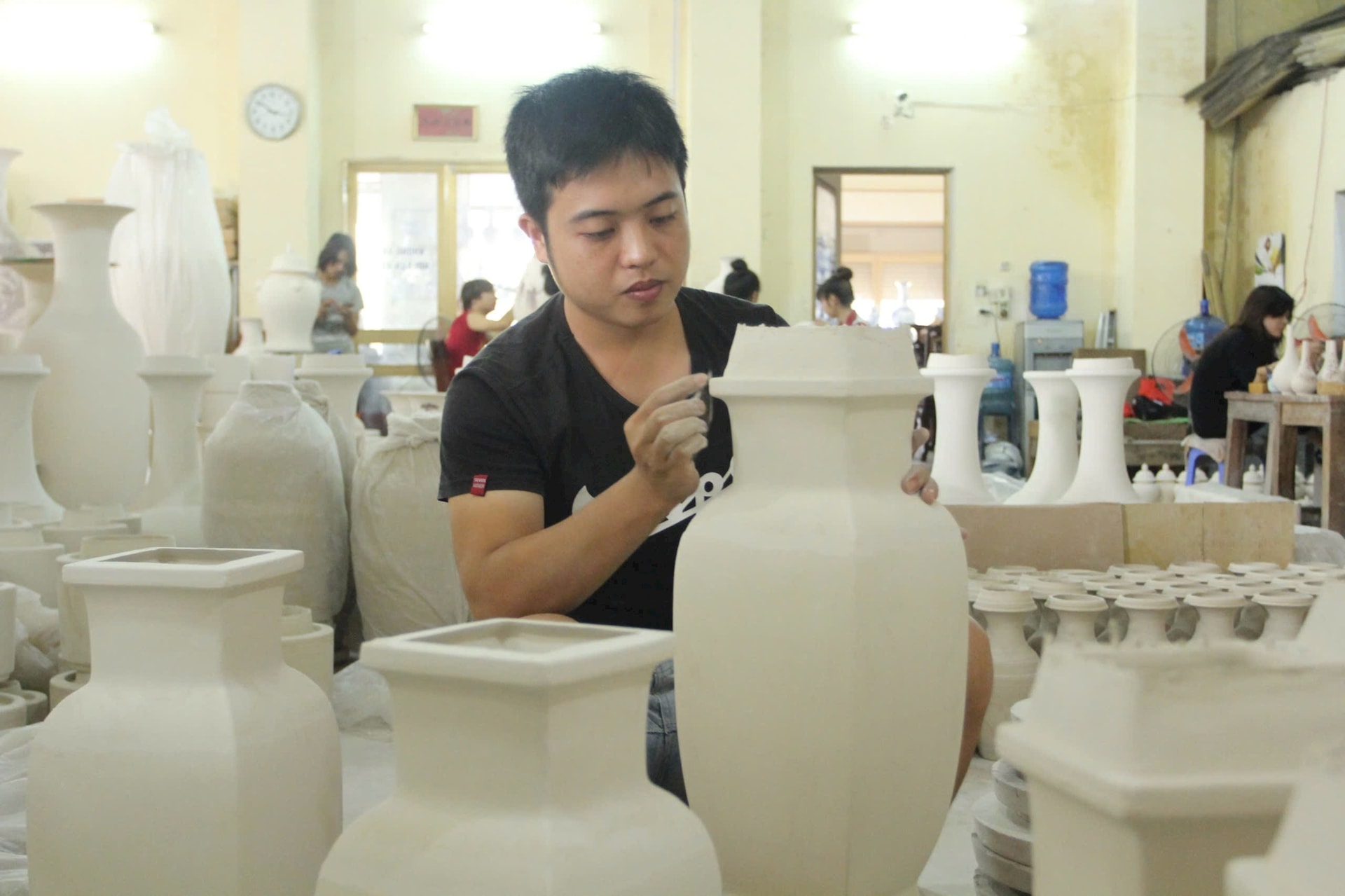
According to Do Thanh Thuan, Vice Chairman of the People's Committee of Bat Trang commune, the Bat Trang pottery village currently has nearly 200 businesses and about 1,000 households producing and trading pottery, creating jobs for thousands of workers.
The production and business value of the craft village reaches over 2,000 billion VND per year, contributing to an average income of approximately 87-90 million VND per person per year.
Preserving traditional crafts while proactively innovating, the people of Bat Trang are gradually asserting their position as a long-standing craft village – where products made from clay not only possess practical value but also carry the cultural stories of the Vietnamese people.
From familiar items like bowls, plates, and teapots to high-end art and decorative ceramics, the products of the craft village are becoming increasingly diverse in design and quality.
According to representatives of the Bat Trang Commune People's Committee, Bat Trang pottery not only serves the domestic market but is also exported to many places such as Japan, South Korea, and Europe, bringing significant income to local people.
As a result, pottery making not only helps preserve traditional cultural values but also creates jobs, increases income, and contributes to the economic development of the locality.
Innovation helps traditional crafts stay alive.
According to artisan Nguyen Trong Nghia from Bat Trang pottery village, creativity has always been important. Especially nowadays, science and technology contribute to bringing creative ideas to a wide range of people everywhere.
According to the artisans, creative ideas will help the craft village keep the craft alive and develop faster. In Bat Trang commune, many elderly people pass on their skills and preserve the craft for the younger generation.
However, preserving the craft is not simply about copying the ideas of those who came before; rather, young people inherit the methods of their predecessors, and from there develop and create new designs and firing techniques to suit the market.
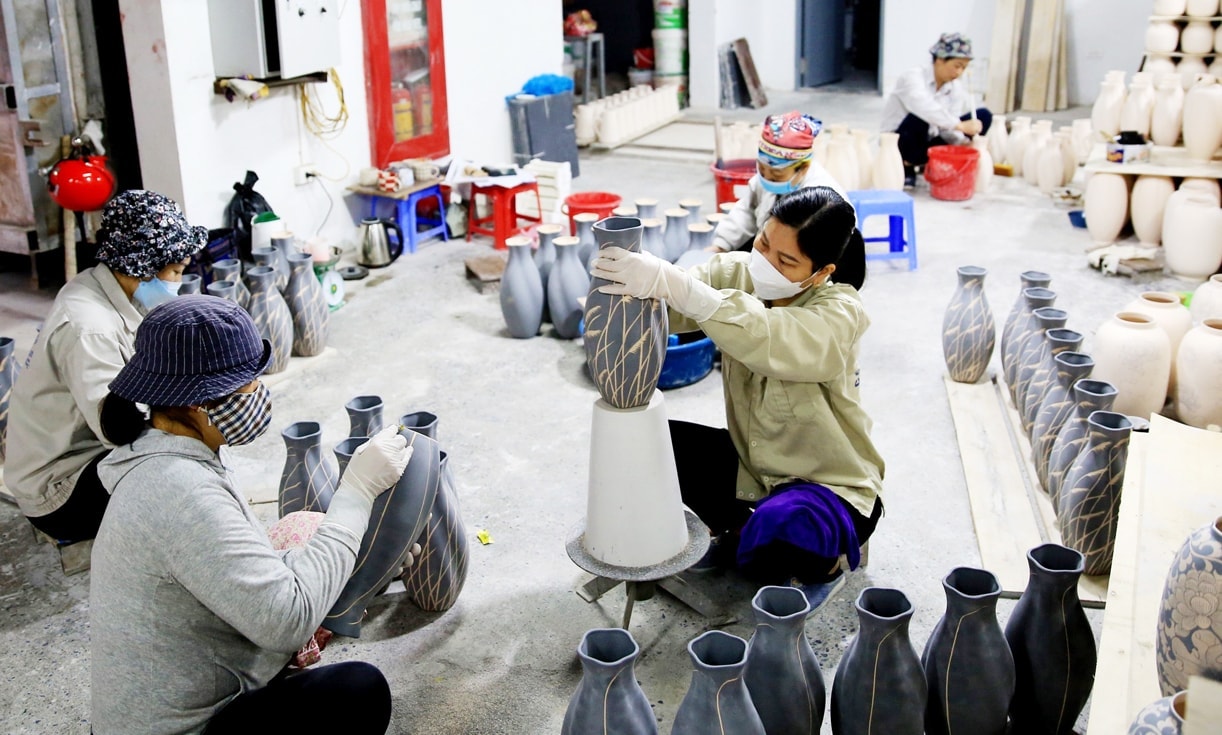
The Vietnamese market is constantly changing in line with global market trends. Therefore, innovation is the most important factor for the development of Bat Trang pottery in particular, and Vietnamese pottery in general.
Throughout his creative journey, young light sculptor Bui Van Tu has continuously sought out new materials to expand his artistic language.
While previously he primarily used wood and recycled materials to create experimental light sculptures, recently Bat Trang ceramics have become an important material in his creations.
Innovative experiments such as the light sculpture art of artisan Bui Van Tu are adding a new perspective to the craft village space, showing that when tradition meets creativity, Bat Trang pottery village can open up many opportunities for tourism development and spread cultural values.
For the sustainable development of traditional craft villages.
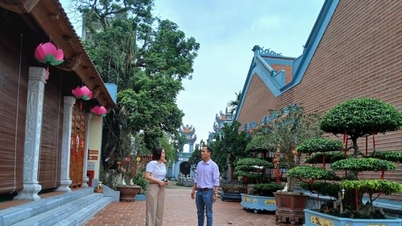
Beyond being just a production center, Bat Trang commune is becoming an attractive cultural and tourist destination in Hanoi. Every year, the village welcomes hundreds of thousands of visitors who come to tour, experience pottery making, and learn about the story of this ancient craft.
In their journey to preserve and develop the traditional pottery craft, the innovative efforts of the people of Bat Trang commune are gradually gaining international recognition.
In 2025, a significant milestone will be the recognition of Bat Trang pottery village (along with Van Phuc silk village), as the first two craft villages in Vietnam to be recognized as members of the Global Creative Cities Network.
According to artisan Ha Thi Vinh, President of the Hanoi Handicraft and Fine Arts Association, this event not only affirms the value of traditional Vietnamese handicrafts in general, and Hanoi in particular, but also opens up opportunities for handicraft products to continue to reach further into the international market.
Having had the opportunity to visit many craft villages around the world, artisan Ha Thi Vinh said that she understands that the development of craft villages in general, and Bat Trang in particular, must be closely linked to preserving the national cultural identity.
The artisans also emphasized the role of science and technology, highlighting the need for innovation and the application of science and technology to create high-quality, distinctive products that evoke emotions in buyers and suit various markets.
The knowledge and technology applied by the people have helped Bat Trang pottery village reach a new turning point, introducing modern kiln technology into production. And it is precisely from this transformation that Bat Trang pottery today has the conditions to develop strongly, improving the quality and value of its products.
Artisan Ha Thi Vinh also emphasized the human element, because "every villager can become a tour guide, a storyteller of the village; each household is a link in the large museum of pottery that our ancestors left behind..."
Mr. Do Thanh Thuan, Vice Chairman of the People's Committee of Bat Trang commune, said that the local government has identified the environment as a particularly important issue for the sustainable development of the Bat Trang pottery village .
In the coming period, the commune will continue to promote solutions for environmental management and protection. The focus will be on raising awareness and encouraging people to switch to kiln technology, planning industrial clusters, and centralized waste treatment.
Bat Trang commune is focusing on promoting and encouraging households engaged in production and business to completely eliminate charcoal kilns and switch to 100% gas or electric kilns, thereby reducing serious air pollution and dust.
In addition, local authorities are focusing on planning and relocating small-scale production households to industrial clusters (covering tens of hectares), which helps to manage waste and wastewater centrally. Ceramic waste is also collected for recycling into construction materials or for land leveling, instead of being dumped indiscriminately.
With decisive environmental management and treatment, Bat Trang commune is determined to effectively control pollution and create a healthier living environment for the craft village. This is a prerequisite for promoting the sustainable development of Bat Trang craft village and its integration into the international community.
Source: https://hanoimoi.vn/dua-gom-bat-trang-vuon-ra-the-gioi-737436.html
![[Photo] General Secretary and President To Lam presides over a working session with the Central Policy and Strategy Committee on the development of the materials industry.](https://vphoto.vietnam.vn/thumb/1200x675/vietnam/resource/IMAGE/2026/05/21/1779359935432_a3-bnd-3129-1412-jpg.webp)
![[Photo] National Assembly Chairman Tran Thanh Man working with the Standing Committee of the Law and Justice Committee](https://vphoto.vietnam.vn/thumb/1200x675/vietnam/resource/IMAGE/2026/05/21/1779378929214_ndo_br_1-4610-jpg.webp)






















































































Comment (0)