

Energy sector
Today, May 21st, the online newspaper Dai Doan Ket published the following information: Draft Law on Petroleum (amended): Encouraging organizations and individuals to invest in and research carbon emission reduction.
The Ministry of Justice recently held a meeting of the Appraisal Council for the draft Law on Petroleum (amended). According to the draft submission for the amended Law on Petroleum, which will replace the 2022 Law on Petroleum, it is based on five policies approved by the Government in Resolution No. 81/NQ-CP dated April 3, 2026. Among these, Policy 5 provides a framework for reducing greenhouse gas emissions, capturing and storing carbon in oil and gas activities.
Accordingly, the State encourages Vietnamese and foreign organizations and individuals to invest in, research, and implement CCS activities in oil and gas operations in Vietnam to reduce carbon emissions in potential areas, deep-water and offshore regions, contributing to the country's economic development and protecting Vietnam's legitimate rights and interests in accordance with international treaties to which Vietnam is a signatory.
During the appraisal council's discussion, a representative from the Ministry of Agriculture and Environment suggested that the Ministry of Industry and Trade, the lead agency in drafting the regulations, should research and add provisions clarifying that CO2 storage activities in the marine environment must comply with the laws on marine and island resources and environment, including regulations on the allocation of sea areas and permits for dumping at sea (if any).
In addition, regulations should be added regarding the coordination mechanism between the state management agency for oil and gas and the state management agency for marine and island resources and environment in the appraisal, approval, and monitoring of CCS projects…
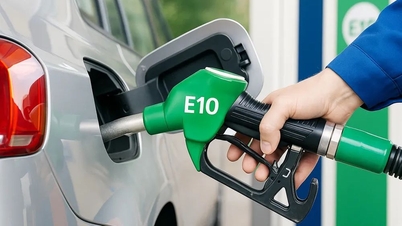
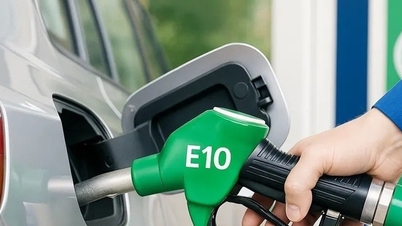
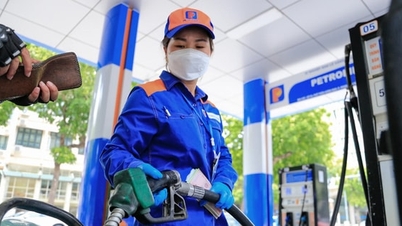
Tien Phong newspaper reports: E10 gasoline: Vietnam could spend billions of USD importing ethanol annually.
According to calculations by the Ministry of Industry and Trade, when E10 gasoline is implemented nationwide, the demand for fuel ethanol (E100) will be approximately 92,000 - 100,000 m3 per month. Meanwhile, the total domestic ethanol production currently only meets about 25,000 m3/month. This means Vietnam will have to import about 75,000 m3 of ethanol per month for at least the first year of implementation.
Mr. Dao Duy Anh, Deputy Director of the Department of Innovation, Green Transformation and Industrial Promotion, Ministry of Industry and Trade, stated that Vietnam currently has six ethanol plants, including: Dong Nai Ethanol Plant, Quang Nam Ethanol Plant, Dung Quat Biofuel Plant, Binh Phuoc Biofuel Plant, Dai Viet Ethanol Plant, Dak To Ethanol Plant, and Phu Tho Biofuel Plant.
However, the majority of these projects were invested in many years ago, some of which were previously on the list of underperforming projects in the industry and trade sector and required lengthy restructuring. For a long time, only about 2-3 factories maintained relatively stable operations, such as the Tung Lam Alcohol Factory (Dong Nai) and the Dai Tan Alcohol Factory (Quang Nam), while many other projects were still in the process of restarting or converting technology.
According to representatives from the Ministry of Industry and Trade, ethanol currently has a fairly abundant supply globally from major markets such as the US, Brazil, India, China, Thailand, and the Philippines. This is considered a factor that helps alleviate concerns about the risk of supply shortages in the initial phase of E10 implementation.

There is a huge demand for imported ethanol to support Vietnam's upcoming rollout of E10 gasoline.
Import and export sector
The Nhan Dan newspaper published an article titled: Brazil's coffee exports could reach a record high in history.
On May 20th, the Brazilian Coffee Industry Association announced that the country's coffee exports could reach a record high in the 2026-2027 crop year, thanks to a strong recovery in production and continued high international demand. Exports in the new crop year could reach approximately 50 million 60kg bags, equivalent to about 3 million tons, surpassing previous records. High international coffee prices in recent months are encouraging farmers and businesses to significantly increase exports.
According to the Brazilian Coffee Exporters Council (Cecafé), in 2025, Brazil exported approximately 44.9 million bags of coffee, generating over $10 billion in revenue – the highest ever for the country's coffee industry. In the first quarter of this year alone, export value continued to increase sharply thanks to the high price of arabica coffee on the international market, driven by concerns about global supply shortages. Brazil is currently the world's largest producer and exporter of coffee, accounting for approximately 35-40% of global supply, particularly for arabica and robusta varieties.
According to the U.S. Department of Agriculture (USDA), Brazil's coffee production for the 2026-2027 crop year could reach over 66 million bags, a significant increase compared to the previous year thanks to favorable weather conditions in key coffee-producing states such as Minas Gerais, Espírito Santo, and São Paulo.
The Nguoi Lao Dong newspaper reports: The reason why Vietnam ranks second in the world for rice imports.
The U.S. Department of Agriculture (USDA) forecasts that Vietnam will import approximately 3.9 million tons of rice in 2026, increasing to 4 million tons in 2027. With this volume, Vietnam will continue to be the world's second-largest rice importer this year, after the Philippines with approximately 5.5 million tons; surpassing China (3.3 million tons), Nigeria (2.9 million tons), the European Union (EU) with approximately 2.3 million tons, and Iraq with approximately 2 million tons.
However, for those in the rice industry, the above figure is not too surprising. Dr. Dao Minh So, Head of the Plant Breeding Department at the Southern Institute of Agricultural Science and Technology, said that Vietnam currently mainly imports raw rice rather than finished rice products.
According to Mr. So, in many provinces bordering Vietnam and Cambodia, Vietnamese people rent land to grow popular rice varieties in the Mekong Delta such as IR50404, OM5451, OM85, or IR4625 (glutinous rice), then bring them back to Vietnam for consumption and processing. "Cambodia still has a lot of uncultivated rice land, so the soil is quite fertile, and the rental price is much lower than in Vietnam. Currently, land rental prices in Cambodia range from about 100 - 300 USD/ha, equivalent to 2.6 - 7.8 million VND/ha, while in the Mekong Delta it is commonly from 15 - 26 million VND/ha," Mr. So informed.
This is an inevitable trend of the market economy as agricultural labor in Vietnam is gradually shifting to other sectors, while land is concentrated in the hands of professional producers. "Cambodia's rice production is still quite backward and heavily dependent on inputs from Vietnam such as seeds, fertilizers, pesticides, and even output," Mr. So commented.
Domestic market sector
The website suckhoedoisong.vn published the following information: A 'boom' in branded goods promotions is about to happen in Nha Trang.
On May 21st, the Department of Industry and Trade of Khanh Hoa province announced the "Nha Trang Mega Sale 2026" promotional program for branded goods. The program will take place from May 27th to May 31st at 60 Tran Phu Street (Nha Trang Ward, Khanh Hoa), featuring a wide variety of high-quality products with clear labels.
According to the Department of Industry and Trade of Khanh Hoa province, the branded goods promotion program is a trade promotion and consumer stimulus activity organized in the context of Khanh Hoa province entering the peak season of beach tourism, aiming to strengthen the connection between supply and demand. The program contributes to expanding the market for branded products, while creating more opportunities to serve the shopping and experiential needs of local people and tourists.
The first-ever large-scale branded goods promotional event in Nha Trang is expected to add a highlight to tourism and trade activities in Khanh Hoa province this summer.
The organizers of the "Nha Trang Mega Sale 2026" brand promotion program announced that, according to the plan, the event will bring together more than 350 domestic and international brands across various categories such as fashion, cosmetics, perfumes, watches, sports equipment, household goods, health care, etc., with discounts ranging from 10% to 80%.
Trade defense sector
The website thuonggiaonline.vn published an article titled: DOC investigates anti-dumping of PTMEG products, Trade Remedies Department issues urgent recommendations.
According to the Trade Remedies Department of the Ministry of Industry and Trade, the product under investigation by the DOC is PTMEG (polytetramethylene ether glycol), also known as PTMG, PTHF, or polybutylene glycol - US HS code 3907.29.0000, and may also be imported under HS codes 2932.11.0000 and 3404.90.5150. The alleged dumping margins for Vietnam range from 100.61% to 151.47% (using Jordan as a surrogate country), from 138.11% to 201.99% (using El Salvador as a surrogate country), and from 149.88% to 212.32% (using Indonesia as a surrogate country). The Vietnam Trade Remedies Authority recommends that exporting businesses fully cooperate with the DOC, submit investigation responses on time to avoid the application of adverse data (AFA) and high tariffs, and proactively monitor the case, review data, and coordinate closely with lawyers, importers, and regulatory agencies.
Source: https://moit.gov.vn/tin-tuc/diem-bao-nganh-cong-thuong-ngay-21-5-2026.html































































Comment (0)