

Proactively meet blending needs.
At a meeting with the Central Propaganda and Mass Mobilization Department on May 26, the Ministry of Industry and Trade reported on the process of drafting and issuing Circular No. 50/2025/TT-BCT dated November 7, 2025, which stipulates the roadmap for applying the blending ratio of biofuels with traditional fuels in Vietnam.
Immediately after Circular 50 was issued, the Ministry of Industry and Trade coordinated with relevant ministries, sectors, localities, businesses, and industry associations to implement the contents of the Circular, such as: preparing the supply of mineral gasoline and E100; preparing the infrastructure for storing and blending E10; upgrading and preparing the infrastructure for distributing E10 gasoline to consumers….
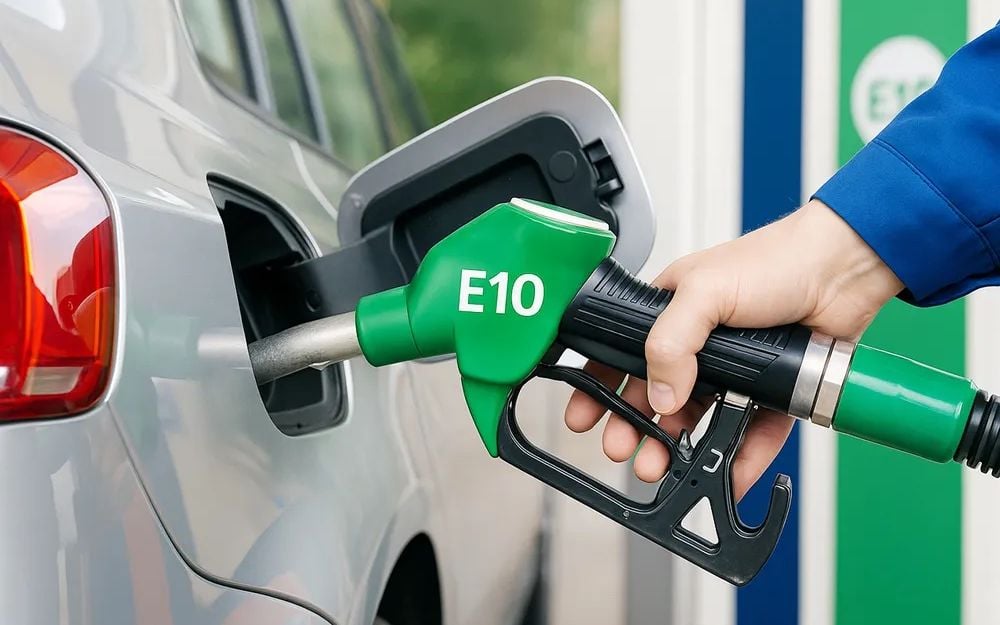
The use of biofuels is an inevitable trend.
To date, the information regarding these issues is as follows: Regarding the supply of ethanol (E100), with the national gasoline consumption at approximately 1 million m3/month, the required amount of E100 is about 100,000 m3/month. Domestic production currently accounts for about 25,000 m3/month, and imports account for about 75,000 m3/month. Essentially, businesses have proactively secured enough to meet the blending needs.
Regarding blending capacity, according to reports from petroleum wholesalers, as of April 23, 2026, 13 out of 26 petroleum wholesalers nationwide have invested in or are in the process of investing in biofuel blending stations. Of these, 3 enterprises have blending capacities of 455,000 m3/month (expanding to 550,000 m3/month) for Petrolimex ; 320,000 m3/month for PVOil; and 120,000 m3/month for Ho Chi Minh City Petroleum Company Limited (Saigon Petro).
The combined capacity of these three businesses is approximately 890,000 m3/month. With an average gasoline consumption of about 1 million m3/month, the blending capacity of the three licensed units accounts for 89% of the domestic gasoline supply (if 100% is E10) and approximately 96% of the domestic gasoline supply (if 85% is E10 and 15% is E5); there are 10 businesses awaiting licenses to blend E10 gasoline with a capacity of approximately 297,600 m3/month.
Therefore, if the aforementioned 10 businesses are licensed to blend and mix, the blending and mixing capacity of all 13 businesses will reach approximately 1,178,600 m3/month, exceeding the blending and mixing demand (1 million m3/month) for supplying E5 and E10 gasoline nationwide.
Additionally, the Binh Son refinery can also blend E5 and E10 bioethanol with a capacity of approximately 20,000 - 40,000 m3/month in May 2026 and 70,000 - 90,000 m3/month from June 2026 onwards, when required.
Regarding distribution infrastructure to consumers, according to the Ministry of Industry and Trade, petroleum distribution infrastructure is the final link in the supply chain and plays a decisive role in bringing E10 bioethanol to the market.
Unlike production and blending, the current distribution system has been comprehensively invested in nationwide, including wholesale warehouses, main depots, retail outlets, and logistics systems. Therefore, the conversion from RON95 mineral gasoline to E10 mainly involves upgrading and adjusting operations, and does not require large-scale new infrastructure investment.
In fact, the entire retail system already has experience selling E5RON92 gasoline, so it can basically accept and distribute E10 without major technical obstacles. However, the storage tanks, pumps, pipelines, and transport vehicles currently used for RON95 mineral gasoline must be cleaned and upgraded to be compatible with E10RON95 gasoline, thus incurring costs and potentially causing temporary disruptions to business operations.
The distribution systems of large enterprises to consumers for gasoline basically do not face many difficulties in handling the above-mentioned issues, such as the two largest distributors, Petrolimex and PVOil, which currently account for about 70-75% of the retail gasoline market share.
PVOil has been testing E10 distribution in Hanoi and Hai Phong since the beginning of August 2025 and will officially distribute E10 gasoline throughout its system of nearly 1000 gas stations nationwide from May 15, 2026; Petrolimex is testing E10 sales at some stations in Ho Chi Minh City and Vung Tau and will officially distribute it throughout its system from May 20, 2026. It can be said that major businesses have joined the initiative, and other units are also preparing plans to participate in the roadmap.
In fact, with the nationwide distribution of E5 gasoline since January 2018 and the testing and distribution of E10 gasoline from August 2025 in some localities and from mid-May 2026 nationwide by PVOil and Petrolimex as mentioned above, the Ministry of Industry and Trade and the enterprises that have distributed E10 gasoline have not received any official complaints from users regarding the quality of E5 and E10 bio-gasoline or any negative impacts on engine performance and lifespan.
The use of biofuels is necessary.
The use of biofuels and bioethanol is a sound policy of the Government, implemented since 2012 by Decision No. 53/2012/QD-TTg of the Prime Minister. In the context of developing a green, low-carbon economy, reducing dependence on fossil fuels for sustainable development, and contributing to national energy security, increased use of biofuels and bioethanol is essential.
Speaking at the meeting, Deputy Minister of Industry and Trade Nguyen Sinh Nhat Tan said that using E10 gasoline helps reduce greenhouse gas emissions, protect the environment, and reduce dependence on fossil fuels, which are becoming increasingly depleted through exploitation. "According to international experience, more than 60 countries are now using E10 gasoline, and even E15 and higher," the Deputy Minister said.
The Deputy Minister also stated that, through inspections and feedback from manufacturers and automotive associations, all types of vehicles are suitable for using E10 gasoline.
Regarding the quality of gasoline, especially E10 gasoline, the Deputy Minister stated that several indicators need attention. Firstly, the base gasoline blended with ethanol; secondly, the blending ratio to ensure compliance with standards and regulations issued by the Ministry of Science and Technology; and thirdly, inspection and control at blending facilities as well as gasoline retail outlets.
In addition, it is necessary to regularly receive feedback and suggestions from production facilities and consumers in order to promptly work with relevant authorities to handle and strictly deal with cases of quality violations.
According to the Deputy Minister, based on that, the Ministry of Industry and Trade has provided additional information and, in particular, has had the participation and support of experts to analyze and evaluate the impact and effectiveness of the product. "In addition, we will continue to develop more comprehensive user manuals in the future," the Deputy Minister said.
The leaders of the Ministry of Industry and Trade also acknowledged that throughout the process of developing and implementing the biofuel roadmap, the Ministry of Industry and Trade has always received attention and support from media and press units nationwide.
Therefore, in the coming period, the Ministry of Industry and Trade hopes that, when the biofuel roadmap is officially implemented nationwide, media and press units across the country will continue to cooperate and provide accurate information about the significance of biofuels and their use to gasoline users and the entire society to create consensus and support for a policy with significant environmental, socio-economic, and energy security implications for the Party and Government.
The International Energy Agency (IEA) reports that more than 60 countries have implemented mandatory ethanol blending policies, with E10 being the most common. This trend is strong in the US, Europe, Brazil, Thailand, Australia, and many Asian countries as a way to reduce dependence on fossil fuels. Globally, E10 gasoline is now considered a common fuel standard, no longer a substitute or experimental product as it was in the past. In the US, the biofuel market has developed into a relatively complete model, with E10 gasoline accounting for over 95% of the market share and ethanol production reaching approximately 60 billion liters per year. Currently, almost all gasoline consumed in the US contains up to 10% ethanol. In the European Union (EU), the RED II Renewable Energy Directive requires a minimum of 14% renewable energy share in the transport sector, thereby promoting E10 gasoline as a common standard in many countries such as Germany and France. Many EU countries have switched almost all of their RON 95 gasoline to E10 to meet emission reduction and carbon neutrality targets. The EU has also developed a flexible technical regulations system, along with a carbon certification mechanism, to control emissions throughout the fuel chain, from raw material production to final consumption. In Thailand, E10 gasoline has been used to completely replace RON 91 gasoline. The successful implementation is mainly due to maintaining a significantly lower price for E10 compared to conventional gasoline, along with consistent management policies over a long period. Similarly, in the Philippines, the Biofuels Act of 2006 mandates that all gasoline sold on the market must be blended with ethanol, with the E10 ratio being a nationwide requirement since 2011. Source: Industry and Trade Newspaper (compiled) |
Source: https://moit.gov.vn/tin-tuc/phat-trien-nang-luong/bo-cong-thuong-thong-tin-ve-van-de-su-dung-xang-sinh-hoc-e10.html


![[Photo] General Secretary and President To Lam presides over the meeting to approve the draft report on the results of the second inspection by the Politburo of the Standing Committee of the Hanoi City Party Committee.](https://vphoto.vietnam.vn/thumb/1200x675/vietnam/resource/IMAGE/2026/05/26/1779789811432_a2-bnd-4430-9620-jpg.webp)







































































Comment (0)