From the rhythm of the blue sea to realms of historical memories
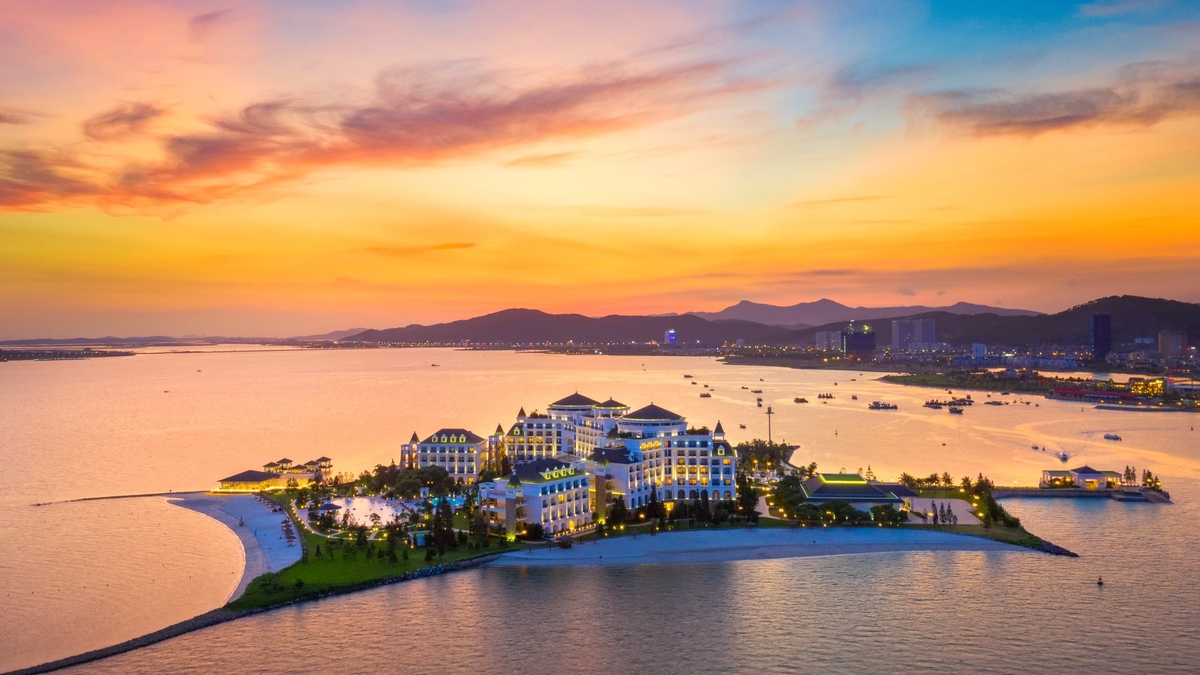
Cua Lo – one of the most famous beaches in Central Vietnam. Unlike the hustle and bustle of many large tourist cities, Cua Lo retains its spaciousness and tranquility. In the early morning, before the sun rises high, fishing boats return after a long night at sea. Fresh catches are quickly transferred ashore, creating a lively yet intimate scene of work.
Visitors to Cua Lo don't just come to swim in the sea. They seek out seafood restaurants along Binh Minh road, enjoying dishes like fresh squid, steamed crab, clam porridge, or fragrant grilled mackerel. Many choose to take a speedboat to Lan Chau Island or Hon Ngu Island to experience the pristine beauty of Nghe An's sea. In the salty sea breeze, life seems to slow down, helping visitors temporarily forget the pressures of everyday life.


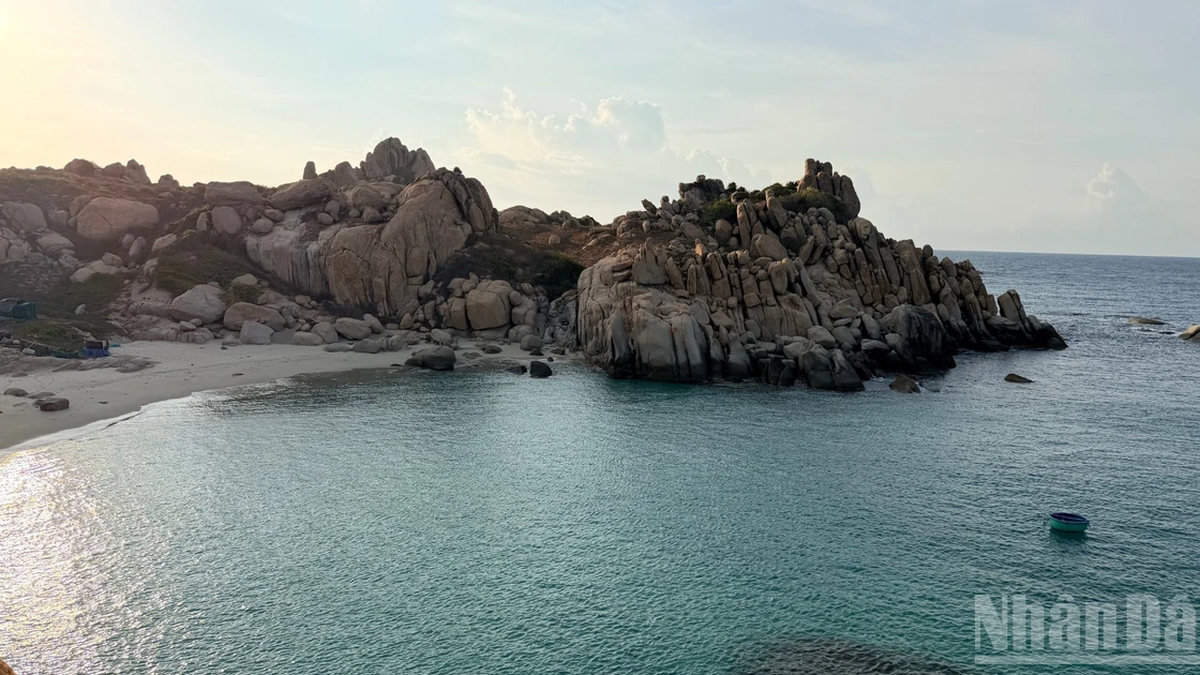
Sunrise over Cua Lo beach, Nghe An province .
Not far from Cua Lo is the Kim Lien National Special Historical Site – the birthplace of President Ho Chi Minh . This is considered the most special destination in Nghe An province due to its historical value and profound spiritual significance. Every year, millions of domestic and international tourists come here to learn about the childhood and early years of the beloved leader.
The road leading to Sen village is shaded by lush green bamboo. The simple thatched house of President Ho Chi Minh's family remains almost perfectly preserved. The small room, the wooden bed, Mrs. Hoang Thi Loan's loom, and the old wooden cupboard all evoke strong emotions in visitors. Many stand silently for minutes under that humble thatched roof, imagining the childhood of young Nguyen Sinh Cung.
Next to Sen Village is Hoang Tru Village – the maternal hometown of President Ho Chi Minh. The peaceful scenery with rows of betel trees, wells, and gardens creates a rare sense of tranquility. Many student groups visiting here often hear stories about the simple virtues and studious spirit of President Ho Chi Minh's family. These simple stories transform the trip from just sightseeing into a meaningful educational journey.
Leaving President Ho Chi Minh's hometown, tourists continue their journey to western Nghe An – where nature still retains many pristine features. The road from Vinh to Con Cuong runs along lush green mountain slopes. The further you go, the cooler and fresher the air becomes. This is where Pu Mat National Park is located – a UNESCO World Biosphere Reserve.

Tourists visit Lang Sen, the birthplace of President Ho Chi Minh.
Pu Mat impresses with its rich ecosystem, home to thousands of rare plant and animal species. Visitors can take a boat ride on the Giang River, admiring the towering cliffs reflected in the turquoise water. The gentle sound of oars blends with the chirping of forest birds, creating a unique natural symphony. Many visitors liken this place to a "miniature Amazon" of Central Vietnam.
In the heart of Pu Mat, the villages of the Thai ethnic minority still preserve many traditional cultural features. Wooden stilt houses nestle on the mountainside, and the melodies of the Khap and Lam folk songs echoing around campfires create unforgettable memories for visitors. Many local households have developed community tourism, offering homestay accommodations and introducing traditional cuisine such as bamboo rice, grilled catfish, five-colored sticky rice, and herbal rice wine.
What surprises many people is the genuine and hospitable nature of the people of Nghe An. Whether in the city or the mountains, locals are always ready to give directions, offer a cup of green tea, or tell tourists stories about their homeland. This simplicity is what creates the unique and unmistakable charm of tourism in Nghe An.
Unleashing the potential of nature and cultural identity.
Besides its beaches and forests, Nghe An also boasts many attractive spiritual and ecological destinations. Cuong Temple in An Chau commune is a place of worship for An Duong Vuong, associated with the legend of My Chau and Trong Thuy. The temple is located on Mo Da mountain, overlooking the vast fields and sea. During each festival season, it attracts a large number of locals and tourists who come to offer incense.
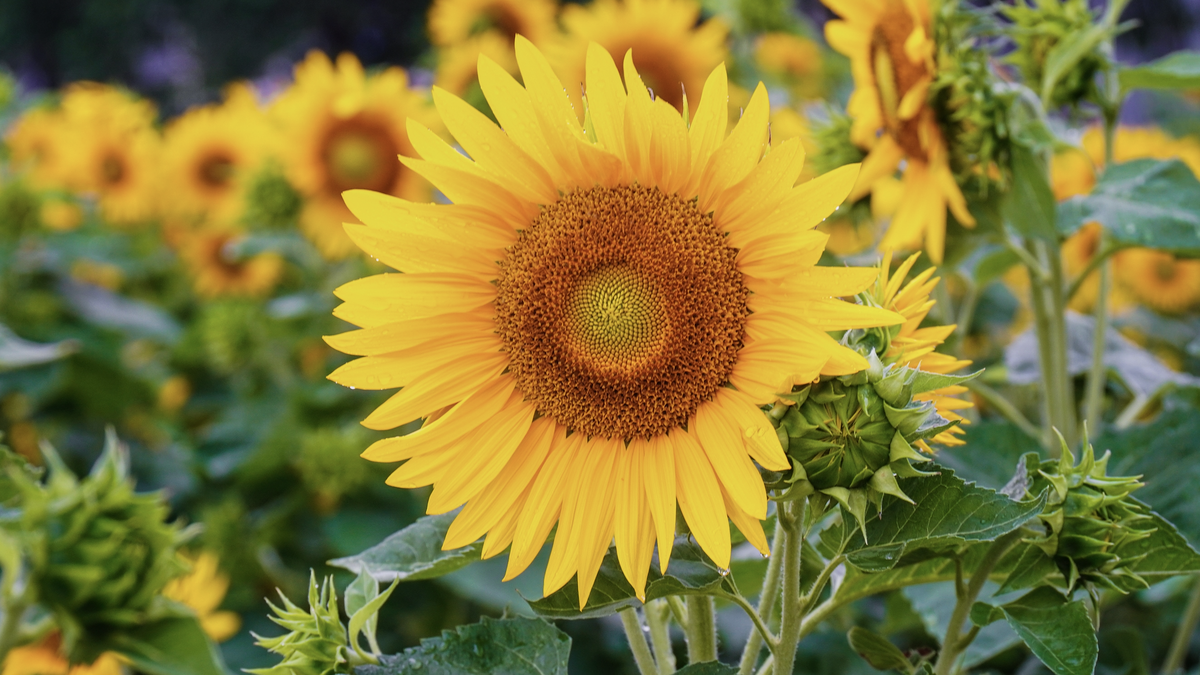
Further south lies the sunflower field in Nghia Dan. In recent years, this place has become a popular check-in spot for young people. During the flowering season, millions of bright yellow sunflowers stretch out like a giant carpet under the sun. Many tourists from Hanoi, Hai Phong, and southern provinces come here just to take photos and enjoy the fresh air.

Sunflower hill in Nghia Dan.
Nghe An tourism is also attractive because of its rich culinary treasure. When mentioning Nghe An, many people immediately think of Vinh eel porridge with its characteristic spicy flavor. Freshwater eels are cleaned, stir-fried with turmeric and shallots, then cooked with porridge to create a rich and unforgettable taste.
On January 6th, the Ministry of Culture, Sports and Tourism recognized the knowledge of preparing eel dishes in Nghe An as a National Intangible Cultural Heritage of the Folk Knowledge category. This title not only honors a renowned specialty but also affirms the value of a treasure trove of experience, cooking secrets, and a love for cooking that has been preserved through many generations.
Besides that, Nghe An province is also famous for many specialties such as Dien Chau rice noodles, Thanh Chuong fermented bamboo shoots, Nam Dan soy sauce, and Xa Doai oranges – flavors that are deeply rooted in the local identity.
At the scientific conference "Nghe An - Developing Potential and Attracting Tourism Investment," Dr. Nguyen Si Dung - former Deputy Head of the National Assembly Office and Member of the Prime Minister's Policy Advisory Council - stated that Nghe An possesses significant advantages for sustainable tourism development. The province has a long coastline, a rich system of historical relics, and the largest forest area in the North Central region. Transportation infrastructure is also increasingly improving with Vinh Airport, the North-South Expressway, and numerous inter-regional connecting national highways.

The mountainous region of Nghe An, with its diverse system of primeval forests, is seeing an increasing number of experiential tourism destinations.
However, to retain tourists for longer periods, Nghe An still needs more unique tourism products. Currently, many tours are short-term, mainly focusing on Cua Lo beach or visiting President Ho Chi Minh's birthplace. Meanwhile, destinations in the Mekong Delta lack high-quality services and professional experiential activities.
Some tourism businesses have begun investing in community-based tourism, trekking, nature exploration, and eco-tourism. This is considered a suitable direction because modern tourism trends increasingly emphasize experiences and local identity. Villages in Con Cuong, Ky Son, or Tuong Duong have the potential to become attractive destinations if properly invested in.
Amidst the rapid development of Vietnam's tourism industry, Nghe An still retains its unique, rustic, and sincere charm. This land may not be glamorous, but it possesses enough depth to make people want to return. With its unique natural and cultural values, Nghe An is gradually asserting its position as an attractive destination in the North Central region.
Source: https://tienphong.vn/cac-diem-den-du-lich-hap-dan-cua-nghe-an-post1844878.tpo



![[Photo] General Secretary and President To Lam presides over a working session with the Central Policy and Strategy Committee on the development of the materials industry.](https://vphoto.vietnam.vn/thumb/1200x675/vietnam/resource/IMAGE/2026/05/21/1779359935432_a3-bnd-3129-1412-jpg.webp)
![[Photo] National Assembly Chairman Tran Thanh Man working with the Standing Committee of the Law and Justice Committee](https://vphoto.vietnam.vn/thumb/1200x675/vietnam/resource/IMAGE/2026/05/21/1779378929214_ndo_br_1-4610-jpg.webp)







![[Photo] National Assembly Chairman Tran Thanh Man working with the Standing Committee of the Law and Justice Committee](https://vphoto.vietnam.vn/thumb/402x226/vietnam/resource/IMAGE/2026/05/21/1779378929214_ndo_br_1-4610-jpg.webp)


















































Comment (0)