

Editor's note: From a small Party cell established by the Giang River in 1931, the Party organization in western Nghe An has undergone a 95-year journey of staying close to the villages and people, sowing seeds of faith in the vast forests. This period has also created the enduring vitality of the Party organization in western Nghe An.
The series " 95 Years of the Party in Western Nghe An: Millions of Wills, One Belief " not only looks back at the historical journey of the Party organization in this border region, but also portrays the growing aspiration for development in every cadre, Party member, and citizen today.
See Article 1: A secret location from 95 years ago in Muong Qua becomes a special national historical site.
A part of community life
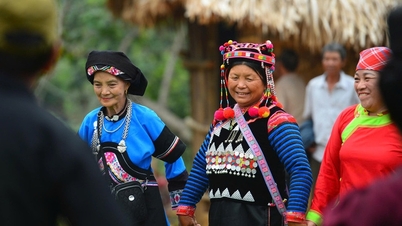
For the past 95 years, the Party organization has ceased to be a concept "at the top," and has become an integral part of the lives of the ethnic minority communities here.
In the border commune of Na Ngoi, the story of Party member Vu Chong Pao (1930-2015) - a Hero of the People's Armed Forces - is still recounted by the people with respect. He joined the revolution early and worked as a commune official, but it wasn't until 1963 that Mr. Pao officially joined the Party. At that time, he was 33 years old.

This Hmong man spent his entire life traveling through villages, persuading people to eradicate opium cultivation, believe in the revolution, and not listen to the bandits led by Vang Pao. For the Hmong people in the border region of Nghe An, Vu Chong Pao is truly a "pioneer."
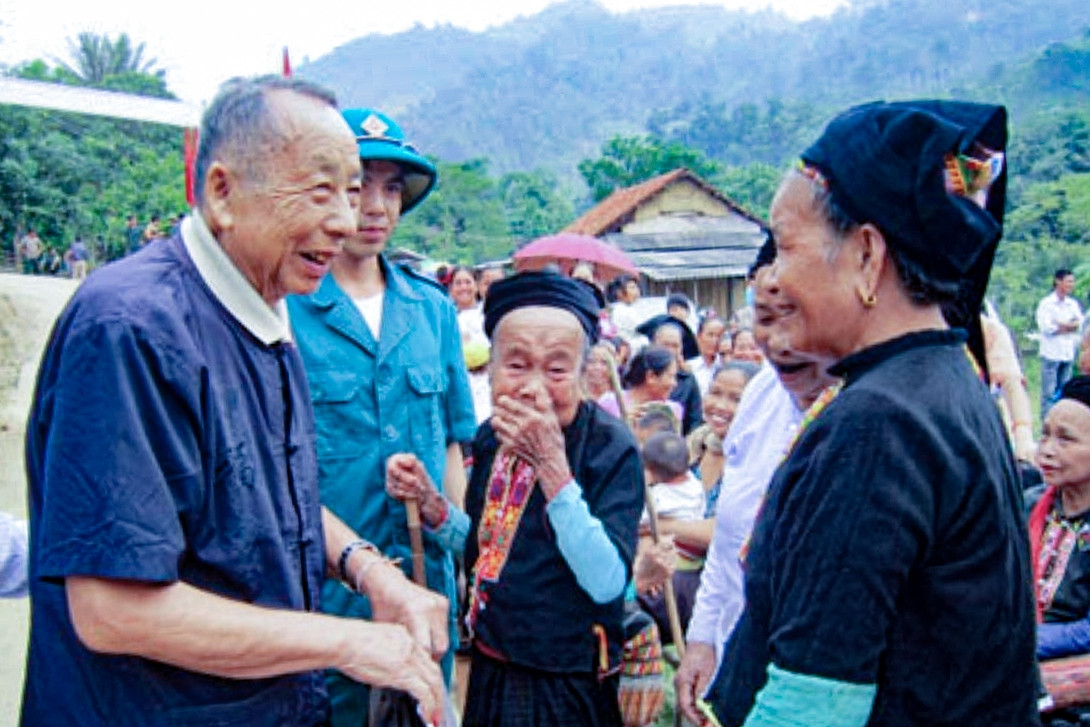
Following in their father's footsteps, Mr. Pao's two sons and four sons-in-law also strived to join the Party. Vu Ba Vu (born in 1959), Mr. Pao's second son, recalled: "My father often said, 'The Hmong people suffered a lot in the past. Thanks to the Party, we have literacy, cadres, roads, and peace. Therefore, we must study to join the Party and help our people.'"
In western Nghe An today, families and clans with generations of Party support are no longer uncommon.
In Pha Mut village, Nhon Mai commune, Mr. Xong Cha Xia was the first Party member in the village (in 1990). In his old wooden house perched precariously on the mountainside, the Hmong man, born in 1961, recounted that when he joined the Party, only a few people in the village were literate.
By early 2026, the western region of Nghe An province will have more than 27,300 Party members from ethnic minority groups . During the 2020-2025 term alone, 4,460 ethnic minority Party members were admitted.
In his wooden home, it was Xong Cha Xia himself who encouraged, enlightened, and nurtured the ideals of his five sons from a young age, so that they successively joined the ranks of the Party.
From Mr. Xia's story, I understand even more deeply the Hmong people's reasoning about the Party: The difficulty in joining the Party is that you have to give up the good and convenient things for your fellow villagers first, and only then will it be your turn. If you are a Party member and a village official, and you do all the easy things yourself, who will listen to you, and who will believe you?
Compared to their father, Xia's sons joined the Party earlier. Xong Ba Cua joined at the age of 20, Xong Ba Tru at 21, Xong Ba Tong and Xong Ba Tua at 25, and Xong Ba Co at 31.

In Muong Long commune, the Va family is considered a "shining example" of the tradition of following the Party.
Mr. Va Ba Lenh, Head of the Party Building Committee of Muong Long commune, said: "The entire commune has 355 Party members, and the Va family alone has 85 members. Among them are many veteran Party members with 40, 50, and 60 years of Party membership."
"In Muong Long, the Va clan has always been a core force in the commune's movements," Mr. Lenh said.
What is remarkable is that faith in the Party in western Nghe An is not conveyed through slogans. It is passed down from generation to generation through the very changes in life.
When the resolution reaches every household.
Not only have Party branches grown in number, but they have also truly become centers for leadership, guidance, and organization of community life at the grassroots level, becoming an important part of community life.

These advantages are due to a rich history; the Party has earned the people's trust and serves as a guiding principle for all actions.
The outstanding feature of the Party branches in western Nghe An lies not in their size, but in their leadership effectiveness. And, what were once "rigid" in terms of policies and resolutions have gradually permeated into daily life, becoming part of everyday activities throughout the villages.
“ Party committees and branches in ethnic minority villages and hamlets have closely followed their functions and duties, effectively demonstrating their leadership and guidance in implementing the Party's guidelines and policies, and the State's laws on socio-economic development, maintaining national defense and security, preserving culture, and preventing social evils, especially drug abuse…” , said Mr. Pham Trong Hoang, Head of the Organization Department of the Nghe An Provincial Party Committee.
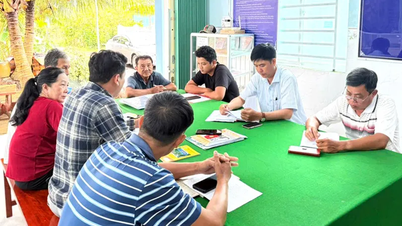
In Dom 1 village, Hung Chan commune, Party Branch Secretary Bui Thi Phuc (born in 1983) still remembers the time the Party branch held a meeting with the villagers to discuss abolishing alcohol at funerals.
"It was very difficult at first! But I explained to the villagers that drinking alcohol is both expensive and harmful to health, and can easily cause disunity. Only when the people agreed did the Party branch include it in the resolution," Ms. Phuc recounted.
After numerous meetings, the entire village unanimously agreed to establish a set of regulations: No drinking alcohol at funerals, no domestic violence, and no allowing livestock to roam freely. All 191 households signed a commitment to abide by these rules. Anyone who violates them will be fined and have to contribute to the village fund. What is commendable is that these regulations were not imposed from above but were discussed directly during Party branch and village meetings.

In Boong village, Chau Khe commune, Party branch secretary Kha Van Nam (born in 1979) has been considered the "locomotive" in the economic development movement for many years.
In addition to encouraging villagers to grow grass for cattle and goats, cultivate bananas, and protect the forest, the Party branch also developed an 8-chapter, 25-article village charter covering all aspects of village life, from marriage customs to forest protection, from economic development to maintaining security and order... Thanks to this consensus, the entire village now has only a few poor households.
"The Party branch must be a place where the people trust in order to mobilize them," said Mr. Kha Van Nam.

Vu Y Do (born in 1982) from Luu Thong village, Tuong Duong commune, is another interesting story. Y Do is the first female Party member in the village, and also the first female Party branch secretary in Luu Thong village.
To reach that position, this Hmong woman had to overcome many prejudices from her family, clan, and village. "I was once told that women with little education didn't know anything to be officials," Y Dở recalled.
But then it was Y Dở who took the initiative to persuade the villagers to abandon outdated customs, to stop spontaneous migration, and to prevent their children from dropping out of school. The Party branch led by Y Dở also introduced many economic models to the village for the villagers to adopt, such as fattening cattle, growing bananas for leaves, and reforestation.
What Ms. Y Dở is most proud of is not her position, but the fact that people are beginning to believe that women can also do many things for the village. "Before, people thought the Party was far away. Now, the Party branch is right in the village, and the Party members are our relatives and family members," Ms. Y Dở shared.
Perhaps that is also why, for the past 95 years, the Party organization in western Nghe An has maintained its enduring vitality. Because the Party does not stand outside the community but becomes an integral part of it.
Lesson 3: The desire to transform a region
Source: https://vietnamnet.vn/95-nam-mien-tay-nghe-an-co-dang-nhung-dong-ho-nhieu-the-he-di-theo-dang-2515849.html





























































Comment (0)