
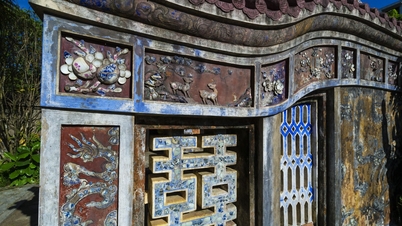
Ceramic mosaics decorate the panels on the screen of the Tuy Lý King's shrine.
The term "phủ đệ" generally refers to the residences of princes and princesses. After their deaths, these residences become ancestral temples. Each residence has its own name, based on the title bestowed upon its owner. For princes, the names are derived from the districts of the provinces where they were granted titles by the king, such as: Tùng Thiện Prince's Residence, Tuy Lý Prince's Residence, Gia Hưng Prince's Residence… For princesses, their residences are usually named after the titles given to them by the king, such as: An Thường Princess's Residence, Ngọc Lâm Princess's Residence, Ngọc Sơn Princess's Residence… However, the common people still affectionately refer to these residences as "the prince's residence" or "the princess's residence."
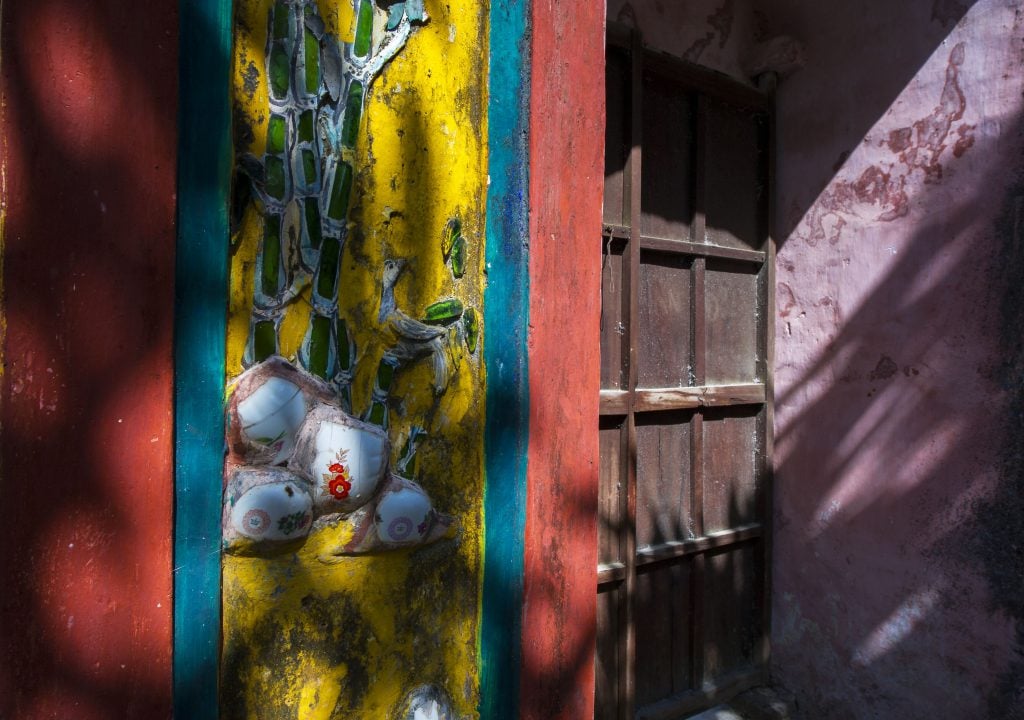
A corner of the gate of the Tuy Ly King's shrine.
During its heyday, the imperial capital of Hue boasted over a hundred mansions, but today only about 50 retain their traditional architecture and style, concentrated in areas such as Vy Da, Gia Hoi, Kim Long, Phu Cam, and Thuy Bieu. Due to the noble status of the emperors and empresses, these mansions featured large gates, high walls, and beautiful traditional houses. However, few people truly understood the life behind these walls. The mansions served as a conduit for the transmission and dissemination of courtly lifestyle and culture to the common people, thus contributing to the formation of the character of the people of Hue, blending the elegance and refinement of the imperial capital. They were also gathering places for contemporary Hue artists and writers, meeting places for poets and scholars to compose verses and poetry.
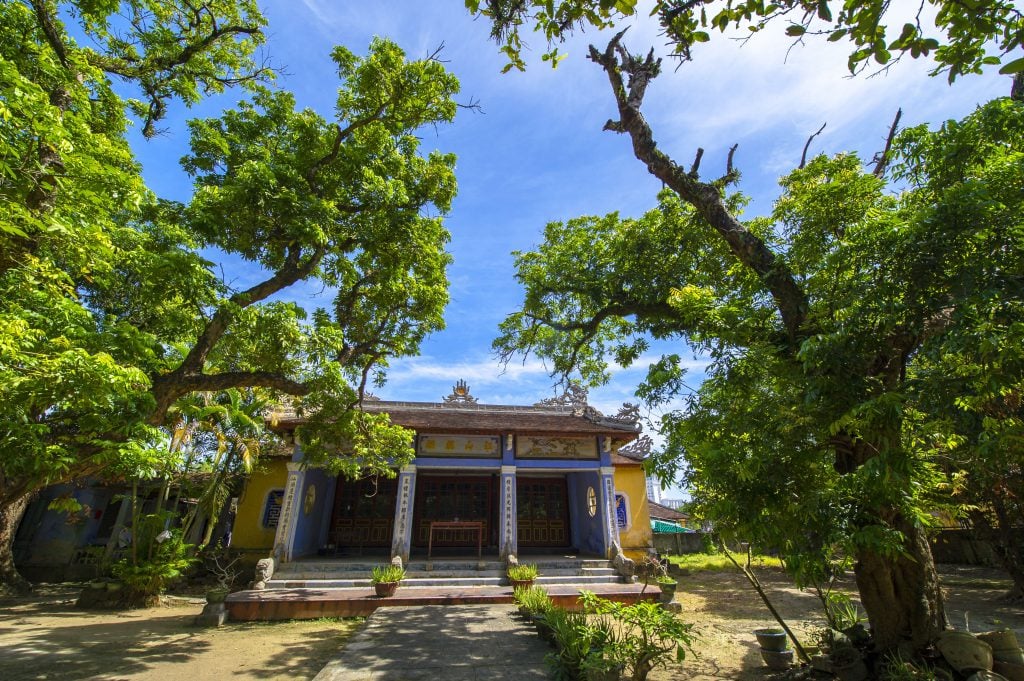
Panoramic view of the Kien Thai King's shrine.
These mansions demonstrate a deliberate combination of architecture and landscape, adhering to the principles of " feng shui ." It can be said that the architecture of these mansions resembles a miniature Hue Imperial City, with screens representing Mount Ngu, water features symbolizing the Perfume River, rock gardens, caves, waterfalls, and various ornamental plants and flowers… all possessing unique cultural and artistic value.
The mansion was built thanks to the talent and efforts of court artisans and the use of rare local materials. It is a work of architectural art that has been refined and perfected over many generations. The mansion's layout is always designed symmetrically, creating a harmonious, refined, and poetic beauty. The entrance to the mansion is a winding path between two rows of tea plants and two rows of betel nut trees; next is a screen wall sufficient to shield the house from all external misfortunes, but not so high as to obstruct the owner's view when they wish to admire the fragrance and beauty of the herbs in the garden. Between the screen wall and the house is a shallow pond planted with water lilies and a miniature rock garden.
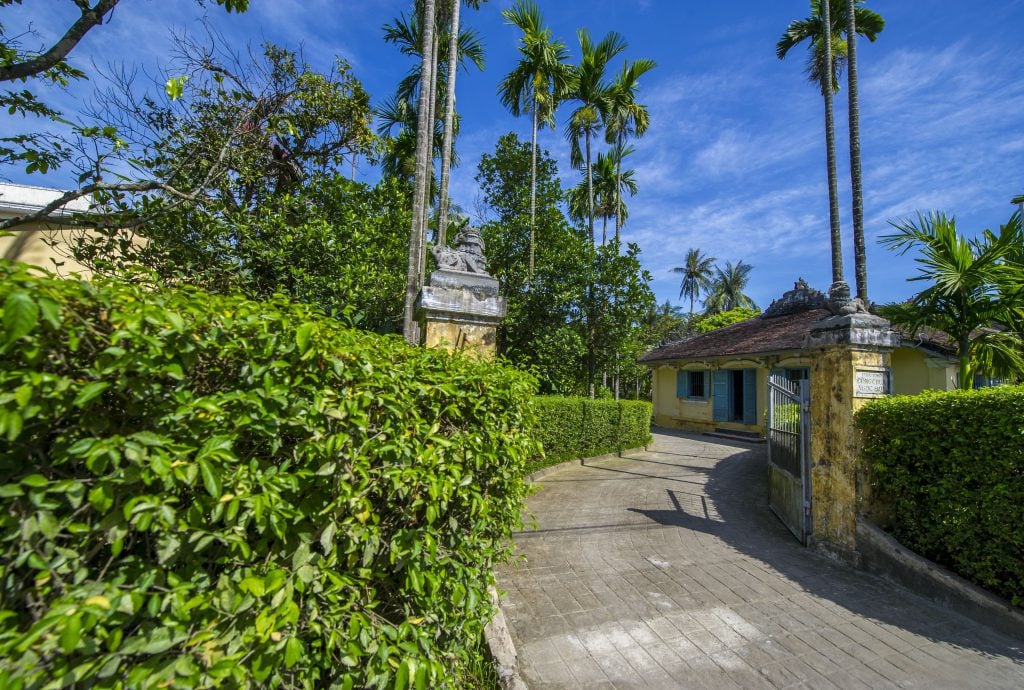
The main architecture is a traditional three-bay, two-wing house with a tiled roof. The truss system is intricately carved with exquisite patterns. The ancestral worship room is in the central bay, while the main reception area is usually the front central bay or the east wing. The west wing is the family's living quarters. Gold-plated Chinese calligraphy scrolls and poems are hung in the center of the main bays, and couplets are displayed on the columns, praising the beauty of nature, filial piety, and family traditions. Furthermore, in the early 20th century, mansions with French architectural influences began to appear, marking the cultural exchange between East and West, such as the Tuyen Hoa Prince's mansion and the Tan Phong Princess's mansion.
The decorative patterns in the mansions are diverse in style and rich in subject matter, expressed in various materials such as wood carvings, plasterwork, and ceramic mosaics. The artistic values of the decorative elements in these mansions have contributed significantly to the decorative art of the Nguyen dynasty's court in particular and to the national tradition of fine arts in general.

The abundance of plant species in the manor gardens reflects a rich spiritual life of the former owners. Upon entering a manor garden, one often feels warmth and intimacy. The garden integrates with the architecture, softening the rigid and restrictive lines of the building, creating harmony with the natural landscape. A characteristic feature of manor gardens is their carefully planned diversity of plant species, with plant systems suited to the climate of Hue. It is a place where nature and humanity intertwine, a place to pause and reconnect with the past…
The cultural space of the royal residences preserves the tangible and intangible cultural values of the ancient royal family. Through the years, time has not diminished the exquisite, artistic beauty that has crystallized into the distinctive architectural and cultural features of each residence. These residences are considered a vibrant cultural and historical heritage and have truly become a unique cultural and artistic feature within the urban heritage architecture of Hue today. There are countless interesting and mysterious things behind the doors of these residences that captivate visitors from all over the world when they visit the ancient capital of Hue, making them eager to admire and explore them .
Source: https://heritagevietnamairlines.com/thuong-lam-phu-de-xu-hue/


![[Photo] General Secretary and President To Lam presides over a working session with the Central Policy and Strategy Committee on the development of the materials industry.](https://vphoto.vietnam.vn/thumb/1200x675/vietnam/resource/IMAGE/2026/05/21/1779359935432_a3-bnd-3129-1412-jpg.webp)

![[Photo] National Assembly Chairman Tran Thanh Man working with the Standing Committee of the Law and Justice Committee](https://vphoto.vietnam.vn/thumb/1200x675/vietnam/resource/IMAGE/2026/05/21/1779378929214_ndo_br_1-4610-jpg.webp)




























































Comment (0)