According to a report from the Ho Chi Minh City Population and Family Planning Department, population work during the 2020-2025 period has achieved many positive results.
After the merger, Ho Chi Minh City remains the most populous city in the country with 14,002,598 people (according to the 2024 mid-term census). The population density is approximately 2,067 people/km², ranking second nationwide, after Hanoi .
Despite a stable population, Ho Chi Minh City's total fertility rate in 2024 is only expected to reach 1.43 children per woman of childbearing age, a slight increase compared to 1.39 children in 2022, but still among the lowest in the country.

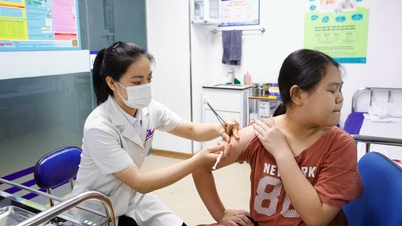
After the merger, Ho Chi Minh City remains the most populous city in the country and is among the localities with the lowest birth rates (Illustrative photo: Thuy Huong).
The persistently low birth rate is causing Ho Chi Minh City to face the risk of rapid population aging. According to data, the population over 60 years old in 2022 accounted for 11.03% of the total population, and this trend continues to increase.
The average life expectancy of Ho Chi Minh City residents in 2024 reached 76.6 years, higher than the national average of 74.7 years. This higher life expectancy reflects improved healthcare and living standards in Ho Chi Minh City, but it also presents significant economic challenges for the future.



In addition, significant achievements have been made in reproductive health screening and counseling. In 2024, the rate of pregnant mothers receiving prenatal screening reached 86.6%, and the rate of newborns receiving screening reached 83.98%.
In particular, 92.5% of young men and women preparing for marriage received information and counseling on pre-marital health, contributing to raising awareness about reproductive health care.
The sex ratio at birth was controlled at a reasonable level, reaching 106.1 boys per 100 girls, down from 112.6 in 2021, indicating that solutions to control gender imbalance at birth have been effective.
Currently, the Ho Chi Minh City health sector is making efforts to advise on policies to address the issue of low birth rates.
Late last year, the People's Council issued a resolution stipulating policies on rewarding and supporting population work, including a subsidy of 3 million VND for women who have two children before the age of 35. In addition, students at all levels of education in the city also receive tuition fee exemptions.
In the Project on Comprehensive Healthcare for the People of Ho Chi Minh City and some solutions to contribute to increasing the total fertility rate in the period 2025-2030, several policies are also put forward to ensure that all citizens have access to comprehensive, continuous, and quality healthcare services, live in a safe environment, and develop holistically in terms of physical and mental health.
Some notable policies include providing counseling, health check-ups, and vaccinations against infectious diseases for young people preparing for marriage; supporting and enhancing prenatal and postnatal screening, improving nutrition and reproductive health; strengthening psychological counseling, preventing school-related diseases, and providing adolescent reproductive health care...



According to a survey by the United Nations Population Fund (UNFPA) in 14 countries including South Korea, Thailand, Italy, Hungary, Germany, Sweden, Brazil, Mexico, the United States, India, Indonesia, Morocco, South Africa and Nigeria, every 5 Some people believe they cannot achieve the family size they desire. Among them, most will have fewer children than planned, while others will have more than they intended.
In particular, young people expressed deep anxiety about the future, with concerns about climate change, rising living costs, prejudiced gender norms, the housing crisis, work pressure, and global instability becoming major barriers to building a family.
Source: https://dantri.com.vn/suc-khoe/dan-so-tphcm-on-dinh-muc-sinh-van-thap-nhat-ca-nuoc-20250713115521912.htm