

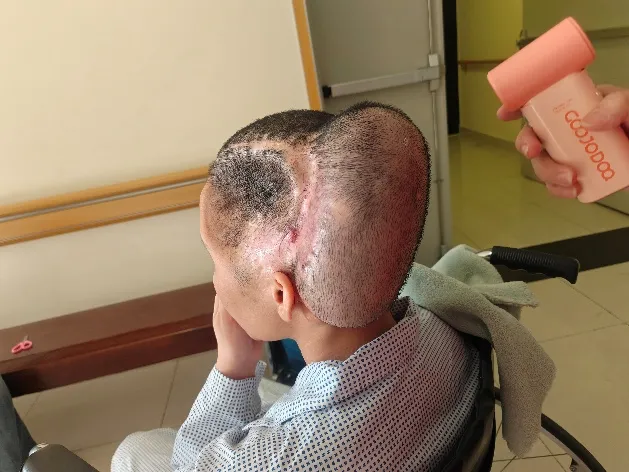
Previously, the patient (33 years old) underwent liposuction and autologous fat grafting to both temples at a private cosmetic clinic. After 60 minutes of the procedure, the patient experienced fatigue, slow responsiveness, inability to speak, and weakness on the right side of the body, and was transferred to Military Hospital 175 .
Here, doctors diagnosed: acute ischemic stroke in the left hemisphere, 3 hours after onset, due to fat embolism, a complication following autologous fat grafting procedure in the temporal region.
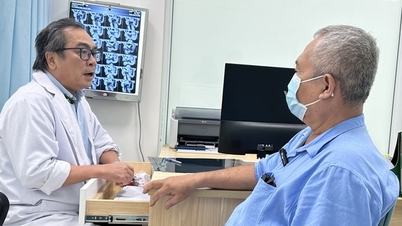
According to Dr. Than Van Hung, Deputy Head of the Burn and Plastic Surgery Department at the Orthopedic Trauma Institute, Military Hospital 175, fat embolism after autologous fat grafting is an extremely rare complication, occurring in 1 in 1,000 cases. When it does occur, the consequences are very serious. The patient suffered severe cerebral edema, and a CT scan of the brain showed extensive infarction in the left hemisphere causing midline shift. The patient was scheduled for emergency open craniotomy for decompression.
During surgery, doctors observed occlusion of the superficial temporal artery, frontal-parietal branch, with no pulse. Pathological examination revealed the artery lumen was filled with fatty cells. Following decompression surgery, the patient's consciousness gradually improved, brain parenchymal damage decreased, and the patient was discharged from the intensive care unit after 13 days of intensive treatment.
After discharge, the patient still experienced weakness in the right side of the body, difficulty with movement, speech, and cognition. In particular, a large cranial defect with extensive scarring and hair loss appeared in the left temporoparietal region, severely impacting aesthetics and psychology. Following several rounds of physical therapy and rehabilitation, the patient's mobility improved.
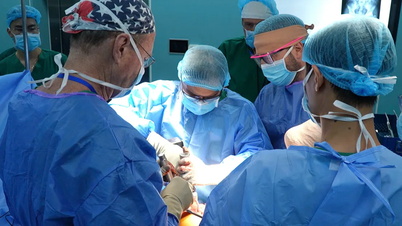
However, the challenge for the treatment team was to repair the cranial defect in the left temporoparietal region; remove the extensive scar tissue; and restore hair and scalp aesthetics. After interdisciplinary consultation, the doctors chose the option of placing a skin expander in the hairy scalp area, then combining it with cranial repair using titanium mesh and transferring a skin expander flap to cover the entire defect.
The surgery went smoothly. Post-operatively, the skin flap was warm, pink, well-perfused, and the hair follicles were fully viable, completely covering the scar tissue defect. The patient's level of consciousness continued to improve.
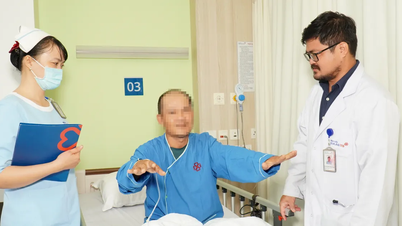
The patient has now been discharged from the hospital, is living a stable life, and is gradually returning to normal life.
According to Dr. Thân Văn Hùng, a specialist in dermatology, skin expansion is a modern surgical technique based on the body's natural biological principles. Similar to the gradual stretching of abdominal skin during pregnancy, the expansion implant is placed under the skin and gradually inflated over time, helping to increase and expand the skin surface area in that location.
The outstanding advantage of this method is that it creates new skin with characteristics completely identical to the deficient area (thickness, elasticity, pigmentation). It is particularly effective in scalp restoration because it preserves natural hair, minimizing the risk of rejection and complications compared to skin grafting from other areas.
Source: https://www.sggp.org.vn/dot-quy-nao-sau-phau-thuat-tham-my-post845735.html

![[Photo] General Secretary and President To Lam meets with National Assembly delegates from ethnic minorities.](https://vphoto.vietnam.vn/thumb/1200x675/vietnam/resource/IMAGE/2026/04/20/1776696701056_a1-bnd-8331-3342-jpg.webp)



![[Image] National Assembly discusses the implementation of the socio-economic development plan.](https://vphoto.vietnam.vn/thumb/1200x675/vietnam/resource/IMAGE/2026/04/20/1776696707422_ndo_br_img-20260420-185419-jpg.webp)
























































































Comment (0)