Differences across regions
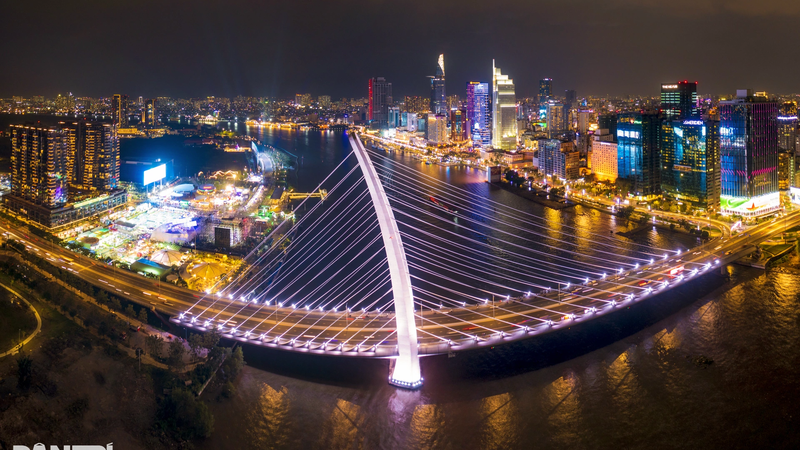
With over 3 million people, Da Nang 's population is relatively small compared to centrally-governed cities, but it is among the largest in the South Central Coast and Central Highlands regions. This indicates that Da Nang is not yet facing overwhelming population pressure, but it plays a prominent role in attracting migrant workers and contributing to the increase in the regional urban network.
During the period 2011-2025, the average population growth rate of Da Nang city reached 1.29% per year, higher than the regional average, affirming Da Nang's position as an important growth pole and attracting population in the Central and Central Highlands regions. Population growth is driven by both natural and mechanical increases. In 2024, the natural increase rate reached 9.37‰, indicating a relatively young population structure and stable population regeneration capacity. Along with this, the positive net migration rate of +3.11‰ reflects the increase in mechanical population growth, demonstrating the city's sustainable attractiveness in terms of employment, living environment, and quality urban services.
However, after the merger, Da Nang's urban-rural structure clearly shows disparities between regions. Over 80% of the city's population is concentrated in the eastern coastal plain, linked to the dynamic economic zone, while most of the western midland and mountainous areas are sparsely populated. The urbanization rate in the city center is very high, while the southern area is undergoing a strong transition towards urbanization.
According to representatives of the consortium advising on the adjustment of Da Nang's planning, this creates an uneven development space, opening up opportunities for population dispersal and urban expansion, while also posing challenges in organizing infrastructure and providing social services. The uneven distribution of the population, with the old Da Nang area acting as a "pulling point" and the old Quang Nam area as a "pushing zone," necessitates appropriate urban planning, infrastructure, and social services.



Predicting the space allocation problem
According to the plan, by 2030, the total population, including the converted population, in Da Nang is estimated to reach approximately 4 million people, with the urban population accounting for about 72%. According to Mr. To Van Hung, Deputy Secretary of the Party Committee of the People's Committee of Da Nang City and Chairman of the City Architects Association, this figure needs to be carefully reviewed and calculated, especially regarding the influx of people due to migration, in order to meet the human resource needs for various sectors.

“For example, the workforce serving industrial zones, open economic zones, and free trade zones… If we calculate the total area of these areas according to the plan, it will reach more than 42,600 hectares. On average, 1 hectare requires about 80-100 workers, so in the future, Da Nang will need more than 4 million workers. This number is very important because it will determine the population size of Da Nang in the coming period as well as being related to investment plans in some sectors and types, such as social housing,” said Mr. To Van Hung.
According to Associate Professor Bui Quang Binh, a lecturer at the University of Economics (Da Nang University), in reality, after the merger, the concentration of economy and population in the core urban area of Da Nang is showing signs of rapid increase. The increased population density in the central area has led to an overload of accompanying services and social infrastructure.
"The rapid development of a range of service industries in the central wards poses a difficult problem regarding spatial organization, population distribution, and harmoniously meeting social welfare needs not only in the east and west but also in the north and south of the city," Associate Professor Bui Quang Binh commented.
Currently, the draft revised Da Nang master plan for the period 2021-2030, with a vision to 2050, has identified a shift in urban spatial structure from a "unipolar - sea-oriented" model to a "multipolar - regionally interconnected" model, narrowing the development gap between sub-regions. The allocation of coordinates for key projects clearly reflects this perspective.



Notably, in the healthcare sector, the plan includes upgrading Quang Nam General Hospital and Quang Nam Obstetrics and Pediatrics Hospital, investing in the construction of a new hospital in Hoi An Tay ward, attracting investment to build private general hospitals in the Duy Hai - Duy Nghia urban area; establishing and building new Tropical Medicine Hospitals and Geriatric Hospitals in the former Quang Nam area… Along with prioritizing the completion of the Da Nang National University Urban Area, the city will also attract investment in the southern university urban area associated with the Chu Lai Open Economic Zone after 2030.
In addition to the 7 approved locations for the Da Nang Free Trade Zone, the city is considering expanding the zone to many other locations in the southern plains, as well as the midland and mountainous areas, after 2030.
Source: https://baodanang.vn/dan-so-va-bai-toan-phan-bo-khong-gian-phat-trien-3321959.html




![[Image] National conference summarizing one year of operation of the overall organizational model of the political system, the three-tiered government model.](https://vphoto.vietnam.vn/thumb/1200x675/vietnam/resource/IMAGE/2026/07/01/1782882811691_ndo_br_1-jpg.webp)










![[Video] Weather forecast for tonight and tomorrow, July 2nd, 2026: Tropical depression likely to strengthen into a storm; many areas will continue to experience thunderstorms.](https://vphoto.vietnam.vn/thumb/402x226/vietnam/resource/IMAGE/2026/07/01/1782911026600_thumb-dem-png.webp)