

Adhering to the principle of "the people are the foundation," many localities have adopted proactive and practical approaches in implementing the mechanism of direct democracy at the grassroots level. The people supervise the work of the Party from the grassroots, which is where all policies and guidelines of the Party and State are directly implemented, and where the people's right to self-governance needs to be exercised most directly and broadly.
The Party is subject to the people's supervision, which is first and foremost reflected in the Party's policies and guidelines stemming from the legitimate interests and aspirations of the people. Promoting the people's right to self-governance at the grassroots level is a crucial part of raising awareness of democracy and improving the capacity to practice it. It is a key and pivotal step in building a socialist rule of law state of the people, by the people, and for the people.
The content and form of exercising people's democratic rights at the grassroots level are increasingly being specifically regulated, and their implementation has had a positive and direct impact on all areas of social life, unleashing the creative power of the people.
Implement extensively and systematically.
On December 18, 1998, the Politburo of the 8th Party Congress issued Directive No. 30-CT/TW on building and implementing the Regulations on Democracy at the grassroots level. Assessing the actual situation at that time, Directive No. 30-CT/TW frankly pointed out that: “the people's right to self-governance is still being violated in many places and in many fields; bureaucracy, authoritarianism, abuse of power, corruption, harassment, and causing inconvenience to the people are still widespread and serious, and we have not yet been able to push back or prevent them.”
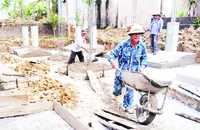
The Party is under the supervision of the people - A strong foundation, a sturdy tree, and everything will succeed.
This is a sound policy, in line with the people's wishes, originating from the demands of reality, and has therefore been quickly and extensively implemented, steadily progressing and truly becoming a part of life. The Party's guidelines and policies, and the State's laws and regulations on grassroots democracy have been developed, supplemented, and perfected to suit the conditions, level of development, and requirements of the country.
The results of field surveys in localities and units confirm the following common points that need to be noted: The building and implementation of grassroots democracy regulations have contributed to reforming the methods and enhancing the leadership capacity of the Party and the management and administration of the State; reforming the content and methods of operation of the Fatherland Front and people's organizations; promoting the pioneering and exemplary role, and rectifying the working style and methods of cadres and civil servants towards being closer to the people, respecting the people, and promoting the people's right to self-governance.
Party committees at all levels have included the implementation of grassroots democracy in their work programs and plans. Many localities have made the implementation of grassroots democracy a criterion for evaluating emulation; linking the inspection of the implementation of grassroots democracy in localities and units with the inspection of the work of the heads of party committees and governments. During the period 2016-2020, 63 provincial and city party committees and governments issued nearly ten thousand guiding documents (resolutions, directives, projects, plans, guidelines, etc.) on the implementation of grassroots democracy; and organized more than 12,000 propaganda and training sessions.
Localities such as Ha Giang, Lao Cai , and Nghe An have issued documents on the implementation of grassroots democracy in ethnic languages to widely disseminate information to a large number of ethnic minority people in the area. These localities have created many innovative models for building and implementing grassroots democracy, contributing to raising people's awareness, accessing information, voluntarily complying with the law, and effectively exercising their direct democratic rights. Bac Lieu has a model called "Clan Self-Management Group".
Ben Tre has the "New Rural Sunday" movement. Long An has the "Three Close" movement - close to the people, close to the work, and close to the locality. Lam Dong has "Law Clubs" in residential areas. The Vietnam Farmers' Association has the "Farmers' Club with Law" model. Binh Thuan has issued guidelines for scoring the implementation of grassroots democracy in various forms. Bac Giang has developed the "Grassroots Democracy Information Management System" software...
The enactment of the Law on the Implementation of Democracy at the Grassroots Level, passed by the 15th National Assembly on November 10, 2022, comprising 6 chapters and 91 articles, has established an important political and legal foundation for the Party and State to continue perfecting the guidelines, policies, and laws on democracy in general, and grassroots democracy in particular, thereby contributing to the improvement of democratic institutions. Practical results in localities show that the implementation of laws on democracy in all fields at the grassroots level helps to truly integrate the law into daily life, enabling the people to take ownership in state and social management, while also contributing to monitoring and reflecting the quality, scientific basis, feasibility, and people-centeredness of the Party and State's guidelines, policies, and laws.
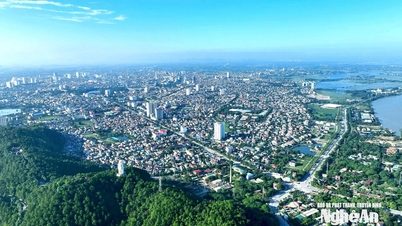
Ba Don Ward (Ba Don town) is the bustling and vibrant economic and commercial center of northern Quang Binh province for decades. National Highway 12A runs through the town center but lacks sidewalks, and the streets within the neighborhoods are narrow and winding. When a thematic resolution on building a civilized and model urban area was issued, which included the important content of widening streets, the Ba Don Ward Party Committee determined to strictly implement democratic principles as a basis for mobilizing people to donate land and save on land clearance costs. Ba Don Ward Party Secretary Dinh Thieu Son recalled: The Party Committee held many meetings with the Party branches, neighborhood groups, front-line working groups, and the people to disseminate information and mobilize support; they publicly and transparently demonstrated the effectiveness of some road projects so that people could see the results. Every contribution, no matter how small, was recorded on large boards and publicly posted. All matters, big and small, were discussed and agreed upon by the people. After more than a year of implementing the "road-opening resolution," hundreds of residents in the ward have voluntarily donated nearly 3,000 square meters of land along with 1.2 kilometers of fences, trees, houses, etc., worth approximately over 20 billion VND.
Thousands of stories could be told about the effectiveness of implementing grassroots democracy, similar to that in Ba Don ward. In 2023, members of the Farmers' Association nationwide donated 4.6 million square meters of land, contributed over 8,000 billion VND and more than 2.5 million man-days of labor, repairing and concreting over 598,000 km of rural roads…
Diverse fields and models
Implementing grassroots democracy is both a condition and a requirement for improving and enhancing the quality of the political system's operation at the grassroots level. According to our reporters' observations, in localities where grassroots democracy is well implemented, most disputes and conflicts between citizens and the government are resolved amicably at the grassroots level, creating a harmonious and open atmosphere in the community, and significantly contributing to maintaining political and social stability.
Communes, wards, and towns have basically fully implemented the contents of public disclosure to the people for their information, discussion, decision-making, and supervision through various forms: posting notices at offices, organizing village and neighborhood meetings; announcing through public address systems, etc. The people have been empowered to exercise their right to self-governance in discussing and deciding on matters of the village, neighborhood, and residential area, such as policies and contribution levels for infrastructure construction, etc. Many localities have implemented grassroots democracy in conjunction with the new rural development program with many synchronized solutions, achieving effective results.
The supervisory activities of the People's Inspection Committee and the Community Investment Supervision Committee at the grassroots level promote the people's ownership and creativity, proving most effective in supervising projects with the direct participation and contribution of the people, contributing to bringing practical benefits to the communities where the projects are implemented. Localities in Ho Chi Minh City, Quang Ninh, and Nghe An have adopted innovative and effective approaches; proactively developing regulations, programs, and plans, and assigning tasks to each member; holding monthly meetings, and compiling suggestions to submit to the Standing Committee of the Fatherland Front at the commune level.
In Bac Kan, from 2013 to 2023, the People's Inspection Committee supervised 2,382 inspections, recommending that competent authorities consider and resolve 147 cases; the Community Investment Supervision Committee supervised 6,050 inspections at 4,823 investment projects, detecting 286 projects with signs of violations. In Binh Phuoc, from 2018 to the present, the People's Inspection Committees of communes, wards, and towns have conducted 1,968 inspections, recommending the recovery of over 300 million VND in misappropriated funds. The Community Investment Supervision Committees have conducted 2,439 inspections of 2,282 projects; detecting and recommending action against 612 projects with violations, recovering misappropriated funds and assets worth 259 million VND…
Direct public oversight through the implementation of grassroots democracy contributes to promoting administrative reform, strengthening administrative discipline, and creating a shift in the awareness and working methods of officials and civil servants towards being closer to the people, respecting the people, listening to people's opinions, and being responsible to the people. Local Party committees and governments expand democracy, publicize administrative procedures, promote the application of information technology, implement the "one-stop shop" and "integrated one-stop shop" mechanisms, and the "friendly government, serving the people" model, creating favorable conditions for individuals and organizations, and helping businesses and citizens monitor the performance of officials and civil servants. Many localities have developed a set of indicators of public satisfaction with the services of administrative agencies and publicly disclose the measurement results annually.
The people directly supervise and control state power through exercising their right to complain, denounce, and petition to competent authorities, or through the Vietnam Fatherland Front and other political and social organizations to resolve petitions, complaints, and denunciations. Implementing grassroots democracy encourages Party committees and governments at all levels to strengthen dialogue, receive citizens, persuade, and limit administrative measures in resolving arising issues, and promptly address complaints and denunciations within their jurisdiction.
According to statistics from the Central Committee's Mass Mobilization Department, in 2023, at the commune, ward, and town levels in 39 provinces and cities, nearly 54,500 citizen reception sessions and over 13,000 dialogues were held by Party secretaries; nearly 109,000 citizen reception sessions and over 22,000 dialogues were held by chairmen of People's Committees. State administrative agencies at all levels resolved 23,735 cases, a rate of over 88%, thereby recommending the recovery of 59.4 billion VND and 0.6 hectares of land for the State; returning 190.8 billion VND and 9.1 hectares of land to organizations and individuals; and restoring and ensuring the rights of 28 organizations and 1,096 individuals…
Continuing to diversify forms of ensuring people's right to self-governance, in the direction of direct democracy, on February 18, 2019, the Politburo of the 12th Party Congress issued Regulation No. 11-QDi/TW on the responsibility of heads of Party committees in receiving citizens, engaging in direct dialogue with citizens, and handling citizens' feedback and suggestions. According to Ms. Phuong Thi Thanh, Permanent Deputy Secretary of the Bac Kan Provincial Party Committee, in implementing Regulation No. 11-QDi/TW, the Provincial Party Committee issued two regulations and two rules on the work of receiving citizens, engaging in direct dialogue with citizens, and handling citizens' feedback and suggestions. The Provincial Party Committee regularly includes this content in the key program of internal affairs, anti-corruption, and judicial reform; at the same time, it focuses on inspecting and supervising the implementation of the responsibilities of lower-level Party committee secretaries regarding this work.
From the Party's policy institutionalized into State law, the process of implementing grassroots democracy is a practical lesson learned during the Party's leadership of the reform process. Based on practical experience in various localities, many opinions from officials, Party members, and the people have pointed out some current limitations in implementing grassroots democracy.
While many resources are being mobilized and numerous large-scale programs and projects are being implemented, raising issues directly related to the rights and interests of the people, the State's legal system is still in the process of being perfected. Some policies are inconsistent, leading to different applications between localities and units, causing confusion among the people. In some places and situations, the implementation of grassroots democracy remains merely a formality.
The staff, especially those at the grassroots level, have weak capabilities and qualifications, failing to promptly and thoroughly address issues and fully consider the legitimate opinions and suggestions of the people. In some places, the implementation of democracy is not yet linked to discipline and the law... This reality necessitates further promoting the active and proactive role of the people through the Vietnam Fatherland Front and other political and social organizations, effectively and substantively implementing grassroots democracy, as well as social supervision and criticism – forms of direct democracy promotion that help competent authorities formulate and implement policies and laws more effectively, making a significant contribution to building national unity and achieving socio-economic development goals at the local and national levels.
General Secretary Nguyen Phu Trong emphasized: “In the socialist political and social system, the relationship between the Party, the State, and the people is a relationship between subjects united in goals and interests; all Party guidelines, policies, laws, and State activities are for the benefit of the people, taking the happiness of the people as the goal to strive for...”.
Source: https://nhandan.vn/dang-chiu-su-giam-sat-cua-nhan-dan-goc-vung-cay-ben-muon-su-deu-nen-post808825.html
![[Photo] “Red Journey” 2026: Vietnamese Youth Continue Building the Bridge of Friendship Between Vietnam and China](https://vphoto.vietnam.vn/thumb/1200x675/vietnam/resource/IMAGE/2026/04/20/1776629730866_4055880775670638308-9618-4200-jpg.webp)














![[Photo] “Red Journey” 2026: Vietnamese Youth Continue Building the Bridge of Friendship Between Vietnam and China](https://vphoto.vietnam.vn/thumb/402x226/vietnam/resource/IMAGE/2026/04/20/1776629730866_4055880775670638308-9618-4200-jpg.webp)

















































Comment (0)