(CLO) Germany 's far-right Alternative für Deutschland (AfD) party is predicted to make significant strides as the entire country goes to the polls for a landmark general election today (February 23).
The rise of the AfD is causing concern among its rivals.
However, the center-right Christian Democratic Union (CDU/CSU) is generally still expected to once again become the largest party in the German Parliament (Bundestag) with 220 seats, allowing them to appoint the first chancellor since Angela Merkel resigned in 2021.
According to YouGov's final poll before the election, the far-right AfD party is projected to win up to 145 seats, surpassing the 115 seats expected of the ruling Social Democratic Party (SPD), after its support plummeted just a few years under Prime Minister Olaf Scholz.
The Green Party, which partners with the SPD in the ruling coalition, is also predicted to see its share of the vote drop from a record 15% in 2021 to 13% in this election.
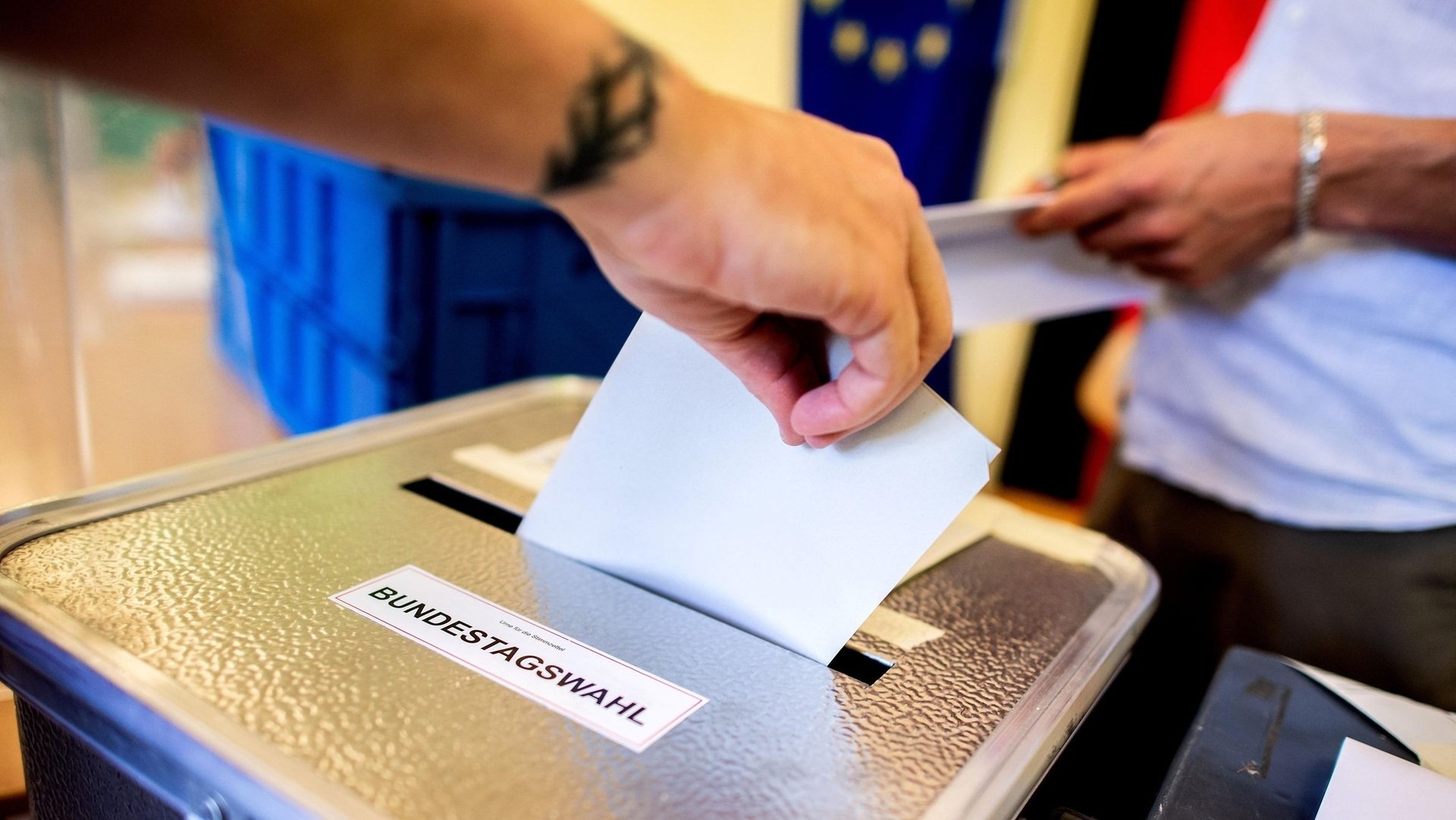
German voters will go to the polls today.
As is known, German President Frank-Walter Steinmeier called for early elections after the ruling coalition collapsed and Scholz lost confidence in the German Parliament on January 15.
Although polls show the CDU/CSU alliance still leading, the far-right AfD party could still spring a surprise. Besides enjoying strong voter support with its policies on stricter immigration, economic reform, and halting aid to Ukraine – three key issues in the election – the AfD's appeal is further boosted by President Donald Trump's victory in the US.
According to research from the Humboldt Institute for Internet and Society and Synosys, tweets by Elon Musk, Trump's special advisor, directly contributed to making AfD leader Alice Weidel the most popular German politician on X and expanding the reach of her posts.
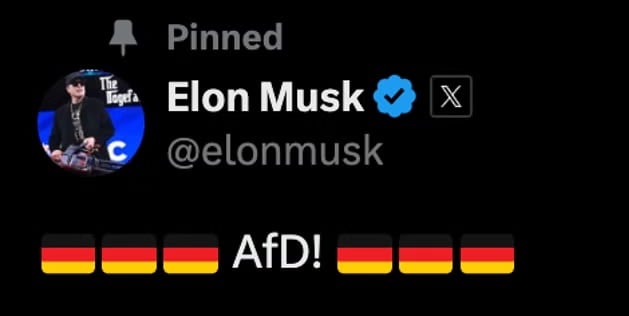
Billionaire Elon Musk has publicly endorsed the AfD party in the 2024 German elections.


Sami Nenno and Philipp Lorenz-Spreen, the study's authors, found that reposts or mentions of AfD and/or Weidel typically had a much higher reach than average; ranging from around 200,000 views to over 1 million views.
Furthermore, Musk's most active period of interaction with the AfD and related content occurred from late December to mid-January; during that time, Weidel's follower count nearly doubled, from over 500,000 to 985,000.
Both sides actively campaigned leading up to election day.
The far-right AfD party also actively organized final campaign rallies in Berlin before election day. Leading candidates delivered strong speeches against knife crime, immigration, and Germany's support for Ukraine.
Following small groups of anti-AfD protesters in Berlin, senior AfD member Beatrix von Storch said the protesters were expressing hatred. "Look at our faces, this is love," she said in English, "and look over there, that's hatred."
Another speaker welcomed President Donald Trump's recent rhetoric regarding Ukraine. "The United States has arrived where the AfD has always been. That is why the AfD now needs to take control of the German government."
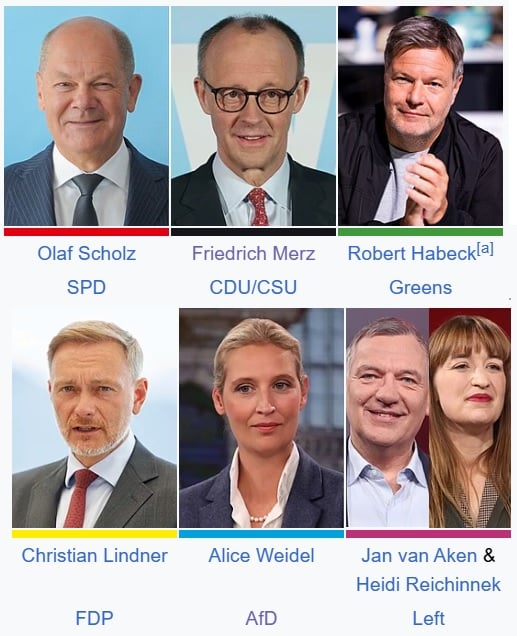
Chancellor candidates from each party in the 2025 German election.
Meanwhile, faced with the prospect of a far-right party potentially taking power in Germany for the first time in nine decades, the country's "mainstream" parties are working to prevent that scenario from happening.
Chancellor Scholz insisted that he still hoped for a victory, however slim. At an event in Potsdam, Scholz once again sought to cast doubt on the credibility of leading candidate Friedrich Merz from the CDU/CSU and described his own party as the strongest bulwark preventing the AfD from playing any role.
Scholz said he was "convinced that this time, many people will simply make their decision at the polling station. I don't believe in miracles, but in victory in this election."
However, his ruling SDP party is now projected to come in third behind Friedrich's CDU/CSU coalition and the far-right AfD party.



Mr. Merz also held a final rally before Sunday's election, where he promised to be "a strong voice in the European Union." Speaking at the CDU/CSU rally, he said: "Europe must become stronger and Germany must become more involved in the European Union."
Will Germany's new parliament be more "crowded" and "complex"?
Given the highly competitive political landscape and complex electoral system, the upcoming German parliament could comprise between four and eight parties. This means that leading politician Friedrich Merz will need one or more strong partners to form a new coalition government. This could be Scholz's main opposition SPD party, the Green Party, or possibly both.
The far-right AfD party, currently second in most polls with around 20%, is predicted to have little chance of participating in any coalition government as all other parties have ruled out cooperation with a party they consider undemocratic. However, the final outcome is difficult to predict.
Hoang Hai (according to YouGov, Indefendant, DW)
Source: https://www.congluan.vn/bau-cu-duc-2025-dien-ra-vao-hom-nay-dang-cuc-huu-afd-co-the-gay-bat-ngo-post335699.html