

Reporter: How do you view the shift in mindset from "preservation through budget" to "activating heritage as a profitable asset"?
People's Artist Vuong Duy Bien: I believe it's time we fundamentally changed our thinking. Previously, we were accustomed to the approach of "heritage preservation using the budget," meaning the State spent money to maintain, repair, and preserve heritage. That approach isn't wrong, but if we stop there, the heritage will remain in a static state.
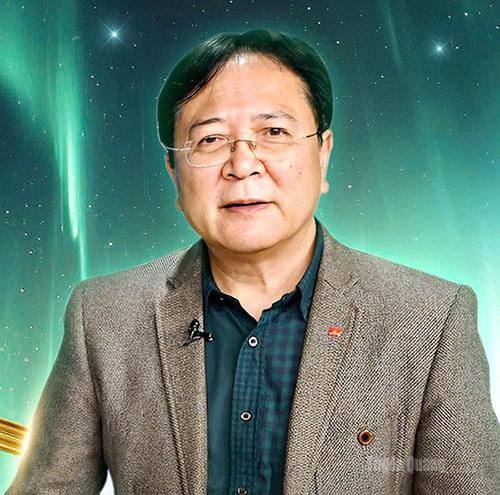 |
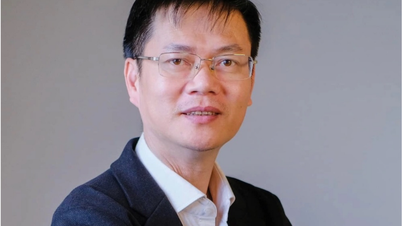
| People's Artist Vuong Duy Bien, former Deputy Minister of Culture, Sports and Tourism, Chairman of the Vietnam Association for the Development of Cultural Industries. |
Today, heritage needs to be viewed as a resource for development, that is, a "dynamic asset." When heritage is properly activated, it is not only better preserved but also generates economic value, creates jobs, and sustains the community. Therefore, the state budget should play a leading role, providing "seed capital," rather than being the sole source of funding.
The biggest obstacle currently preventing cultural heritage from becoming a "dynamic asset" that attracts social resources, especially from the community, is, in my opinion, not money, but the mechanisms and mindset. We still have a hesitant attitude towards "opening up" heritage to social participation, fearing commercialization and the distortion of its original values. Furthermore, the legal framework for social participation is unclear, causing confusion for both local authorities and businesses.
Furthermore, the capacity for organizing and managing heritage in a modern way—that is, both preserving and exploiting it—is still limited in many places. This means that heritage, despite its potential, has not yet been able to become an attractive product.
Reporter: The concept of "crowdfunding" for heritage is still relatively new in Vietnam. How do you assess the potential and feasibility of this model in the cultural sector?
People's Artist Vuong Duy Bien: Crowdfunding in the cultural sector in Vietnam is still new, but I believe it has great potential. Vietnamese people have a tradition of loving culture and cherishing heritage. The problem is that we haven't created projects that are "attractive enough" for them to be willing to contribute. If there is a clear, transparent program with a story and specific social value, I believe many people will participate, not only domestically but also overseas. However, to be feasible, it needs to be done systematically and professionally, not just as a movement.
To effectively mobilize crowdfunding, trust is paramount. Building trust requires transparent mechanisms: from project announcements and fund utilization to auditing and performance evaluation. Furthermore, policies are needed to acknowledge community contributions, not just materially, but through recognition and long-term support.
I also believe that pilot models, legally "sponsored" by the State in the initial stages, are necessary to set a good precedent. Once there are successful examples, society will naturally participate more actively.
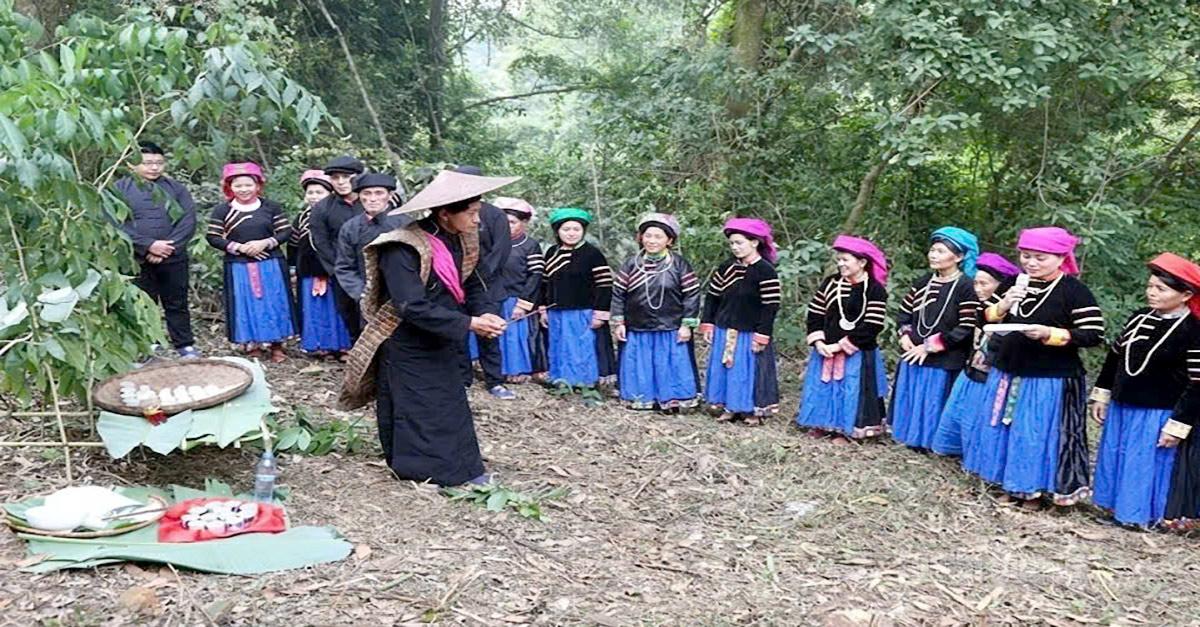 |
| The forest worship ceremony of the Pu Péo people in Phố Bảng commune was recognized as a National Intangible Cultural Heritage in 2012. |
Reporter: As Chairman of the Vietnam Association for the Development of Cultural Industries, how do you assess the combination of creative industries and heritage to create sustainable economic value?
People's Artist Vuong Duy Bien: Cultural industries are the "bridge" to bring heritage into modern life. If we only focus on pure preservation, heritage will struggle to spread. But when combined with creative industries such as film, music , design, and experiential tourism, the value of heritage will be multiplied many times over.
In my capacity as the Vietnam Association for the Development of Cultural Industries, I believe it is necessary to strongly promote the linkage between artists, businesses, and localities. With such an ecosystem in place, heritage will not only be preserved but will also become a sustainable economic resource, contributing to the positioning of the national cultural brand.
Reporter: Based on your experience in Tuyen Quang, what message do you have for localities to proactively "awaken" their heritage and mobilize social resources, instead of relying on the state budget?
People's Artist Vuong Duy Bien: Tuyen Quang is a revolutionary homeland with a deep cultural and historical heritage, featuring prominent landmarks such as the Tan Trao Special National Historical Site, the Dong Van Karst Plateau Global Geopark, and the Na Hang - Lam Binh scenic area. Along with this is the vibrant culture of 22 ethnic groups, creating a rich heritage space with a system of 215 national-level historical sites, 308 provincial-level historical sites, and nearly 50 national intangible cultural heritage sites.
The practical challenge is how to "awaken" and effectively utilize this vast heritage resource, instead of letting its values remain dormant in a state of potential. This is not unique to Tuyen Quang, but reflects the common reality of many localities. We possess abundant cultural resources, from historical relics, festivals, folk performing arts to community cultural spaces, but much of it remains in a "static" state, dependent on budgets, projects, and support mechanisms.
Based on that experience, in my opinion, Tuyen Quang in particular and localities in general need to boldly shift their thinking in three directions:
Firstly: Expand community participation in heritage preservation. The entire responsibility should not be placed on the State; instead, conditions should be created for citizens, businesses, and artists to participate, benefit, and share responsibility in preserving and promoting the value of heritage. When there is "co-ownership" in a broad sense, heritage will naturally receive additional social resources.
Secondly: Build a transparent and creative mechanism for mobilizing social resources. In reality, there is no shortage of individuals and organizations willing to contribute to culture, but what they need is clarity regarding objectives, effectiveness, and the value they will bring. Every festival, art program, or creative space can become a "crowdfunding project" if it is well-designed, has a compelling story, and has a wide reach.
Thirdly: Connect heritage with the development of cultural industries and experiential tourism. Heritage only truly comes alive when placed within the contemporary context. If the old organizational methods are maintained, its value will be difficult to disseminate; but when combined with modern art, technology, and media, heritage is not only preserved but also "awakened," creating added value and new appeal.
It can be said that "awakening" heritage is not just a story of preservation, but also a problem of development thinking – where culture becomes an important endogenous resource for sustainable growth.
Reporter: Thank you very much, sir!
Performed by: HONG HA
Source: https://baotuyenquang.com.vn/van-hoa/202604/danh-thuc-di-san-38560a6/
![[Photo] General Secretary and President visit the China-ASEAN AI Application Cooperation Center](https://vphoto.vietnam.vn/thumb/1200x675/vietnam/resource/IMAGE/2026/04/17/1776404277677_vna-potal-tong-bi-thu-chu-tich-nuoc-tham-trung-tam-hop-tac-ung-dung-ai-trung-quoc-asean-8706616-2286-jpg.webp)







![[Photo] National Assembly Chairman Tran Thanh Man attends the policy seminar to promote Vietnam-Türkiye cooperation.](https://vphoto.vietnam.vn/thumb/1200x675/vietnam/resource/IMAGE/2026/04/16/1776351415367_vna-potal-chu-tich-quoc-hoi-tran-thanh-man-du-toa-dam-chinh-sach-thuc-day-hop-tac-viet-nam-tho-nhi-ky-8705791-jpg.webp)







































Comment (0)