

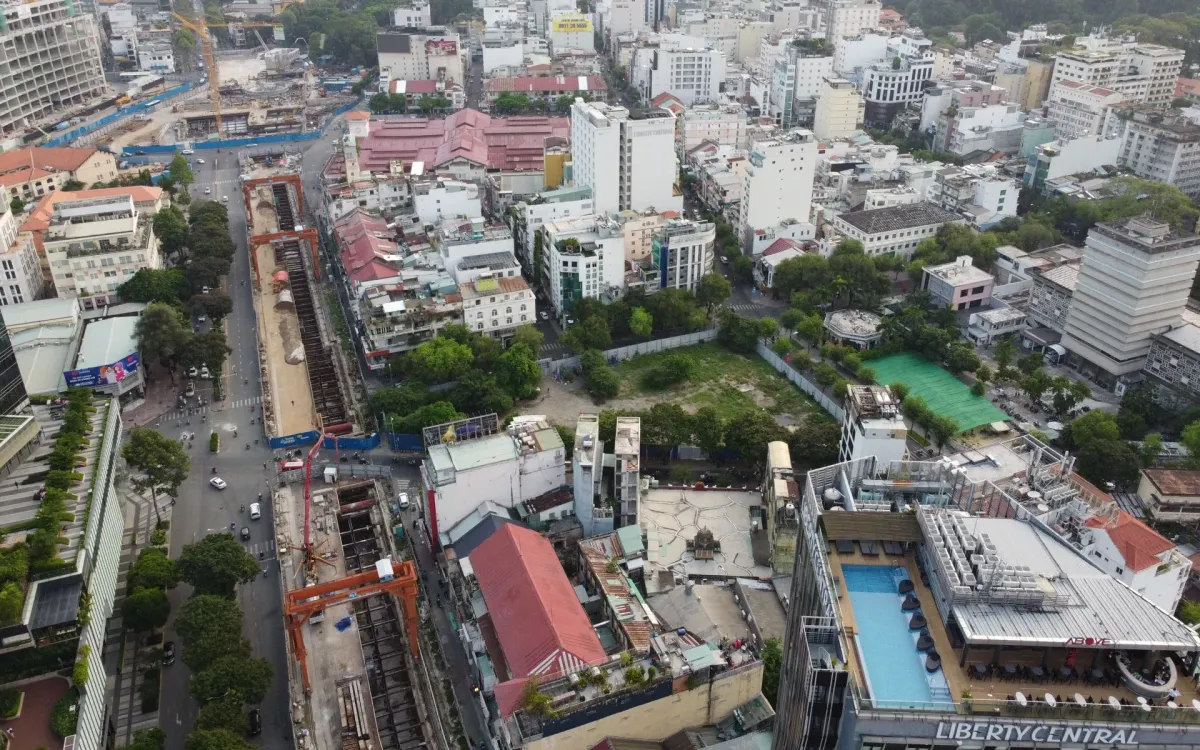
Thousands of public properties have been left vacant for years, indicating that Ho Chi Minh City needs to shift from simply holding onto assets to utilizing them as a resource for development.
Resources are being frozen.
The announcement by the Ho Chi Minh City Department of Finance of a plan to review, reorganize, and handle vacant public buildings following administrative unit mergers is not just a matter of asset management techniques. It is a test of Ho Chi Minh City's urban governance thinking in this new phase.
For many years, the biggest paradox of Ho Chi Minh City has been that, despite a constant shortage of funding for infrastructure, flood control, metro systems, schools, and social housing, numerous prime land plots lie idle in the city center. Many former office buildings are left vacant for extended periods, used sparingly, or leased out without transparency.
It's important to note that public assets are not ownerless assets. They are resources generated from the budget and contributions from the people. When valuable land plots worth hundreds or thousands of billions of dong are left idle, the waste lies not only in the real estate value but also in the opportunity cost of development.

When land plots worth hundreds or thousands of billions of dong are left idle, the waste lies not only in the real estate value but also in the opportunity cost of development.
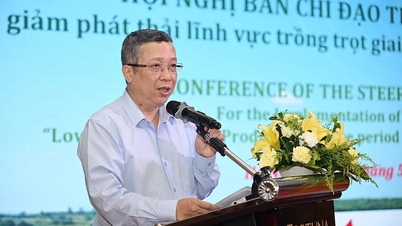
According to Professor Dang Hung Vo, former Deputy Minister of Natural Resources and Environment , the State should prioritize auctioning surplus public buildings and land to convert them into production and business areas, thereby generating a large source of public finance for socio-economic development. Professor Vo also argued that the abandonment of public assets is creating a "double waste" cycle, resulting in both the loss of state resources and the slowing down of the process of transforming land into a driving force for growth.
This assessment accurately reflects the current situation in many localities. A report presented at a conference organized by the Department of Public Assets Management in early May 2026 showed that approximately 15 localities had completed or were nearing completion of step 2 of the public asset restructuring process. However, many places have only handed over the assets to land development centers or commune-level authorities for management, without putting them into actual use. Many facilities remain vacant, retaining their old signs. Mr. Nguyen Tan Thinh, Director of the Department of Public Assets Management, Ministry of Finance, also stated that such cases cannot yet be considered as having completed the task.
For many years, the prevailing mindset among numerous agencies has been to "hold onto land," "hold onto headquarters," and "hold onto management control." This mindset has led to the fragmentation and underutilization of public assets. A modern city cannot tolerate these "dead zones" in its urban center. Abandoned public land and buildings not only waste infrastructure but also detract from the aesthetics, diminish the value of surrounding areas, and create the risk of illegal use.
From management to operations
On the positive side, Ho Chi Minh City is beginning to change its public asset management practices. The proactive review of the entire public land and property fund shows that the city is now viewing public assets in terms of efficient utilization rather than mere administrative management.
This is the right direction because, in the context of tight budgets, public assets are a "gold mine" if managed properly. Land no longer needed can be auctioned publicly to generate capital for infrastructure development. Many old office buildings can be converted into schools, medical facilities, public spaces, or social housing at a much lower cost than building new ones.

Ho Chi Minh City plans to auction off 50 public land plots in 2026 according to Plan 88/KH-UBND to increase land use efficiency and attract investment.
More importantly, public assets need to be considered within a long-term urban development strategy rather than being handled on a case-by-case basis. Ho Chi Minh City is lacking public spaces, educational land, and social housing. If the focus is solely on selling assets to increase short-term budget revenue, the city may pay a heavy price in the future.
Therefore, many experts believe that the biggest requirement now is not how much public land can be sold, but rather optimizing the social value per square meter of public land. To achieve this, Ho Chi Minh City must first make all public asset data transparent. Citizens need to know how much public land and property the city owns, how it is being used, and what the plans are for its disposal. Transparency is the most important condition to prevent losses and vested interests.
Along with that, market mechanisms should be applied to the exploitation of public assets, but with strict control through public auctions, realistic valuations, and independent audits. Even a public land plot valued 20% to 30% below market value represents a significant loss. Another obstacle is the fear of accountability in handling public land after a series of recent cases. Many officials choose the safe option of not daring to make decisions or sign documents. As a result, assets continue to be left abandoned for many years. Without clear legal mechanisms and protections for those who act correctly, the process will remain slow.
According to experts, what Ho Chi Minh City needs right now is not simply rearranging a few administrative offices, but rather building a system for managing and operating public assets. Accordingly, public assets should no longer be just assets to be held onto, but must become a resource for development, creating long-term economic, social, and urban value. If this is achieved, Ho Chi Minh City will not only free up currently frozen resources but also create a modern model of public asset management for the entire country.
Ho Chi Minh City plans to auction 50 public land plots in 2026 according to Plan 88/KH-UBND to increase land use efficiency and attract investment. Among these, eight plots in the Thu Thiem New Urban Area, totaling over 138,600 m², will be auctioned for various functions such as commercial, service, and residential use. In addition, the city will auction 42 other land plots with a total area of over 2.59 million m² in various locations. Notably, this includes a land plot of over 2.34 million m² reclaimed from San Miguel Pure Foods Co., Ltd., and several previously unsuccessful auctioned land plots for medical and residential purposes.
Source: https://vtv.vn/danh-thuc-nguon-luc-dat-cong-cho-tang-truong-kinh-te-100260514163859724.htm





































































Comment (0)