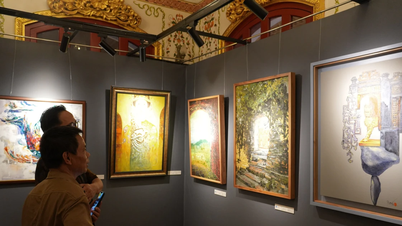
The exhibition, organized by The Muse Art Space, features artists from multiple generations: Ly Truc Son, Nguyen Quang Trung, Phan Cam Thuong, Trieu Khac Tien, Nguyen Thi Que, Do Thi Kim Doan, Nguyen Xuan Luc, Pham Tra My, Vu Van Tich, and Nguyen Thi Thuy Nguyet. The oldest artist was born in 1949, the youngest in 1989, but they are all established artists in the lacquer painting genre. According to curator Van Vi, the 10 artists with nearly 30 works on display are the "talents" of lacquer painting in northern Vietnam.
Visitors to the exhibition, including many art students and young artists, had the opportunity to admire the works and meet recognized masters of contemporary Vietnamese lacquer painting such as Ly Truc Son, Nguyen Quang Trung, and Trieu Khac Tien. Ly Truc Son (born in 1949 in Hue ) is the founder of the "Son Ta" group and has had a significant influence on contemporary lacquer painting.
At this exhibition, the artist presents a trio of lacquer paintings on wood titled "Galaxy," a rather unusual and rare theme for lacquer painting: realistic nude women, inspired by a poetic idea from Guillaume Apollinaire – a great French poet and writer of the early 20th century. Alongside these, viewers can also be overwhelmed by the colors when viewing four abstract works by artist Nguyen Quang Trung, who previously worked in cultural and artistic activities within the People's Public Security Force and had many opportunities to gather creative materials from life.
Participating in this exhibition, artist Trieu Khac Tien is quite special, not only because he submitted the most works, but also because he has two students whose works were selected: artists Vu Van Tich and Nguyen Thi Thuy Nguyet (both born in 1989). Trieu Khac Tien is also the only artist in Vietnam currently holding a PhD in lacquer art.
The artist's learning, research, and creative process in lacquer painting incorporates many elements related to Japanese lacquer art. The eight works in the exhibition were created between 2017 and 2023, showcasing diverse styles and inspirations, from the minimalist and intensely red hues characteristic of Japan in "Transformation" to the unconventional "Spring on the Dong Van Stone Plateau" with its expansive green spaces creating profound depth.
The female artists participating in the exhibition also made a strong impression with their vibrant lacquer paintings, created using challenging techniques and abundant creativity. Artist Do Thi Kim Doan has been involved with lacquer painting for nearly three decades, her passion for this traditional material beginning with her work with water puppets.
The trio of works titled "Garden Corner" by the female artist at the exhibition attracted considerable attention from female viewers, due to the feminine settings and characters and the aesthetic appeal of East Asia. Artist Pham Tra My (born in 1986) contributed only one piece, "Dreamy Garden," but this large-scale work (composed of four panels) is like a "feast" of colors with countless hidden characters and details, showcasing meticulous visualization and execution. The paintings of artist Nguyen Thi Thuy Nguyet stand out with their unique style, featuring modern settings and female characters exuding freedom and spontaneity.
It's not difficult to see that the works at the exhibition are divided into fairly specific schools and trends. Firstly, there are veteran artists who strive to preserve and utilize traditional lacquer materials, aiming for a perfect blend of East and West through research and practice of lacquer painting. Secondly, there are representatives of the younger generation who want to explore and shift both themes and materials within the rich and ever-changing context of contemporary painting.
Young artist Vu Van Tich, though a new face to art lovers, has already gained recognition in the art world for his successful experimentation with complex techniques on emotionally rich themes. Another young artist, Nguyen Xuan Luc (1983), presents lacquer relief sculptures at the exhibition, a unique visual language combining the essence of lacquer art with both sculpture and painting. Having grown up in the Chuon Ngo mother-of-pearl inlay village (Phu Xuyen district, Hanoi ), he, a craftsman who has been involved in the craft since a young age, affirms: "The materials and techniques of lacquer are not just a means, but also a story and a source of inspiration for me."
Lacquerware is a traditional folk art material that has existed in Vietnam for a very long time. However, if we consider the period when artists first incorporated this material into their artwork, starting with the establishment of the Indochina College of Fine Arts in 1925, then in just a few years, Vietnamese lacquer art will celebrate its 100th anniversary, marked by many ups and downs. The exhibition "Walking Through the Land of Lacquer" is one of the efforts to honor various aspects of lacquerware, bringing the names and works of contemporary lacquer artists closer to the public.
The exhibition is open until August 8th, and includes two art tours with curators and researchers at 10:00 AM and 3:00 PM each day.

(according to nhandan.vn)
Source: https://baoninhbinh.org.vn/dao-qua-vung-dat-cua-son-mai-duong-dai-20230807091926655.html