

Over the years, Yen Lap district has identified vocational training for rural laborers, especially ethnic minority laborers, as a crucial solution in poverty reduction, contributing to economic development and improving living standards.
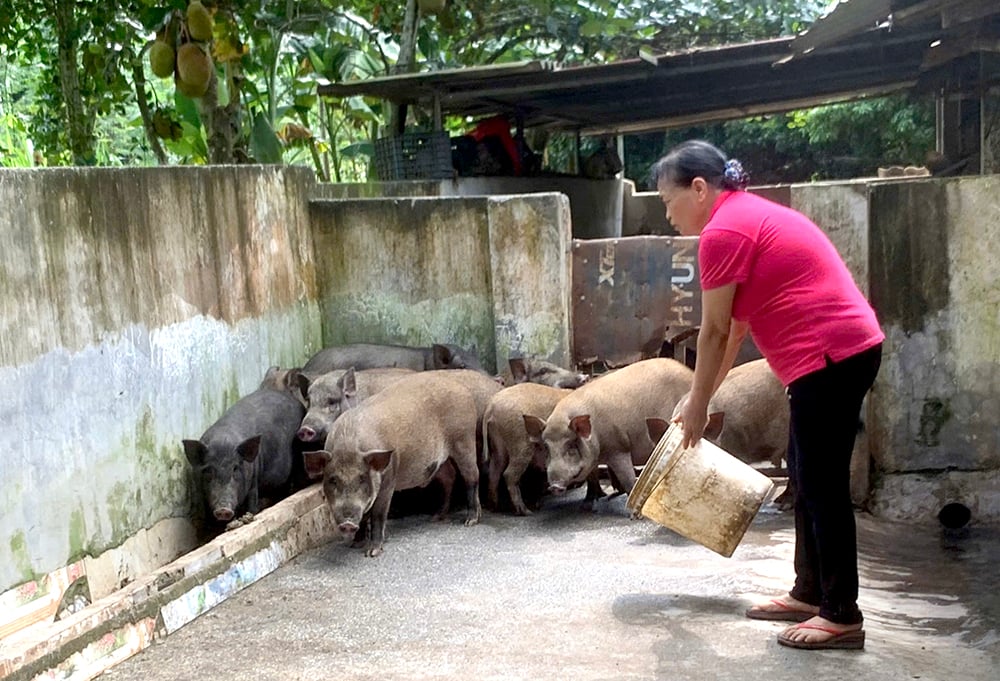
The commercial wild boar farming model of Ms. Le Thi Huyen's family in Vong area, Phuc Khanh commune, Yen Lap district, has yielded high economic efficiency.
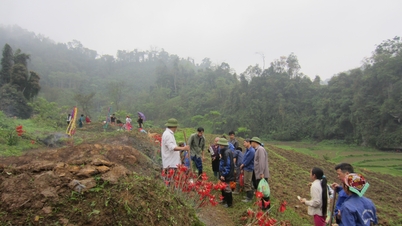
Yen Lap is a mountainous district with 17 administrative units and a population of over 97,500 people, of which more than 80% are ethnic minorities. Since the beginning of the year, the district has effectively managed state affairs in the field of vocational training. Accordingly, the district has coordinated with relevant agencies to open 3 vocational training classes for 105 rural workers, focusing mainly on agricultural and non-agricultural occupations such as: raising and treating diseases in pigs and chickens; repairing agricultural machinery in the communes of Xuan An, My Luong, and Luong Son; enrolling and completing the application process for 6 classes for 210 trainees under the National Target Program for ethnic minority and mountainous areas; and continuing vocational training under the joint program of 13 intermediate and university-level classes for 364 trainees.
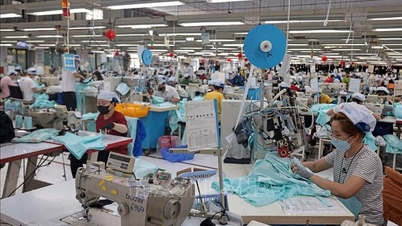
Statistics show that 85% of graduates receive career counseling, referrals, and access to job markets through job exchanges. Many graduates have opened local businesses to serve the needs of the people, such as mechanical workshops, machinery repair shops, and garment factories.
As one of the households that escaped poverty thanks to knowledge gained from local agricultural vocational training courses, Ms. Le Thi Huyen, from Vong area, Phuc Khanh commune, has now established a stable and expanded wild boar farming operation with over 100 pigs. Ms. Huyen shared: “Thanks to the guidance, support, and knowledge and skills in caring for and treating diseases in pigs, along with years of accumulated practical experience, my family has successfully raised wild boars, providing clean food to traders inside and outside the district. Currently, wild boar meat sells for 130-140 VND/kg, twice as high as regular commercial pork. On average, my family sells about 100 pigs per year, generating an income of over 200 million VND.”
Besides vocational training, the district has actively implemented job placement, recruitment, and career orientation activities for ethnic minority people in recent times. The district has coordinated with the Provincial Employment Service and Vocational Education Center to organize job fairs and employment events. Through these programs, thousands of workers and young people have been able to access labor market information to choose suitable jobs and secure stable employment. Furthermore, these networking activities have facilitated businesses and licensed organizations in sending Vietnamese workers abroad according to regulations, providing opportunities for young people, students, and young workers in the area who need them.
Thanks to the focus on implementing vocational training policies for rural workers and ethnic minorities, thousands of laborers in villages and hamlets in the district have received vocational training in various fields closely aligned with the practical needs of the locality and its people. Mr. Dinh Cong Thuong, Head of the District Department of Labor, War Invalids and Social Affairs, stated: Currently, the district has approximately 58,000 people of working age, accounting for 60% of the total population. In the first nine months of 2024, nearly 500 people found employment, raising the rate of stable employment to 85%. Furthermore, the rate of trained and skilled workers in the district reached 67%, with 31% receiving vocational certificates for training lasting three months or more.
In the coming period, the district will continue to implement various measures to shift the labor structure, create jobs, increase income, and sustainably reduce poverty for the people in general, and ethnic minorities in particular; proactively coordinate with communes and towns to survey and investigate the quality of human resources and vocational training needs of rural laborers; develop vocational training plans according to the needs of workers and the labor market; effectively implement policies to encourage and support vocational training for rural workers and ethnic minority workers; and coordinate with vocational schools to improve the quality and effectiveness of vocational training linked to job creation and increased income for workers.
Ha Nhung
Source: https://baophutho.vn/dao-tao-nghe-cho-dong-bao-dan-toc-thieu-so-222606.htm




![[Photo] Prime Minister Pham Minh Chinh receives the Chinese Ambassador to Vietnam](https://vphoto.vietnam.vn/thumb/1200x675/vietnam/resource/IMAGE/2026/04/05/1775397481797_ndo_br_dsc-5512-jpg.webp)




































































![[INFOGRAPHICS] Exploiting children's personal images for profit can result in fines of up to 50 million VND.](https://vphoto.vietnam.vn/thumb/402x226/vietnam/resource/IMAGE/2026/04/06/1775442200854_1775442148.webp)


















Comment (0)