Stuck with the land plot.
After owning a corner plot of land in a residential area near an industrial zone in Binh Duong (now Ho Chi Minh City) for two years, Mr. Thanh (Cat Lai Ward, Ho Chi Minh City) has been unable to sell it despite numerous attempts to sell it. In 2024, he spent over 7 billion VND to buy the land, hoping that once the industrial zone was developed, land prices would increase sharply, similar to previous price surges in the market.
However, prices have remained almost unchanged, and liquidity is very low. What he regrets most is that during the same period, many apartment projects have increased in price by at least 30-40%, while other investment channels such as stocks have also experienced significant price increases.
A similar situation occurred with Mr. Hung (Binh Trung Ward, Ho Chi Minh City). In 2024, he withdrew all the money from his securities account to buy two plots of land worth nearly 2 billion VND in the Dau Tieng area (formerly Binh Duong province), which was expected to benefit from the industrial and residential zone planning.
However, after two years, land prices remained almost unchanged, and transfers became difficult. Looking back, he believes that if he had continued to hold onto the stocks or switched to apartments, the investment returns could have been much more favorable.

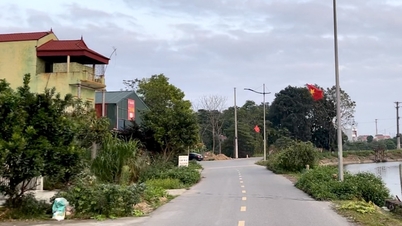
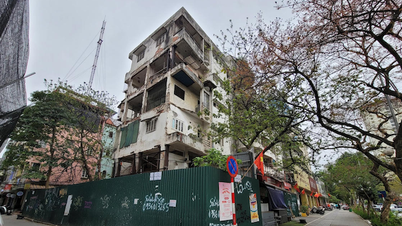
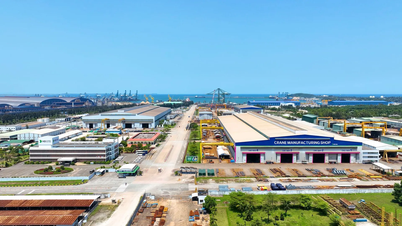
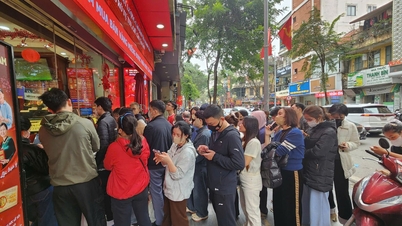
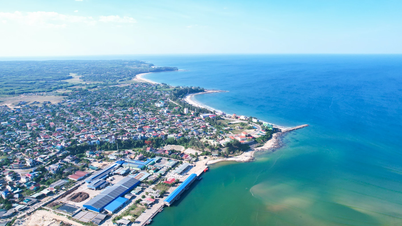
The land market is sluggish (Photo: KC).
The stories above partly reflect the current developments in the land market. Data from Batdongsan.com.vn in May shows that interest in land plots nationwide decreased by 40% compared to the same period last year - the sharpest decline among all types of real estate. In Hanoi alone, interest decreased by as much as 55%, while in the former Ho Chi Minh City area it decreased by 16%.
This unit noted that in Hanoi, the demand for land plots is scattered across many areas, while in Ho Chi Minh City it is mainly concentrated in a few areas such as District 9, Thu Duc City, Cu Chi, and the former District 2. Selling prices still show an upward trend in some areas, but mainly concentrated in the Central region.



Expert Ngo Thanh Huan cited survey data showing that many areas that were once "hot spots" for land and agricultural land investment, such as Binh Phuoc, Bao Loc, Hoa Binh, and Thai Nguyen, have not yet recovered to the peak prices set in 2022. Meanwhile, some other localities have recorded significant price increases, reflecting the increasingly clear differentiation of capital flows in the market.
According to Mr. Huan, during periods of rapid market growth, many investors primarily base their investments on expectations regarding urban planning or infrastructure projects, rather than considering fundamental factors such as population size, job creation potential, or the actual exploitable value of the real estate.
The mere appearance of information about urban planning can cause land prices in many areas to surge in a short period. Phu My (Ba Ria - Vung Tau), Duc Trong, Bao Loc, Phan Thiet, Binh Phuoc, and northern localities such as Hoa Binh, Bac Giang, and Bac Ninh have all experienced such price increases.
Cash flow shifts
However, expert Ngo Thanh Huan believes that since the market entered a slump at the end of 2022, the picture has changed significantly. Liquidity of land plots in areas far from the city center and with low population density has decreased by more than 80%, while apartments and other products with real cash flow potential have recovered much faster in both transactions and selling prices within about a year. To date, many areas where land prices previously increased mainly due to speculative expectations have yet to regain their previous price levels.
According to Mr. Huan, this is the most noteworthy signal in the current real estate market and will shape future trends. Money isn't disappearing; instead, it's shifting towards quality assets that generate cash flow, have infrastructure, transparent legal frameworks, and real utility value.
Sharing the same perspective, expert Tran Quang Trung believes that the period from now until the end of the year, and especially in the coming year, will be a time when investors need to proactively restructure their real estate portfolios, instead of continuing to invest based on herd mentality or emotions as in previous cycles.
According to him, the first thing to do is to review the entire portfolio to assess which assets should be retained, which assets need to be prioritized for addition, and what will be the main investment in the strategy for the next 5-10 years.
Mr. Trung emphasized that in the current context, liquidity is just as important, if not more significant, than expected returns. Therefore, investors need to anticipate market trends and changes in buyer demand to determine which segment will lead the next cycle.



According to the expert, unlike in previous periods, the planning direction, infrastructure development, and urban expansion are now clearer, and planning information is also publicly and transparently available. Therefore, instead of chasing land price surges, investors should base their long-term investment choices on the planning.
He argued that strategies that once yielded high profits, such as subdividing land for sale or investing based on local trends, would no longer be suitable in the new context.
To select real estate with lasting value, investors need to prioritize fundamental factors such as population size, infrastructure development speed, job creation potential, and amenities. Areas with metro lines, schools, hospitals, shopping centers, and other key infrastructure projects will have more potential for long-term price appreciation compared to areas supported only by expectations from planning information.
Source: https://dantri.com.vn/bat-dong-san/dat-nen-het-thoi-la-ga-de-trung-vang-20260630104615828.htm


![[Photo] Strengthening character and expertise: Intense training for artillery soldiers.](https://vphoto.vietnam.vn/thumb/1200x675/vietnam/resource/IMAGE/2026/06/30/1782815602541_lu-368-1875-4571-jpg.webp)