

With a forest cover rate of 61.5%, it can be affirmed that forests have become a crucial foundation for the sustainable development of Lao Cai . Forests are not only the "green lungs" of the country, but also a source of livelihood and a driving force for escaping poverty and achieving prosperity. In particular, the funding from forest environmental services, approximately 250 billion VND, has further strengthened the bond between people and the forests, making them consider them valuable assets.
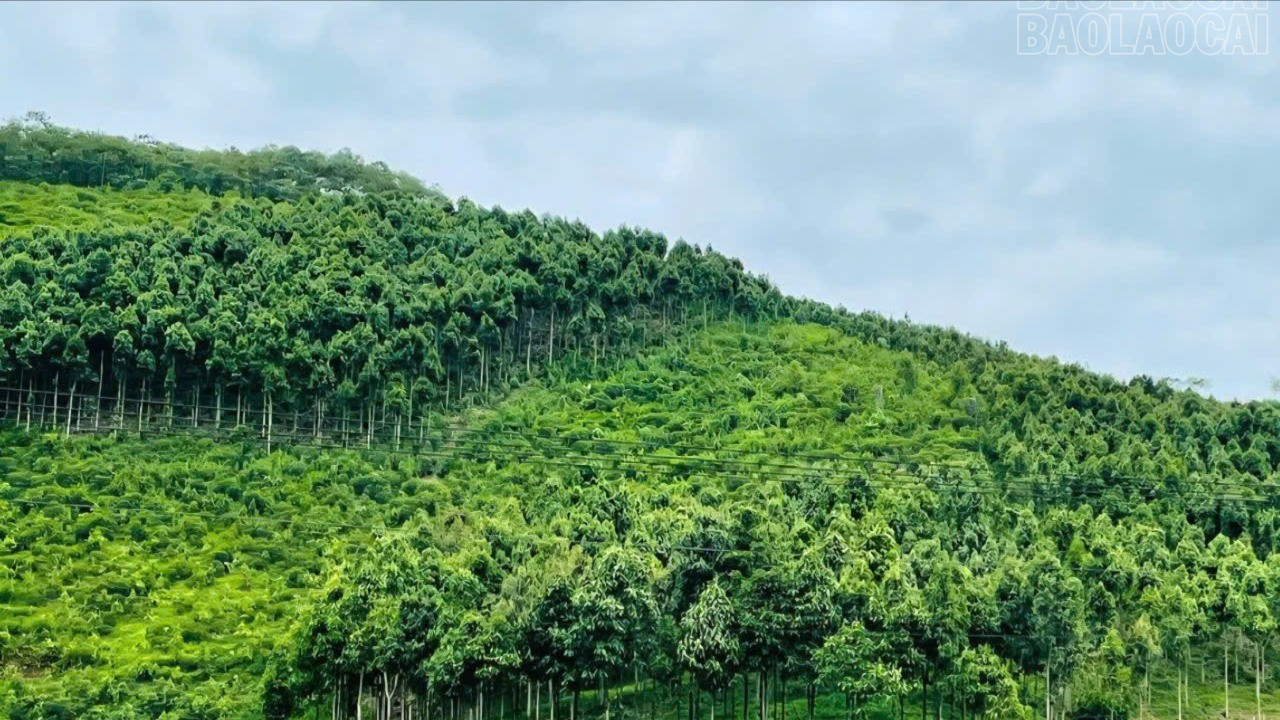
Forest cover rate reached 61.5%.
The entire province has 975,923 hectares of forest and forestry land, of which 865,059.9 hectares are forested land, including: 473,223 hectares of natural forest, 338,883 hectares of planted forest, and 52,953.7 hectares of non-forested land.

By 2025, the entire province will have planted over 14,000 hectares of forest.
Accordingly, in 2025, the entire province planted 14,242.9 hectares of concentrated forest, achieving 100.2% of the set plan. Of this total area, 1,517.7 hectares were newly planted for production; 12,448.4 hectares were replanted; and 276.8 hectares were planted as replacement for forest land converted to other uses. In addition, the province planted 7,870.5 thousand scattered trees, equivalent to 7,870.5 hectares.
Mr. Vu Minh Phuc, Deputy Head of the Provincial Forest Protection Department, said: To support the development of the aforementioned forest area, the entire province has prepared 111.5 million seedlings including cinnamon, tallow tree, pine, mahogany, acacia, bodhi tree, Pinus massoniana, Dalbergia tonkinensis, cypress, Terminalia catappa, and bamboo species...
Immediately after the province's merger, in order to ensure uninterrupted forest management, protection, and development, the province announced the 2024 forest status report within the year, serving as the basis for implementing the 2025 forest management, protection, and development plan.
Monitoring of forest resource changes is carried out in accordance with the Forestry Law; forest area changes in 100% of communes and wards have been updated on the FRMS software system; the current status and planning options for forest protection and development for the period 2021-2030, with a vision to 2050, have been integrated into the provincial plan; data on key tree species have been compiled and current status maps have been created.
In particular, to improve the quality and effectiveness of forest protection in general and natural forests in particular, the Bat Xat Nature Reserve has been upgraded to a National Park; forest management boards, forestry companies, and forest owners have developed sustainable forest management plans, including plans for planting medicinal plants under the forest canopy, along with many ecotourism and resort projects.
To date, 36,478.7 hectares have been granted forest certificates and organic cinnamon certification; 6,297.5 hectares of forest with approximately 6,200 codes have been issued certificates confirming the codes for planted forest areas for raw materials...

The forests of Lao Cai are lush and green, stretching from the lowlands to the highlands.
The entire province has reorganized 100 forest fire prevention and control steering committees with 4,393 members; strengthened the forest fire forecasting system with 11 automatic forecast tables, satellite data, and warning software... Widespread public awareness campaigns have resulted in only 4 forest fires occurring in the province in 2025, which were promptly handled according to the "four on-the-spot" principle, causing damage to 1.58 hectares.
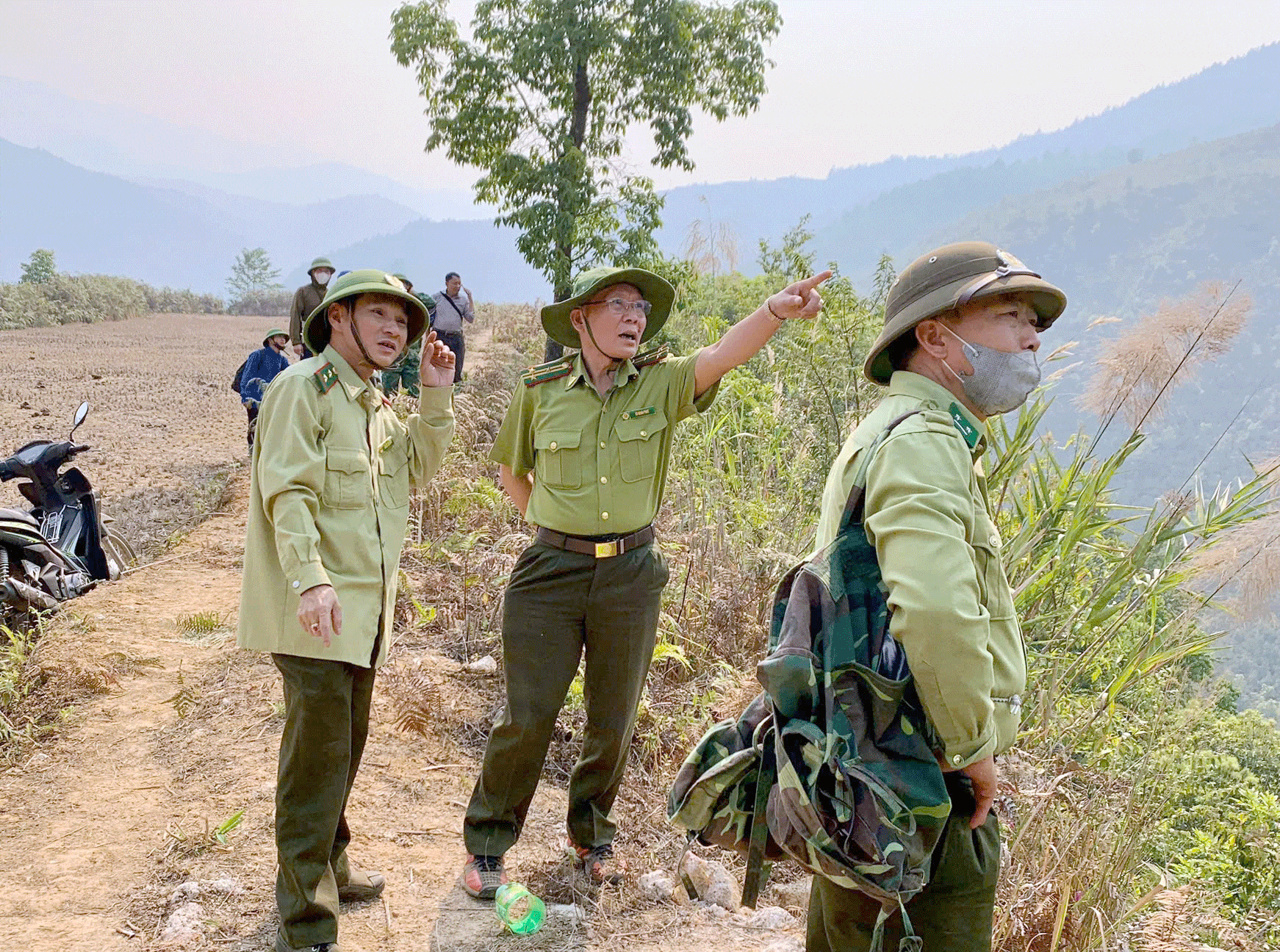
Provincial forest rangers patrol and protect the forest.
In 2025, the province's total forest product output reached a high level with 1,108 thousand m³ of timber, 86,426 tons of various forest products, 94,452 tons of bamboo shoots, 2,509 tons of hawthorn, 1,851 tons of cardamom, and 1,032,595 tons of firewood; 236,000 tons of dried cinnamon branches, leaves, and bark were harvested, and 646.9 tons of essential oil were extracted.
Recognizing afforestation as a key area in economic development, by 2025, the 15 communes currently located in the former Van Chan - Tram Tau - Nghia Lo district area had planted 3,410 hectares of forest and regenerated 1,573 hectares of natural forest. Simultaneously, the local people harvested 88,259 m³ of timber from planted forests, achieving 101.2% of the plan; 14,558 tons of bamboo, achieving 100.7% of the plan; 3,168 tons of cinnamon bark, achieving 100.6% of the plan; and cared for 498 hectares of planted protective forests.
Mr. Vu Dinh Truong, Head of the Regional Forest Protection Department, affirmed: Forests not only preserve the ecological environment but also play a crucial role in creating jobs and increasing income for the people, especially ethnic minorities in the area.
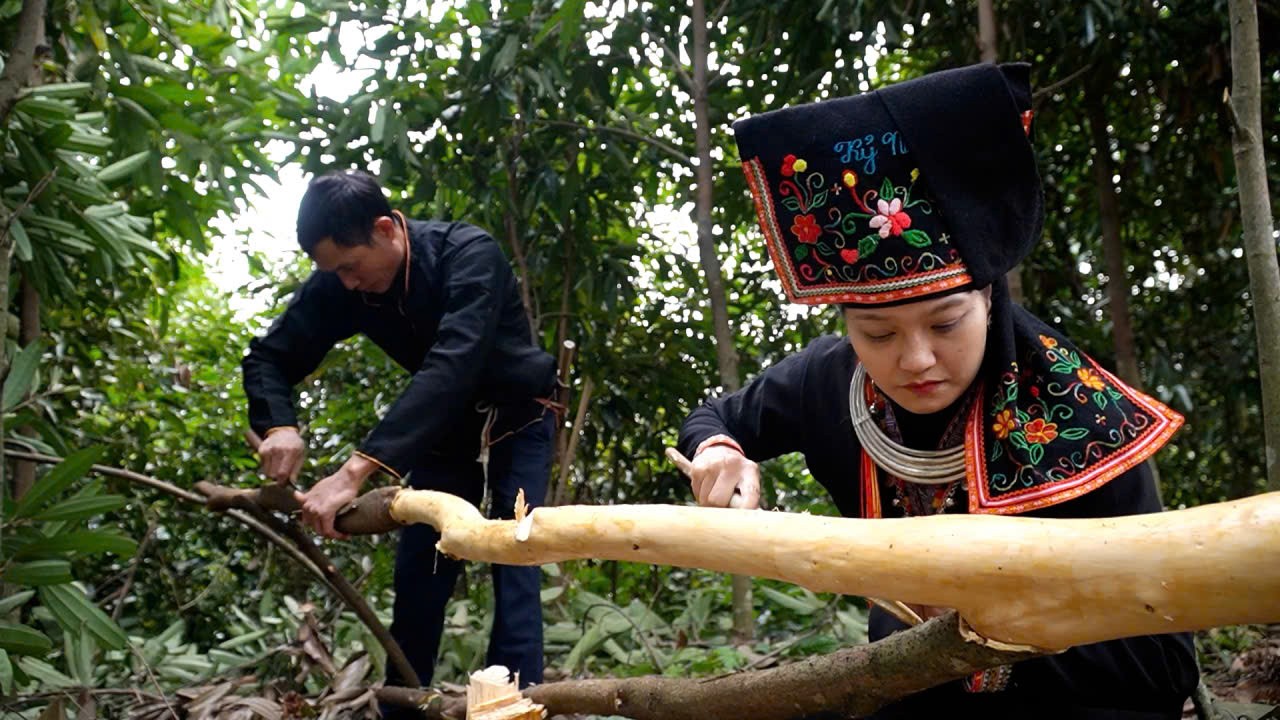
The Dao people harvest cinnamon.
Given its potential strengths, forestry continues to be a sector that makes a significant contribution to socio-economic development and creates stable jobs for the people of Phong Du Thuong commune.
In 2025, the people of the commune planted 221 hectares of new forest, achieving 116% of the plan, an increase of 31 hectares compared to 2024, with cinnamon trees accounting for over 95% of the planted forest area. This raised the forest cover rate in the commune to 78.5%. During the year, the people harvested 1,000 tons of cinnamon bark, 16,000 m³ of timber from planted forests, and 3,852 tons of bamboo and rattan.
Mr. Luong Van Thu, Chairman of the Commune People's Committee, said: Thanks to the forest, people have jobs, income, and faith in a green future; the multidimensional poverty rate of the commune has decreased to 3.98%.

The veneer factories provide employment for many local workers.
Forests have truly become a resource for development, acting as the "green lungs" and a sustainable livelihood for tens of thousands of households, while also opening up new avenues for ecotourism and processing industries. Many households have opened veneer processing workshops, creating jobs for rural workers.
Mr. Tuong Van Quy, from Dong Ty village, Yen Thanh commune, the owner of a workshop, shared: "Using local raw materials, our family workshop consumes about 20 cubic meters of wood per day, employing 6 local workers who have regular jobs with salaries ranging from 6 to 10 million VND per person per month."
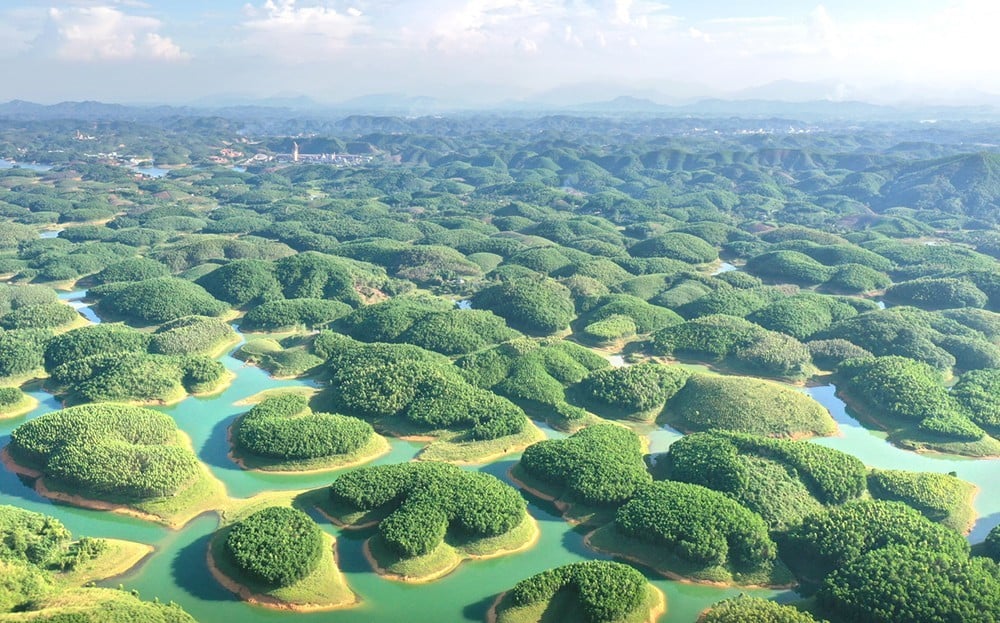
Forests planted on Thac Ba Lake.
Overcoming numerous difficulties, 2025 marks a significant step forward for the forestry economy of Lao Cai province. This achievement has contributed to creating jobs and increasing income for hundreds of thousands of workers, reducing the multidimensional poverty rate across the province to 11.06%, with poor households accounting for 5.5% and near-poor households 5.56%. Average per capita income reached 47 million VND, an increase of 17.3 million VND compared to 2020.
Thanks to payments for forest environmental services, and the sustainable conservation and development of cinnamon forests, protective forests, and special-use forests, the lives of the people are increasingly improving. Forests not only preserve land and water, and protect the ecological environment, but also become a foundation for the people's faith and aspirations, contributing to the realization of the goal of building a green, harmonious, distinctive, and happy Lao Cai.
Source: https://baolaocai.vn/dau-an-kinh-te-rung-post890747.html


![OCOP during Tet season: [Part 3] Ultra-thin rice paper takes off.](/_next/image?url=https%3A%2F%2Fvphoto.vietnam.vn%2Fthumb%2F402x226%2Fvietnam%2Fresource%2FIMAGE%2F2026%2F01%2F28%2F1769562783429_004-194121_651-081010.jpeg&w=3840&q=75)





Comment (0)