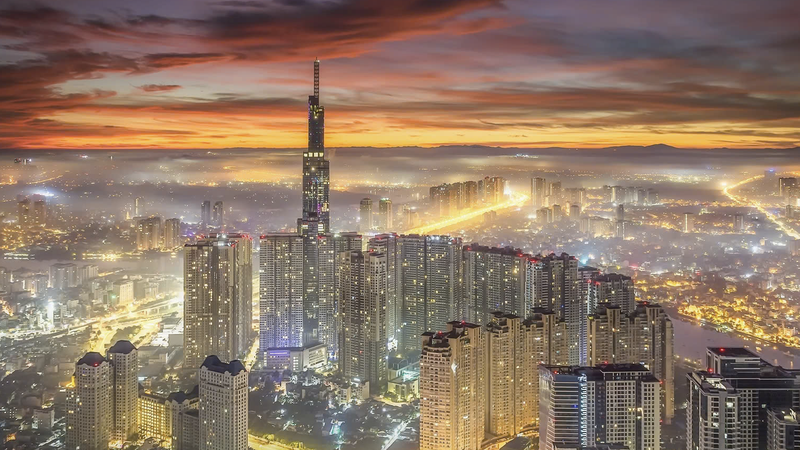
According to Mr. Bui Hong Minh, Deputy Director of the Department of Construction, while previously trees were often seen as merely an element beautifying the landscape and creating focal points for streets and residential areas, their role has now been recognized more broadly. They now represent ecological spaces, community gathering places, environmental improvement factors, and are also part of urban infrastructure, directly contributing to improving the quality of life for residents. Therefore, the province has proactively integrated the planning of green spaces, parks, and landscapes into the Provincial Planning for the period 2021-2030, with a vision to 2050, and the general planning of localities.

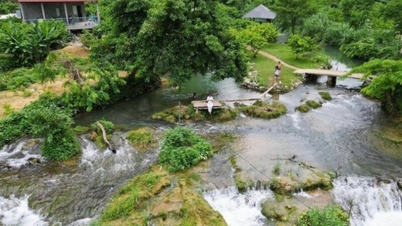
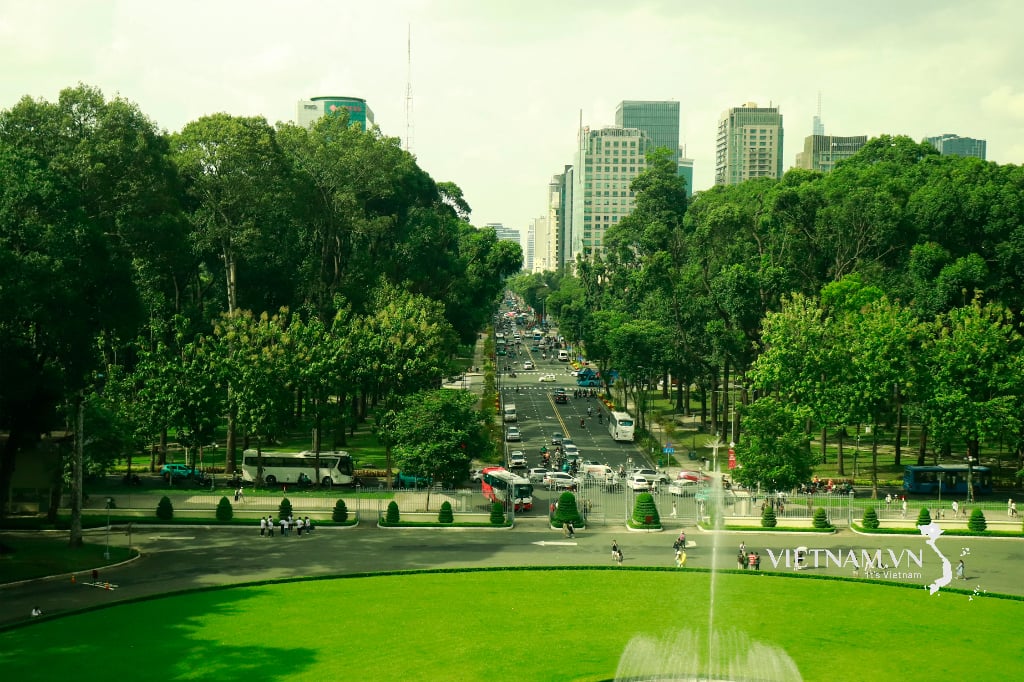
From the provincial level down to communes, wards, and special zones, the development of green spaces is no longer limited to the application of planning standards, but is viewed in harmonious relation to the urban development space. Tree planting is no longer focused on large-scale, mass-scale, or simply greening areas, but has shifted to systematic planning, themed tree planting, and the selection of tree species suitable for the soil and urban characteristics. Flower-lined streets, landscaped green areas, parks, gardens, and public spaces have contributed to softening the urban landscape, reducing the feeling of concrete jungles, and creating more outdoor recreational areas for residents.
Based on that orientation, the area of urban green space in the province has increased year by year. Public spaces, central parks, green buffer zones in industrial parks, and external transportation routes have become more clearly defined. Many urban renovation projects combined with technical infrastructure have helped upgrade the average public green space per capita, improving the urban landscape and living environment.

Along with state investment, the socialization of green space development has also been promoted. The participation of businesses and local communities in tree planting programs, mangrove reforestation, and greening areas affected by industrial production has created additional resources for the goal of green urban development. Mr. Vu Dinh Trinh, Manager of the Environmental Workshop, TKV Environmental Company, said: “The company has been assigned by the Vietnam Coal and Mineral Industry Group to manage the 12/11 Square in Cam Pha ward since 2019. We have focused on investing heavily in green spaces. To date, 80 Dalbergia tonkinensis trees, 23 date palms, and 25 Dalbergia tonkinensis trees have been planted and are thriving, creating a green, clean, and beautiful environment.”
In reality, urban green space development still faces several difficulties and limitations. The proportion of urban trees meeting standards is not evenly distributed, mainly concentrated in the core and central areas of large cities. Meanwhile, in some new urban areas, type III cities, or suburban areas, the ratio of public green space per capita is generally still low. The database and digitization system for urban green spaces are also not yet synchronized to track the life cycle of each tree, affecting long-term management and care.

To further green the city, Quang Ninh province has identified the need to "formalize" the development of green spaces through planning and standards. Strategic plans, construction plans, and architectural management regulations will continue to be refined, serving as the basis for urban management and development. The province will allocate an appropriate proportion of land for the development of urban infrastructure, green spaces, urban green areas, and regulating lakes to create scenic landscapes.
In addition, the province aims to develop a list of suitable tree species for each specific region, such as coastal areas tolerant to salinity, areas affected by landslides, coal mining areas, and heritage urban areas. Simultaneously, it aims to establish a "multipurpose green infrastructure" mechanism, integrating the green space system with smart drainage infrastructure following the "sponge city" model, using park green spaces to absorb and store natural rainwater, reducing localized flooding.



“The province will also continue to review, renovate, invest in, and upgrade cultural facilities, ensuring that each village and neighborhood has a playground and outdoor community space to serve the people; prioritizing resources to invest in building 100 hectares of new parks, green spaces, flower gardens, and public playgrounds in a modern, integrated, and environmentally friendly manner, with a budget of approximately 1,500 billion VND,” emphasized Bui Hong Minh, Deputy Director of the Department of Construction.
Source: https://baoquangninh.vn/de-do-thi-co-them-nhung-khoang-tho-xanh-3411956.html

![[Photo] Strengthening character and expertise: Intense training for artillery soldiers.](https://vphoto.vietnam.vn/thumb/1200x675/vietnam/resource/IMAGE/2026/06/30/1782815602541_lu-368-1875-4571-jpg.webp)