In its recently published annual Energy Union Report, the European Commission (EC) emphasized that EU member states must intensify their efforts to achieve the bloc's energy consumption reduction target by 2030.
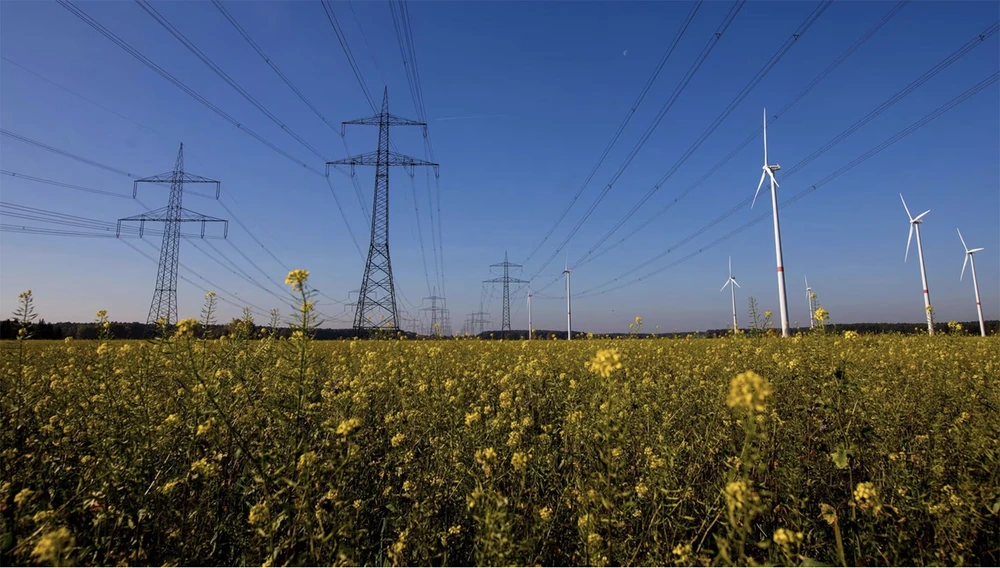
Ensure sufficient supply.
The report states that all members must step up efforts to ensure ambitions are adequately met and that the EU is on track to combat climate change. The EC calls on member states to submit their National Energy and Climate Plans as soon as possible to address bottlenecks, discuss best practices, and improve regional coordination, while enabling the rapid and flexible implementation of the Union's 2030 targets.

The EC also emphasized the need for closer coordination among member states, as well as market integration and joint action to address emerging challenges such as increasing energy shortages and energy price disparities compared to global competitors. The EC report also acknowledged the need for partnerships with industry to accelerate the development of net-zero emissions technologies and strengthen the EU's production base.
Previously, in October 2023, EU countries adopted a binding target of reducing energy consumption by 11.7% by 2030 compared to projected annual consumption based on the 2020 reference scenario. The Union also aims to reduce greenhouse gas emissions by at least 55% by 2030 compared to 1990 levels.
Take advantage of solar heat.
The competitiveness of Europe's clean technology industry is an integral part of the Energy Union, playing a crucial role in achieving energy security and decarbonization goals.
However, the report highlights that progress in the use of renewable energy for heating and cooling has been modest compared to the electricity sector, increasing from 18.6% in 2012 to 24.9% in 2022. Meanwhile, no concrete action has been taken to accelerate decarbonization in the thermal sector, and the enormous potential of renewable heat sources such as solar thermal, which are mass-produced in Europe, remains untapped.



According to Solar Heat Europe, in the context of the solar thermal industry calling for greater priority on the thermal decarbonization agenda, the EU must, on the one hand, expand its production capacity for all net-zero emission technologies, including those on which the EU has a serious strategic dependence, to meet the growing demand driven by the EU's climate ambitions. On the other hand, the EU must take decisive action to encourage faster deployment of net-zero emission technologies already produced in Europe.
Compiled by Hanh Chi
Source: https://www.sggp.org.vn/de-eu-dat-muc-tieu-giam-tieu-thu-nang-luong-post758680.html


![[Image] National conference summarizing one year of operation of the overall organizational model of the political system, the three-tiered government model.](https://vphoto.vietnam.vn/thumb/1200x675/vietnam/resource/IMAGE/2026/07/01/1782882811691_ndo_br_1-jpg.webp)