


Ho Chi Minh City is calling on overseas Vietnamese to join a new "financial ecosystem" where they can not only send money but also contribute capital, invest, and partner with businesses.
Boosting the attraction of overseas Vietnamese investment.
The Ho Chi Minh City People's Committee has just issued a plan to promote financial programs to attract remittances into science and technology . Accordingly, it is expected that in 2026, the city will pilot the mobilization of at least 500 billion VND from remittances and other social resources for investment in science and technology; establish a Science and Technology Investment Fund with an initial scale of at least 50 billion VND; and support at least 100 manufacturing and processing enterprises in accessing preferential credit for technological innovation, digital transformation, and green production investment.
By 2027, the scale of fundraising will be increased to at least VND 1,000 billion, aiming for long-term capital for green credit and technology-based credit. This is not just a policy decision, but a signal that the city is proactively shifting remittances from a consumption function to a development capital role.

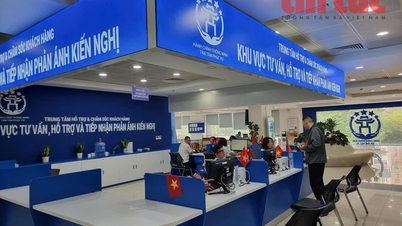
Another key "bottleneck" that overseas Vietnamese hope for is that the city will continue to accelerate administrative procedure reforms.
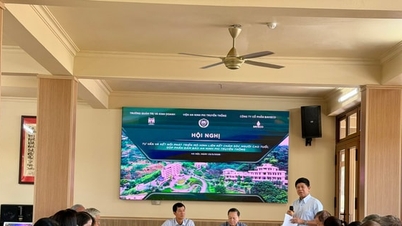
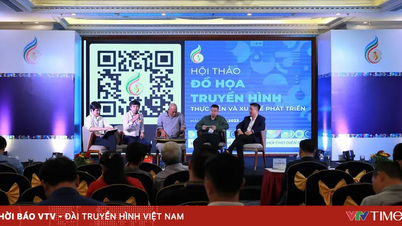
According to many experts, this goal is entirely achievable. In 2025, remittances to Ho Chi Minh City are expected to reach over US$10.34 billion, an increase of 8.3% compared to the previous year. Asia and the Americas continue to be the two main regions, accounting for over 80% of the total remittances, indicating that this flow of money is not only large but also relatively stable. Furthermore, according to data presented at the seminar "Leveraging Overseas Vietnamese Resources in Utilizing the Achievements of the Fourth Industrial Revolution for the Development of Ho Chi Minh City," organized by the Center for the Fourth Industrial Revolution in Ho Chi Minh City (HCMC C4IR), Vietnam has received over US$190 billion in remittances over the past 10 years, with Ho Chi Minh City alone accounting for approximately 60% of the national total.
While remittances were previously seen as a resource to support livelihoods, stabilize consumption, and build foreign exchange reserves, Ho Chi Minh City is now calling for a new "financial ecosystem" where overseas Vietnamese can not only send money but also contribute capital, invest, partner with businesses, and participate in technological development projects. According to Ms. Nguyen Huynh Diem Phuong, an overseas Vietnamese residing in the UAE, Ho Chi Minh City's upcoming establishment of a venture capital fund for overseas Vietnamese is a positive sign for attracting investment. For the first time, the city has moved from a policy of attracting remittances to a specific financial instrument with a defined scope, scale, objectives, and measurable expectations.
Mr. Nguyen Duc Huy, Deputy Director of HCMC C4IR, stated that currently only about 8.4% of remittances are invested in production and business; the majority remains focused on consumption and financial investment. This demonstrates the significant potential for redirecting these funds. Furthermore, the low rate of capital investment in business is due to market resistance. Therefore, if the issues of trust, transparency, and effective output are not addressed, remittances will continue to flow into safer havens rather than into production, investment, and business in science and technology – sectors with higher risks and longer payback periods.
What priorities should be given?
Therefore, the first priority for overseas Vietnamese should not be a general invitation, but a clear institutional commitment. Professor Ha Ton Vinh, Chairman and CEO of Stellar Management, believes that for investment funds to attract remittances, they must demonstrate transparency, risk management capabilities, profitability, and a clear legal framework. For overseas Vietnamese, to attract investment, the State needs to guarantee the rights of investors. When money is managed according to market standards, trust will have a basis for formation.
Furthermore, Ho Chi Minh City needs to quickly create investment channels that suit the "capital appetite" of each group of overseas Vietnamese. Mr. Bui Quang Duy, Deputy Director of Climate Finance Investment at the responsAbility Fund in Switzerland, believes that investments in green finance and sustainable transformation require long-term capital, risk-resistant capital, and this is something that venture capital funds can provide well. Not all remittances should go into one basket. Some will be suitable for green certificates of deposit or technology-based certificates of deposit because they prioritize safety and stable returns; but others will be willing to invest in venture capital funds if the project portfolio is clear, the management team is professional, and the exit mechanism is transparent. To attract real money, Ho Chi Minh City must design many specific "investment sectors".

Currently, only about 8.4% of remittances are used in production and business; the majority remains concentrated in consumption and financial investment.
Another crucial "bottleneck" that overseas Vietnamese hope for is that the city continues to accelerate administrative procedure reforms. Tony Truong, CEO of Vietnam Semiconductor Test Corp, recounted that his company took six months to establish a business in Vietnam, while it only took about two months abroad. In the semiconductor industry, cumbersome procedures and customs issues can significantly hinder operations; transparency and a new, innovative environment are key factors in attracting talent back to the country.
It is also necessary to recognize overseas Vietnamese as a comprehensive resource of knowledge, governance, and global networking. According to Mr. Vo Quang Hue, Chairman of FoundryAI Vietnam, the intellectual resources of the Vietnamese community abroad are not an abstract concept, but a "living resource" that can create a tangible impact if properly connected and utilized.
By mobilizing overseas Vietnamese resources as a knowledge ecosystem, the city will gain additional technology, governance standards, market relations, advisory teams, and the capacity to lead large-scale projects. Therefore, the highest priority for overseas Vietnamese in Ho Chi Minh City's new plan must be their right to participate deeply in the value chain, not just as investors. According to experts, when these priorities are implemented, remittances will truly transform into development capital and science and technology.
Source: https://vtv.vn/de-kieu-hoi-thanh-von-cong-nghe-100260318112311222.htm

























































































Comment (0)