Amidst Hue's efforts to promote its heritage values for cultural and tourism development, the current challenge lies not in the number of published books but in the ability to bring those values to readers.
Preserving the culture of the ancient capital through the Hue Book Collection.
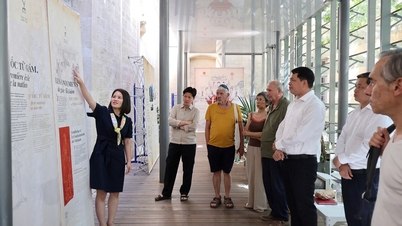
The People's Committee of Hue City has just issued a plan to implement the "Establishing and Developing the Hue Library" project in 2026, identifying this as a pivotal year marking the beginning of the 2026-2030 period. According to the plan, the city will continue to improve the management mechanism, strengthen the organizational structure and regulations related to the operation of the Hue Library; and simultaneously build and update the catalog of publications, organize the selection, evaluation, and publication of works on the history, culture, geography, and scholarship of Hue.
One of the key focuses for 2026 is to accelerate digital transformation. The city aims to digitize 100% of new publications eligible for electronic distribution, build and perfect the Hue Electronic Bookcase database, and gradually connect it with the Hue-S platform. Alongside this, community bookcases, school bookcases, and free reading stations will continue to be developed to expand access to knowledge for the people.
Promotional activities are also emphasized through cultural and tourism events, competitions to learn about the Hue Library, and media programs on newspapers and digital platforms. The city is also actively mobilizing social resources and developing the Hue Library Fund to support publishing activities, contributing to the spread of reading culture and bringing materials about Hue closer to the public.
With a history spanning over 700 years, Hue possesses a vast collection of documents covering many fields such as history, culture, literature, art, and science and technology. Over generations, this ancient capital has consistently attracted researchers, historians, artists, and those who love Hue, leading to the creation of many meaningful works that contribute to enriching the region's and its people.
However, over time, many publications and documents about Hue are at risk of being lost or forgotten due to limited storage, inconsistent preservation conditions, and a lack of systematic publishing processes. Meanwhile, many valuable manuscripts have yet to reach readers, and many areas of research on Hue still have gaps that need to be explored and supplemented. This reality necessitates the preservation, systematization, and more effective dissemination of the wealth of documents accumulated over generations.

In 2021, the Hue Book Project was officially launched with its inaugural publication, the Thua Thien Hue Gazetteer - Culture section. From this milestone, many works on the history, culture, and heritage of Hue have been selected and published, such as "Hue - The Capital of Vietnamese Ao Dai"; "Hue Singing Art in Contemporary Society"; "Thai Hoa Palace - Architecture and Art - A Symbol of the Nguyen Dynasty's Aspirations"; "King Ham Nghi - Memories of the El Biar Road"; and the "Magical Capital" book series...


Most recently, in April 2026, the Hue Library continued to introduce a collection of research papers on the Nguyen Dynasty, comprising two volumes with a total of over 2,700 pages. The collection includes 165 representative works by many generations of scholars, covering fields from politics, history, law, diplomacy, military to culture and society. This is considered one of the largest-scale works ever published within the framework of the Hue Library, contributing to supplementing important research materials on the Nguyen Dynasty and the history of Hue.
After five years of establishment, the Hue Library has gradually built up a rich source of research materials on the history, culture, and people of Hue. The project has been highly praised by many experts and is considered the first provincial-level library model in the country. According to Mr. Phan Thanh Hai, Director of the Department of Culture and Sports of Hue City, this is a long-term initiative in the local cultural development strategy. Through its implementation, the project has gradually gathered and supplemented many important documents on the history, culture, heritage, and social life of Hue, creating a foundation for research, education, and promotion of local culture.
Mr. Phan Thanh Hai commented that the Hue Library is gradually becoming a place to gather and share materials about Hue, where research works are preserved and introduced to the public. In the context of Hue becoming a centrally-governed city, this is also a process of building a knowledge foundation to serve heritage preservation, education, and cultural development in the future.
After five years of implementation, the Hue Book Collection has gradually formed a system of publications specializing in the history, culture, and heritage of the ancient capital. From the Thua Thien Hue Gazetteer - Culture section to works on the ao dai (traditional Vietnamese dress), Hue folk songs, imperial architecture, and the Nguyen Dynasty, many important documents and research results have been compiled and introduced to readers. With 16 published books, the project contributes to preserving valuable resources about Hue, while also creating a foundation for continued research, dissemination, and promotion of the cultural values of this heritage land in the new era.
The path to reaching the public is still narrow.
Despite having a substantial collection of books about Hue, the journey to bring these publications to a wider readership still faces many obstacles. Most of the books currently available are scholarly and academic research papers, making them more accessible to a niche audience compared to more general publications. Furthermore, the distribution system is quite limited, mainly relying on donations or availability at libraries and reading rooms, making it difficult for many who need access to these books to purchase them.

Many readers consider this regrettable because numerous publications from the Hue Book Collection are meticulously produced in both content and design. "I found some books very good, suitable as gifts for relatives and friends who love Hue, but I couldn't find them on the market," one reader shared. Furthermore, the marketing efforts haven't generated the necessary appeal, leaving many highly regarded books in the research community relatively unknown to the general public.
Acknowledging this reality, Mr. Phan Thanh Hai stated that many publications in the Hue Book Collection have good content and are highly regarded by researchers, but their reach within the community remains limited. According to him, this is one of the key issues that needs to be addressed in the next phase of development.
Based on this experience, the Hue Book Collection is gradually shifting from a project-based publishing mindset to one that is linked to the needs of the public and the market, while still ensuring academic quality. The goal is for books about Hue to not be confined to libraries, reading rooms, or internal distributions, but to have a wider presence in the reading community.



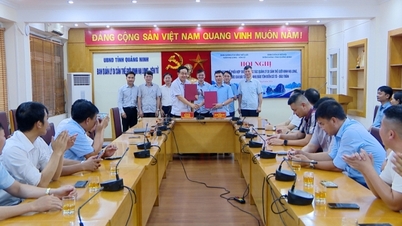
Currently, the Hue City Department of Culture and Sports is collaborating with Thuan Hoa Publishing House in editing and publishing books under the project. In the future, the Department of Culture plans to expand its partnerships with professional distributors to bring books to a wider market, including online distribution systems and e-commerce platforms.
In addition to scholarly books, the Hue Library will expand to include photo books, bilingual books, historical narratives, and other publishing formats more suitable for the general public. Selected publications must meet requirements for academic quality, cultural and historical value, originality, and the potential for widespread dissemination within the community.
Notably, the selection scope will not be limited to research works. Literary and artistic works bearing the distinctive mark of Hue will also be considered for inclusion in this system. This is seen as a necessary direction for the Hue Book Collection to expand its readership, enrich the source of materials about the ancient capital, and bring Hue's cultural values to greater prominence in contemporary life.
Source: https://baovanhoa.vn/xuat-ban/de-sach-hue-di-xa-hon-239037.html
![[Photo] General Secretary and President To Lam attends the Central Public Security Party Committee Conference](https://vphoto.vietnam.vn/thumb/1200x675/vietnam/resource/IMAGE/2026/06/24/1782302063612_a1-bnd-9302-9166-jpg.webp)
![[Photo] Opening Ceremony of the 13th National Congress of the Ho Chi Minh Communist Youth Union](https://vphoto.vietnam.vn/thumb/1200x675/vietnam/resource/IMAGE/2026/06/24/1782286753905_ndo_br_1-8510-jpg.webp)


![[Photo] The 13th National Congress of the Youth Union conducts personnel work.](https://vphoto.vietnam.vn/thumb/1200x675/vietnam/resource/IMAGE/2026/06/24/1782299943080_ndo_br_1-6868-jpg.webp)