In South Korea, candidates thought it would be easier because it only involved textbook knowledge and omitted the "killer questions," but in reality, the university entrance exam was just as challenging as in previous years.
On November 16th, half a million South Korean students took the Suneung – a college entrance exam assessing aptitude. This was the first year that the highly difficult "killer questions" requiring knowledge beyond textbooks were removed, leading many students to hope for an easier exam.
However, according to a survey by the educational television channel EBS, nearly 86% of the 2,764 respondents said this year's exam was "relatively difficult" and "very difficult".
Specifically, in Korean language, 64.5% of test-takers rated the exam as "very difficult" and 23.2% found it "relatively difficult". For English, 38.2% reported a high level of difficulty, while the figure for Mathematics was 32.1%.
According to experts and candidates, each subject exam has about 5 high-level application questions with a difficulty level equivalent to the "killer questions" of previous years. For example, question 22 in the Math exam required candidates to find a graph that satisfies a given condition by examining the sign of the differential coefficient, and then calculating the value of the function. Many candidates were stumped, while a math teacher at a tutoring center took more than 20 minutes to solve this problem.
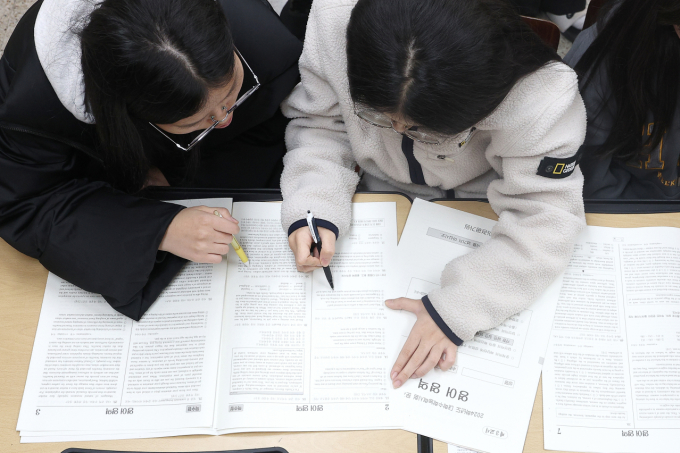
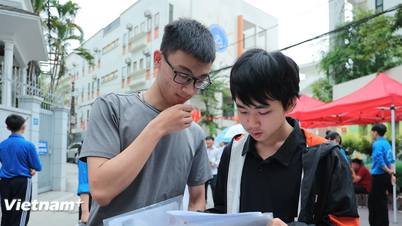
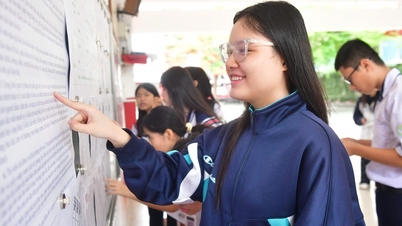
One day after the university entrance exam, students in Daegu check their answers together, November 17. Photo: Yonhap

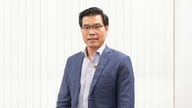

Lim Seong-ho, director of Jongno Academy, one of the largest private educational institutions in South Korea, noted that while the exam content is based on textbooks, the questions are becoming increasingly complex.
"Students need to solve a math problem in 2-3 minutes, but the teachers at the cram school think this is impossible," he said.
Choi Soo-il, head of the Center for Mathematical Innovation at No Worry Education, shared a similar assessment.
Experts are concerned that students will continue to attend cram schools to receive guidance and adapt to new question formats, contrary to the Ministry of Education's original goals.
Meanwhile, at a meeting last weekend, the council organizing this year's university entrance exam affirmed that the exam content would only include knowledge from textbooks and would have an appropriate level of difficulty to assess the abilities and classify candidates. Those who prepare well for the exam will achieve high results.
"Although the question is complex, it doesn't require problem-solving skills that are only taught at private centers," the South Korean Ministry of Education responded to the controversy surrounding the difficulty of the math exam.
The Suneung exam is one of the most rigorous university entrance exams in the world . In eight hours, candidates must take tests in Korean language, mathematics, English, Korean history, a second foreign language, or Kanji, among other subjects. In previous years, the difficulty of the exam stemmed from "killer questions," which typically only appeared in mathematics and Korean. These "killer questions" usually had a low correct answer rate (5-10%), aiming to identify top-performing students for university admissions.



This year, at the president's request, these questions have been removed. The goal is to reduce exam pressure for students and to minimize the need for parents to spend heavily on extra tutoring for their children.
50% of the exam content was produced by the teaching staff of EBS, the national educational television channel. The exam organizing committee also tried to eliminate questions requiring a high level of knowledge or containing many variables to ensure that candidates had enough time to complete the exam.
Phuong Anh (According to Korea Herald )
Source link