According to a proposal put forward by Thailand , ASEAN will strengthen semiconductor supply chain linkages, develop high-quality human resources, share research infrastructure, build a network of centers of excellence, and work towards common standards through the establishment of the ASEAN Semiconductor Council. Given that the semiconductor industry is becoming a strategic element of the digital economy and artificial intelligence (AI), this is seen as a long-term step to enhance the region's standing.
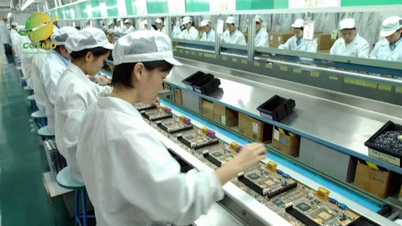
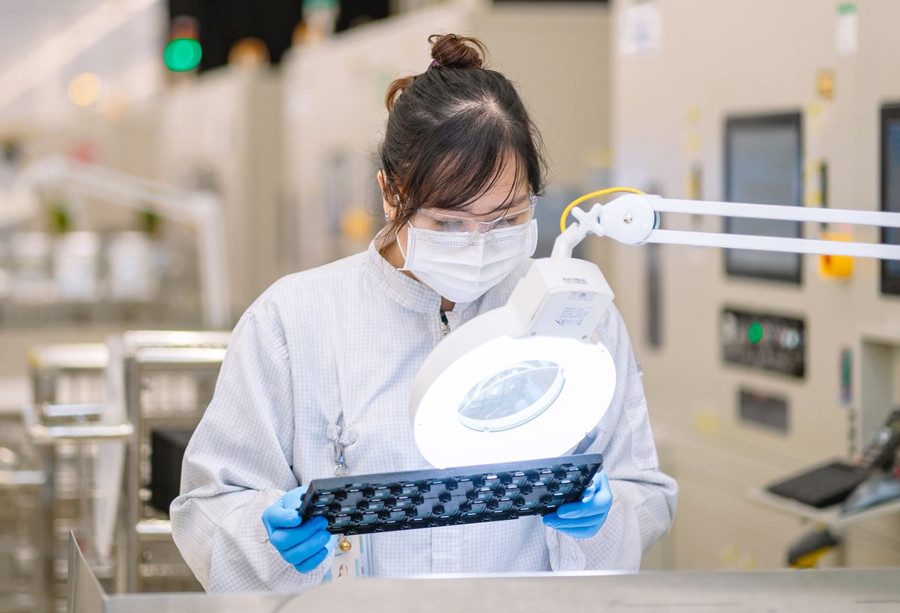
In fact, ASEAN has long been a crucial link in the global semiconductor industry. Malaysia and Singapore have long been centers for chip packaging and testing. Vietnam has emerged with design and assembly projects. The Philippines possesses a large workforce in the electronics sector. And Thailand has a developed automotive and electronics industry, creating a huge demand for chips. However, the capabilities of these countries remain fragmented, lacking coordination mechanisms to form a complete value chain.


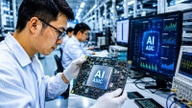
If the ASEAN CHIPS Act is implemented, the greatest benefit will be connecting the strengths of each country. This is crucial because, to date, no country in the region has been able to build a complete semiconductor value chain like the US, Taiwan (China), or South Korea . With effective coordination, ASEAN could form a supply chain spanning from research, design, material manufacturing, packaging, testing, to consumption, creating greater attractiveness for global technology corporations.
In the current geopolitical climate, many businesses are seeking to diversify their supply chains instead of relying on a single country. Southeast Asia is considered one of the best destinations for this investment shift. ASEAN itself already possesses an industrial supply chain, being home to many factories producing electronic components, packaging, and testing chips for major technology corporations. This means ASEAN doesn't need to build an entirely new ecosystem but can expand from its existing industrial base. Furthermore, with over 680 million people, ASEAN is not only a manufacturing hub but also a growing consumer market for electronics and semiconductors. The region also boasts a young, competitively priced, and increasingly skilled workforce. With a mechanism for collaborative training, expert exchange, and mutual recognition of qualifications among member countries, ASEAN could potentially form a unified semiconductor workforce – something even many developed economies are currently lacking.
However, the path to realizing the ASEAN CHIPS Act is not entirely smooth. The first difficulty is the vast development gap between member states. Secondly, there is the competitive factor in attracting investment, as countries still use tax incentives, land, and their own policies to attract foreign businesses. Furthermore, the semiconductor industry requires very large capital investments, highly skilled human resources, and access to advanced technology – all factors that ASEAN cannot yet fully control. In addition, the region remains significantly dependent on partners outside the bloc for manufacturing equipment, materials, design software, and core technologies. Finally, as semiconductors become a strategically competitive sector among major powers, ASEAN will have to maintain a balance in its relations with the US, China, Japan, South Korea, and Europe to both attract investment and avoid being drawn into confrontation.
Although still in the conceptual stage, the ASEAN CHIPS Act initiative is significant, offering the region a framework for cooperation with a long-term vision. If ASEAN can build an effective coordination mechanism, leverage the complementary strengths of each member, and capitalize on the global supply chain shift, the bloc has a real chance of becoming a new pole in the global semiconductor value chain.



Source: https://hanoimoi.vn/de-xuat-dao-luat-chips-asean-co-hoi-hinh-thanh-chuoi-gia-tri-ban-dan-khu-vuc-1209551.html