The Hanoi Center for Disease Control (CDC) predicts that the number of measles cases may continue to increase in the first three months of 2025 due to social gatherings and contact with large groups of people during the Lunar New Year holiday.
The Hanoi Center for Disease Control (CDC) predicts that the number of measles cases may continue to increase in the first three months of 2025 due to social gatherings and contact with large groups of people during the Lunar New Year holiday.
According to information from the Hanoi CDC, in the week from January 3-10, the city recorded 120 cases of measles in 22 districts and towns, an increase of 19 cases compared to the previous week. Since the beginning of 2024, Hanoi has had 556 cases of measles in 30 districts and towns, while no cases were recorded during the same period in 2023.
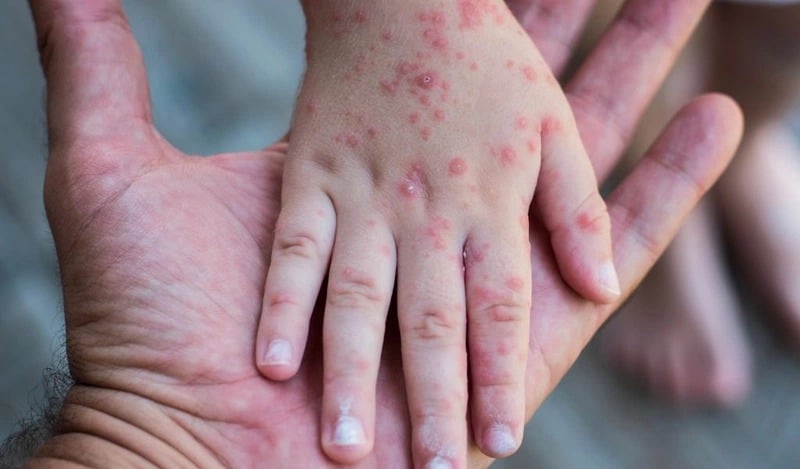 |
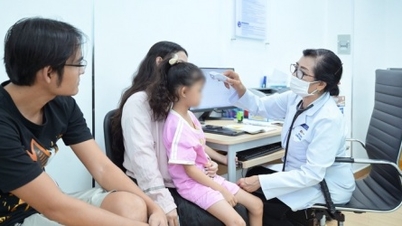
| In Hanoi, a large proportion of measles cases recently have been among children. (Illustrative image) |
The age distribution of measles patients included 61 cases under 6 months (11%), 91 cases from 6 to 8 months (16.4%), 85 cases from 9 to 11 months (15.3%), 183 cases from 1 to 5 years old (32.9%), 57 cases from 6 to 10 years old (10.3%), and 79 cases over 10 years old (14.2%).
The Hanoi CDC assesses that the measles epidemic is rapidly increasing, mainly among people who have not been vaccinated or have not been fully vaccinated. It is predicted that in the first three months of 2025, the number of measles cases may continue to rise, especially during the Lunar New Year holiday, following the trend of the 2018-2019 epidemic.
Besides measles, Hanoi also recorded 67 cases of dengue fever in 23 districts last week, an increase of 12 cases compared to the previous week. To date, the entire city has recorded 9,288 cases of dengue fever, a decrease of 77% compared to 2023.
This week, a dengue fever outbreak also occurred in Hai Ba Trung district. The total number of outbreaks since the beginning of the year is 481, of which one is currently active.



In addition, Hanoi recorded 27 cases of hand, foot and mouth disease (an increase of 18 cases compared to the previous week) and 1 case of whooping cough in Thach That district (a 2-month-old girl who had received one dose of the 6-in-1 vaccine). Other diseases such as tetanus, streptococcal infection in pigs, meningococcal disease, and Covid-19 were not recorded last week.
The Hanoi CDC has proactively coordinated with relevant units to monitor, detect patients, and handle outbreaks in areas with reported cases.
Next week, the CDC will inspect and monitor the handling of measles outbreaks at several schools in Chuong Duong ward (Hoan Kiem district), Hoang Liet and Mai Dong wards (Hoang Mai district).
The Hanoi CDC continues to review the measles vaccination history of children aged 1-5 years and those in close contact with measles cases. Those deemed necessary will be advised to receive at least two additional doses of the vaccine as per the Ministry of Health 's guidelines.
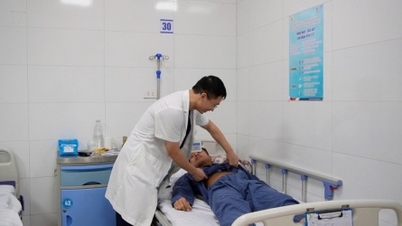
At the National Hospital for Tropical Diseases, there are currently many cases of measles, the majority of which are children under 1 year old. One notable case is baby LTC, who was admitted with symptoms of high fever (39°C), cough, vomiting, and diarrhea.
Initially, the family thought the child had a sore throat, but after three days without improvement, a red rash appeared, spreading from the face down to the body and limbs. After being hospitalized, the child was diagnosed with measles and is receiving intensive treatment. The condition is gradually stabilizing, but monitoring is still necessary to prevent complications such as pneumonia or malnutrition.
Another serious case involved 6-month-old NTQ, who contracted measles with a complication of severe pneumonia. The child required emergency intervention, including intubation and respiratory support. After 5 days of treatment, the child showed positive progress but still needs long-term monitoring.
Dr. Le Thi Thu Hien, who treats measles patients, said that measles can cause many dangerous complications, especially in children who have not been fully vaccinated. Common complications of measles include pneumonia, encephalitis, malnutrition, etc.
To prevent measles and its dangerous complications, full vaccination is the most important measure. Doctor Le Thi Thu Hien advises parents to ensure their children receive both doses of the measles vaccine according to the national immunization schedule. Women should also get vaccinated before pregnancy to protect their children in the first few months of life.



Besides vaccination, parents should also pay attention to other preventive measures such as isolating children with measles to prevent the spread of the disease, maintaining a clean living environment, and washing hands frequently. Children should receive their first dose of the measles vaccine at 9 months of age, the second dose at 15-18 months, and the third dose when they are 4-6 years old.
Dr. Nguyen Tuan Hai, from the Safpo/Potec Vaccination System, emphasized that vaccination is the only way to protect children and adults from measles and its dangerous complications. Countries require measles vaccination coverage rates above 95% to achieve herd immunity.
Vaccination not only protects children's health but also prevents the spread of the disease in the community. With an effectiveness rate of up to 98%, the measles vaccine is the most effective preventive tool, helping to minimize the risk of contracting the disease and serious complications.
Measles is a preventable disease through vaccination. However, if not detected and treated promptly, it can lead to serious complications. Parents need to adhere to the vaccination schedule and take their children to a medical facility immediately upon detecting symptoms of measles.
Source: https://baodautu.vn/ha-noi-dich-soi-co-the-tang-thoi-gian-toi-d240753.html




















































































![[INFOGRAPHICS] Can Tho implements the Strategy for Ethnic Affairs until 2030, with a vision to 2045](https://vphoto.vietnam.vn/thumb/402x226/vietnam/resource/IMAGE/2026/06/28/1782658308447_1782658217.webp)