

(HNMCT) - Van Ban is a mountainous district in the southwest, the gateway to Lao Cai province. Its natural and cultural resources possess a pristine beauty, largely unknown as a potential tourist destination. This is both an advantage and a limitation for Van Ban. However, with proper planning and direction, Van Ban promises to become a high-quality destination alongside other attractive locations in the northern mountainous provinces.
The potential for "sleeping"
Van Ban possesses incredibly diverse natural resources, including a large area and volume of forest resources, with a forest cover rate of 64.8%. The vast primeval forests with ancient trees and rich ecosystems in Nam Tha, Liem Phu, Nam Xe communes, and the Hoang Lien - Van Ban Nature Reserve are home to many rare and precious plant and animal species. The natural landscape of Van Ban is also as attractive as the Muong Hoa Valley (Sa Pa) and Y Ty (Bat Xat), thanks to its unique terraced rice fields spread across the Den Thang, Na Nheo, and Duong Quy valleys.
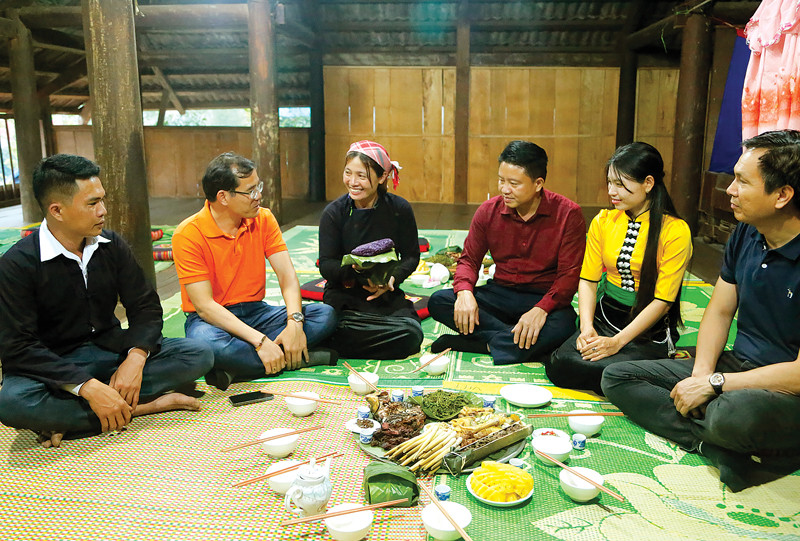
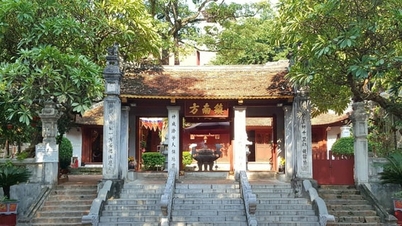
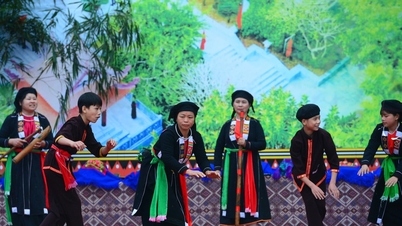
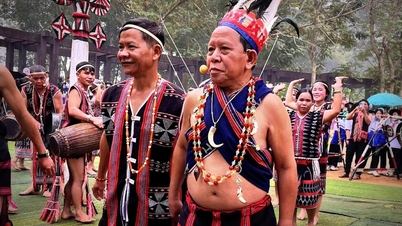
Van Ban is home to 11 ethnic groups, accounting for 84.6% of the district's population, including the Tay, Mong, Dao, Giay, Phu La, San Chay, and Xa Pho. The ethnic minority communities in Van Ban have relatively well-preserved their customs and traditions, along with 14 unique national intangible cultural heritage sites such as the Long Tong Festival and Khap Nom folk songs of the Tay people; the Ay Lay village prayer ceremony of the Dao Ho people; the forest worship ceremony of the Giay people; and the Khoi Kim ritual of the Red Dao people. The district also boasts historical sites that commemorate the nation's resistance against foreign invaders, such as the Na Chuong revolutionary base, the Pu Gia Lan historical site, and the Khau Co fort victory site. In addition, the district has one national historical site, the Co Tan An Temple, and six provincial-level historical and cultural sites.
However, in recent years, tourism in Van Ban seems to have remained dormant, lacking competitiveness compared to neighboring destinations. Based on its rich natural and human resources, Van Ban is oriented towards developing tourism alongside its "pillars" of industry, agriculture , and urban development.
Positioning a distinctive destination brand.
Based on reality, Van Ban recognizes the need to orient tourism development with key products being cultural tourism, ecotourism, and agricultural tourism in order to optimally exploit the district's advantages. The town of Dan Thang, which has been planned to become a high-quality tourist town, possesses all the necessary conditions to develop these products, making it a highlight of tourism in Van Ban and Lao Cai province.
According to the Chairman of the People's Committee of Van Ban District, Vu Hong Phuong, although it is a "latecomer" locality, with its existing advantages, along with a well-planned orientation and long-term vision as shown in the Dan Thang Tourist Town Planning and the Van Ban District Tourism Development Strategy Project to 2030, with a vision to 2050, Van Ban will "surpass" other localities.
To develop tourism in conjunction with sustainable cultural and natural landscape preservation, Vice Chairman of the Vietnam Community Tourism Association (VCTC) Vu Van Tuyen suggested that Van Ban should leverage the existing experiences of neighboring localities to manage risks and mitigate negative impacts from natural disasters and human activities. In addition, specific scenarios are needed for infrastructure development, accommodation systems, and tourism training. “Van Ban needs to position itself as a unique destination, avoiding the pitfalls of Sa Pa where uncontrolled tourism development negatively impacted the environment, landscape, and cultural identity,” Mr. Tuyen stated.
Referring to the perspective of transforming core values into added value through the development of appropriate services, according to Associate Professor Dr. Duong Van Sau, former Head of the Tourism Department (Hanoi University of Culture), Van Ban needs to aim for "six bests" in the criteria, namely: Simplicity, distinctiveness, and making the most satisfying and impressive experience for tourists; Best exploitation of resources and mobilization of resources; Bringing the highest benefits to stakeholders; Best possible protection of the ecological environment; Best preservation and promotion of local cultural values; and Creating and developing the most harmonious relationships within the community.
Sharing the perspective that preserving culture for tourism development is a long-term orientation of the province, Deputy Director of the Department of Culture and Sports of Lao Cai, Duong Tuan Nghia, said: “Some ethnic minority groups such as the Tay, Green Hmong, and Xa Pho in Van Ban are currently preserving cultural values that are different from many other regions, creating a unique identity. This is an “asset” that needs to be preserved through the province's Project on preserving and promoting heritage values associated with tourism development. In addition to developing cultural tourism, nature tourism, ecological tourism, and agricultural tourism products, Lao Cai also focuses on preserving heritage at risk of disappearing, strengthening the transmission of heritage between generations, and incorporating it into school education programs. Developing high-quality tourism products with unique experiences will contribute to positioning the Van Ban tourism brand in the future.”
Source
![[Photo] General Secretary To Lam presides over a thematic session on strategic technology.](https://vphoto.vietnam.vn/thumb/1200x675/vietnam/resource/IMAGE/2026/03/18/1773838586650_anh-1-bnd-1822-7089-jpg.webp)






















































Comment (0)