During the summer break, the number of children seeking eye examinations for refractive errors, including myopia, increases significantly.
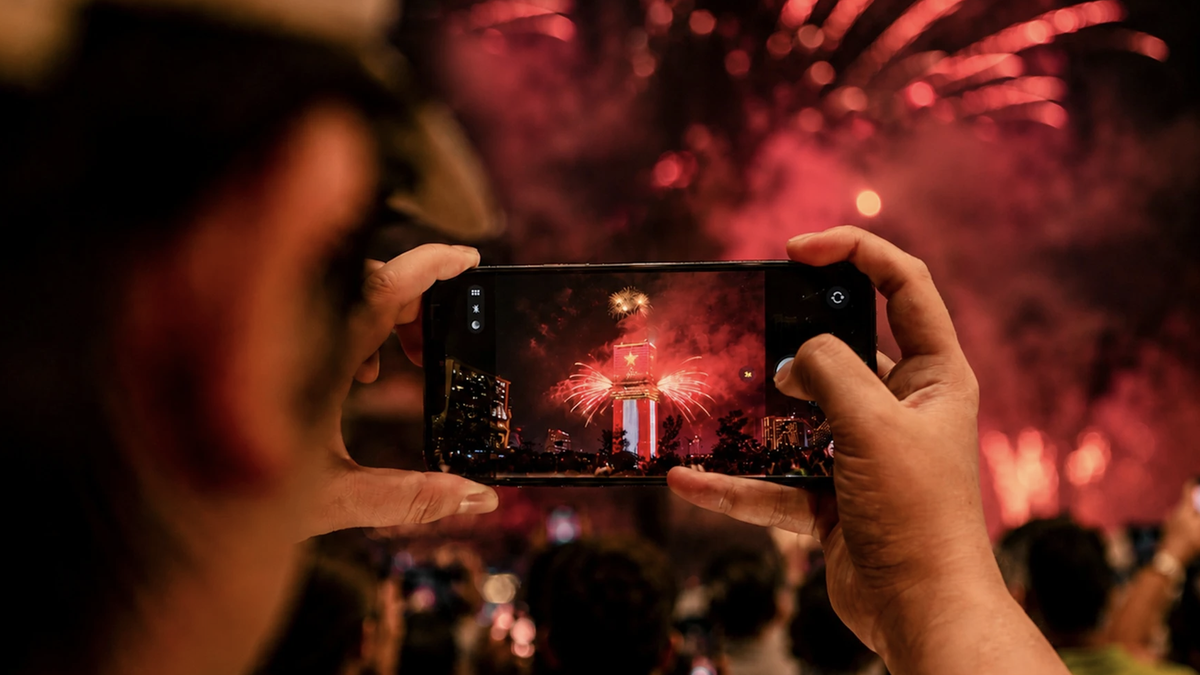
This number is also projected to increase after the summer holidays as children overuse electronic devices such as TVs, laptops, and phones, while spending more time indoors and engaging in less outdoor activities.
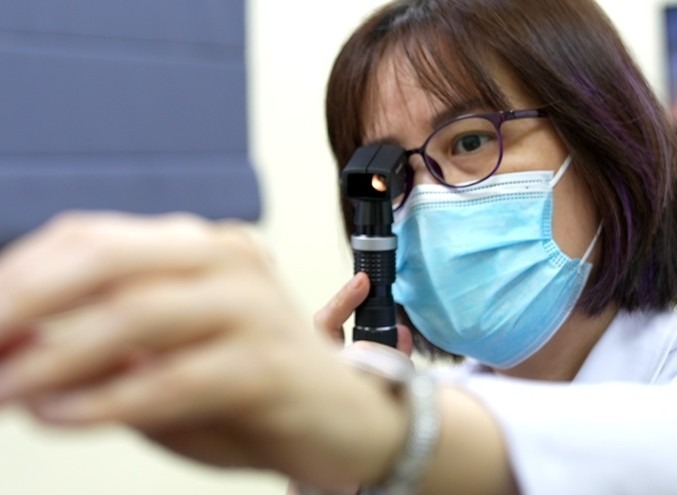 |
| During the summer break, the number of children seeking eye examinations for refractive errors, including myopia, increases significantly. |
Vietnam has nearly 3 million children with refractive errors, with myopia accounting for over 70% of cases. It's clear that academic pressure combined with easy access to electronic devices (television, phones, computers, etc.) is causing a rapid increase in the incidence of refractive errors, especially during summer holidays.
At the Ophthalmology Department of Dong Do Hospital in Hanoi , while normally only 3-5 children with myopia are examined per day, during the summer months like now, the number of children coming for examination increases to 15-20 per day.
According to Dr. Nguyen Vinh Quang, Head of the Ophthalmology Department, most children who come for examination have a history of overuse of technological devices such as televisions, phones, laptops, and iPads. The rate of myopia among urban students is quite high.
Accordingly, after spending time at school, mainly staying indoors, watching TV, using smartphones excessively, and limiting exposure to outdoor spaces and light can negatively impact eyesight.
Furthermore, many families take advantage of the summer break to have their children's eyes checked. Therefore, the number of children seeking treatment for myopia increases every summer. In addition, there are cases of increased myopia due to excessive gaming and use of electronic devices.
Similarly, at Ha Dong General Hospital (Hanoi), an average of 70-80 cases of refractive errors (myopia, hyperopia, astigmatism) are examined each day, sometimes reaching up to 100 cases; among them, the highest percentage is children with myopia.
According to ophthalmologists at Ha Dong General Hospital, a common problem among families bringing their children for eye examinations is the discovery that the children's eyesight is very poor.
If children watch television too close to their eyes every day, in a confined space, with the distance from their eyes to the TV being less than 3 meters and watching for more than 3 hours a day, their eyesight will deteriorate very quickly.
According to ophthalmologists, there are three ways to treat refractive errors: wearing eyeglasses, wearing contact lenses, or surgery.

Wearing eyeglasses is a popular method because it's convenient, affordable, easy to change, and comes in many types, but it's easy to forget to bring them, and they're prone to breaking. Have your prescription checked every 6 months.
People with nearsightedness usually wear glasses, so do people with farsightedness need to wear glasses? People with farsightedness can wear glasses, however, this should be discussed with a healthcare professional.
Wearing contact lenses: This type of lens is suitable for teenagers and adults. The advantage of this method is that it is compact, and it is difficult for others to notice the refractive error.
However, wearing contact lenses also has certain drawbacks, such as the need to remove and clean them daily, which, if not done carefully, can cause corneal abrasions and infections. Some people may also experience allergic reactions to the lenses.
Refractive surgery: Patients can undergo eye surgery using Lasik – a type of surgery that uses a laser to correct vision problems, especially those caused by refractive errors.
A Lasik eye surgery takes less than 30 minutes, making it the most popular method with over 40 million surgeries performed worldwide .
Associate Professor Dr. Nguyen Thi Thu Hien, Head of the Refraction Department, Tam Anh High-Tech Eye Center, stated that before deciding on Lasik surgery, doctors will conduct several tests and assessments to determine whether the surgery is feasible.
The examination steps include: Measuring corneal surface and thickness. Checking for dry eye. Measuring refractive errors. Checking for recent changes in vision.
Alongside Lasik eye surgery, vision can be improved with PRK (photorefractive keratectomy), a type of outpatient refractive laser eye surgery that treats nearsightedness, farsightedness, and astigmatism.
However, this method is also not recommended for certain groups such as: people with glaucoma, pregnant or breastfeeding women, people with cataracts, scarring in the eye, or previous corneal injuries, etc.
The aforementioned surgical methods may carry some unwanted risks, so before choosing a method to correct refractive errors, patients should visit specialized medical facilities for examination and consultation with a doctor.
Ophthalmologists believe that while refractive errors are not extremely dangerous, they can cause many inconveniences in daily life. Therefore, it is necessary to proactively care for and protect your eyes by changing unhealthy lifestyle habits.


Therefore, it is recommended to have your eyes checked every six months, especially if you already have refractive errors. Don't wait until you have serious symptoms before seeing a doctor.
In addition, it is necessary to develop healthy lifestyle habits. Improve the learning and working environment with sufficient lighting, and adjust the distance to about 50-60cm when reading or using electronic devices.
The 20-20-20 rule can be applied to give your eyes a rest after periods of work or study. Specifically, after 20 minutes of working with electronic devices, you should rest your eyes for 20 seconds and look into the distance at something 20 feet (approximately 6 meters).
For young children, it's important to teach them proper posture while studying and control their screen time. Besides study time, encourage outdoor activities and take them for eye checkups every six months, or immediately if they show any suspicious symptoms such as blurred vision, rubbing eyes, squinting, tilting their head, or bending too close to their books, to promptly detect and correct refractive errors.
In addition, it is necessary to eat a balanced diet with a variety of foods such as sweet potatoes and carrots (providing plenty of vitamin A); spinach and eggs (sources of lutein and zeaxanthin that help protect the retina), milk and dairy products (containing vitamin A and zinc)...
Source: https://baodautu.vn/dip-he-tre-mac-cac-benh-ve-mat-tang-cao-d219904.html