

Businesses are still unclear about this.
CBAM was officially implemented in October 2023 for certain products exported to the EU, such as cement, electricity, fertilizers, iron and steel, aluminum, and hydrogen. Despite the announcement a long time ago, many businesses are still unclear about this mechanism.
One of the main reasons is the lack of accurate and complete information. Many businesses only have a basic understanding of CBAM and are not fully aware of the detailed requirements or implementation roadmap.
According to Ms. Nguyen Hong Loan, an expert in the Technical Support Project on CBAM Impact Assessment, businesses in the directly affected sectors have conducted research and prepared. However, most still do not fully and accurately understand this mechanism. This lack of understanding leads to ineffective responses, reducing their ability to respond positively to CBAM.
Furthermore, some businesses have rushed to address CBAM by purchasing carbon credits without going through official channels. This not only wastes resources but also exposes businesses to financial risks as EU requirements and guidelines on carbon pricing and credit offsetting mechanisms remain unclear.
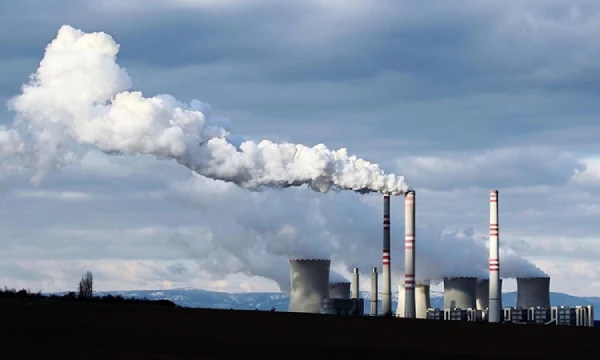
Many businesses only have a basic understanding of CBAM and are not fully aware of the detailed requirements and implementation roadmap.
Sharing Ms. Loan's viewpoint, Mr. Hoang Van Tam - Head of the Energy Saving and Sustainable Development Department, Ministry of Industry and Trade , stated that many businesses have addressed this issue early, especially foreign-invested enterprises, but the majority of domestic businesses have not yet invested adequately in resources and human capital.
According to Mr. Tam, one of the biggest challenges faced by Vietnamese businesses is the difference in regulations between the EU's CBAM and carbon emission policies in Vietnam. Vietnam has mechanisms and policies for reducing carbon emissions, but these regulations are not entirely compatible with CBAM. The calculation, scope of application, and requirements of CBAM differ from current regulations in Vietnam.
"It is essential to have coordination between specialized agencies of Vietnam and the EU in negotiating and agreeing on the methodology and method for calculating carbon emissions to create official guidelines for businesses in our country," Mr. Hoang Van Tam emphasized.
Mr. Tam added that CBAM requires businesses to conduct greenhouse gas emission inventories and calculate carbon prices. However, establishing a sufficiently scientific and verifiable database system is a major challenge for many businesses, especially small and medium-sized enterprises (SMEs). Failure to conduct emissions inventories as required by CBAM could cause these businesses to lose opportunities to export products to the EU market.
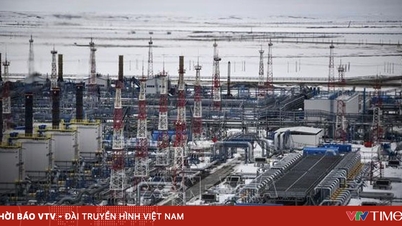
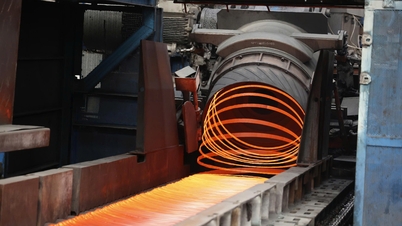
The steel industry is one of the sectors heavily impacted by CBAM. According to Mr. Dinh Quoc Thai, General Secretary of the Vietnam Steel Association (VSA), in 2023, Vietnam produced approximately 20 million tons of crude steel, with exports to the EU accounting for about 27%. With export turnover reaching 8.9 billion USD, the EU is an important market for the Vietnamese steel industry.
"This is a very large and unique market, so with the mechanisms affecting production output and export business, the steel industry must carefully consider and research them," said Mr. Dinh Quoc Thai.
However, according to Mr. Thai, not all businesses have sufficient resources to quickly transition to green production and reduce carbon emissions. To maintain market share in the EU, steel companies need to accelerate digital transformation and adopt advanced technologies to optimize production processes, save energy, and control emissions. This requires significant financial investment, which not all businesses can afford.
Partnering with businesses
In light of the challenges posed by CBAM, experts agree that the government needs to provide stronger support to help businesses adapt.
Mr. Ngo Chung Khanh, Deputy Director of the Multilateral Trade Policy Department (Ministry of Industry and Trade), said that on August 24, the Government assigned the Ministry of Industry and Trade to take the lead and coordinate with relevant agencies to develop and implement appropriate measures to deal with the CBAM mechanism.
The Ministry of Industry and Trade has proposed several solutions, including developing regulations related to carbon pricing, while also strengthening the dissemination of information and guidance to ensure businesses have an accurate and comprehensive understanding of CBAM. The Ministry also proposed organizing direct training programs to help businesses prepare for and understand the regulations on compliance with this mechanism.
Mr. Khanh emphasized that supporting businesses in reducing carbon emissions is a top priority, and promoting green financing will help businesses transition to more environmentally friendly production models sooner.
In addition, the Ministry is strengthening its connection with the EU, requesting a list of eligible consulting organizations and promoting negotiations to postpone the application of CBAM for some Vietnamese industries until after 2026. At the same time, the Ministry is proactively participating in international forums to secure support and obtain more flexible commitments, aiming to help Vietnamese businesses effectively adapt to the CBAM mechanism.
Proactive change
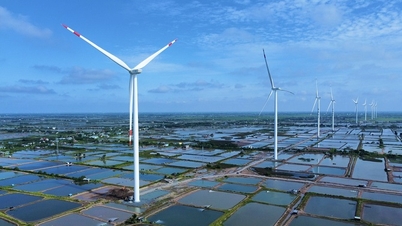
CBAM (Comprehensive and Sustainable Agriculture) is not only a challenge but also an opportunity for Vietnamese businesses to enhance their competitiveness in the international market. The transition to green production will not only help businesses maintain their market share in the EU but also open up opportunities to access other large markets. However, to achieve this, businesses need thorough preparation in terms of both resources and strategy.
Expert Nguyen Hong Loan recommends that businesses should closely follow the EU's CBAM implementation roadmap and identify steps that suit their financial conditions and resources. Implementing greenhouse gas emission inventories and building a transparent and accurate data system are prerequisites for meeting CBAM requirements and maintaining exports to the EU.
However, the biggest challenge remains changing the management mindset and production methods of businesses. To effectively implement the roadmap for responding to CBAM, businesses need not only support from the government but also must proactively change their production methods, invest in technology and human resources to meet the stringent requirements for carbon emission reduction.
Source: https://doanhnghiepvn.vn/kinh-te/doanh-nghiep-thieu-thong-tin-ve-cbam/20240917035411378


![[Photo] National Assembly Chairman Tran Thanh Man attends the policy seminar to promote Vietnam-Türkiye cooperation.](https://vphoto.vietnam.vn/thumb/1200x675/vietnam/resource/IMAGE/2026/04/16/1776351415367_vna-potal-chu-tich-quoc-hoi-tran-thanh-man-du-toa-dam-chinh-sach-thuc-day-hop-tac-viet-nam-tho-nhi-ky-8705791-jpg.webp)

























![[Image] Bridges and roads connecting the eastern part of Ho Chi Minh City](https://vphoto.vietnam.vn/thumb/1200x675/vietnam/resource/IMAGE/2026/04/16/1776328595108_ndo_br_bh-vt5-jpg.webp)































![[Infographic] Details of the Hanoi-Quang Ninh High-Speed Railway Project](https://vphoto.vietnam.vn/thumb/402x226/vietnam/resource/IMAGE/2026/04/16/1776338188424_anh-man-hinh-2026-04-16-luc-18-16-10.png)

![[Photo] National Assembly Chairman Tran Thanh Man meets with the Speaker of the Georgian Parliament](https://vphoto.vietnam.vn/thumb/402x226/vietnam/resource/IMAGE/2026/04/16/1776338494029_anh-man-hinh-2026-04-16-luc-18-21-21.png)



























Comment (0)