

With a well-structured implementation program, clear objectives, and synchronized solutions, the city aims to improve the operational efficiency of state-owned enterprises, effectively utilize public resources, and enhance their leading role in socio-economic development.

Implement Resolution No. 79-NQ/TW comprehensively.
Resolution No. 79-NQ/TW of the Politburo clearly defines the perspective of comprehensive reform and improvement of the efficiency of the state-owned economy. Accordingly, this sector needs to be organized and operated according to market mechanisms, ensuring efficiency and competitiveness, while maintaining its leading role in guiding and directing socio-economic development. To implement the Resolution, Hanoi has developed an action program with many synchronized solutions, focusing on the comprehensive restructuring of state-owned enterprises. According to the roadmap, by 2027, the city will complete the restructuring of all state-owned enterprises, concentrating resources on key areas with a wide-ranging impact such as urban infrastructure, public transport, digital transformation, and high technology. Notably, Hanoi aims to establish 1 to 3 large-scale state-owned enterprises with sufficient competitiveness to be among the top 500 enterprises in Southeast Asia.
Associate Professor Tran Dinh Thien, former Director of the Vietnam Institute of Economics and a member of the Prime Minister's Economic Advisory Group, commented that Hanoi has never shown such determination and decisiveness in implementing the resolution as it does now. The issuance of the action program with specific tasks demonstrates a proactive, systematic approach, in line with the requirement to shift from "talking" to "doing."
Meanwhile, economist Dr. Nguyen Van Hien, Vice Rector of Gia Dinh University, believes that Hanoi has the potential to become a pioneer in state-owned economic reform, serving as a model in the management of public assets, state-owned enterprises, and strategic infrastructure. This assessment stems from Hanoi's numerous outstanding advantages: it is one of the two largest economic centers in the country, with continuously growing GRDP and significant contributions to the national budget; it possesses abundant public resources, including valuable urban land, a large-scale system of public assets and infrastructure, and a widespread network of public service units.
Furthermore, Hanoi benefits significantly from the unique institutional framework of the Capital City Law, allowing for expanded autonomy in finance and public investment; piloting new urban management models; and promoting decentralization to local governments. As a result, the city has much more policy space than many other localities, especially in managing public assets, developing infrastructure, public services, and state-owned enterprises. This provides Hanoi with favorable conditions to pioneer the implementation of Resolution No. 79-NQ/TW with fewer institutional obstacles.
Furthermore, Hanoi possesses a significant advantage in the quality of its human resources as the national political and administrative center, concentrating a team of highly qualified, experienced, and policy-minded senior leaders and managers. This facilitates the rapid and consistent implementation of resolutions. Simultaneously, its knowledge ecosystem, with its network of universities, research institutes, and leading experts, creates a rich source of intellectual capital, serving the planning and implementation of modern state economic policies.
Promote governance reforms and effectively utilize public resources.
To achieve the above goals, the city will accelerate the restructuring and consolidation of enterprises in the same industry, strengthen linkages with large economic groups; and at the same time, implement equitization and divestment of enterprises operating in unnecessary sectors where the state holds 100% of the capital. The city clearly defines that the state-owned economy plays a leading role, must be a pioneer in creating development, leading, paving the way, and establishing a new growth model, with science and technology, innovation, and digital transformation as the main driving forces. Regarding the goal of building 1 to 3 large-scale state-owned enterprises with sufficient competitiveness to be among the top 500 enterprises in Southeast Asia, many experts believe that the core issue lies not in ranking but in genuinely improving management capacity and operational efficiency. Therefore, it is necessary to focus on upgrading management, increasing the ability to mobilize capital, with the key solution being the application of international financial, accounting, and management standards.
Expert Nguyen Van Hien argues that one of the key solutions is a strong reform of state-owned enterprises. Enterprises operating in various sectors such as urban infrastructure, energy, public transportation, and public services need to abandon the subsidized mindset and shift to market-based management, improving capital efficiency while enhancing transparency and accountability. The state economy should not only perform business functions but also play a constructive role, creating a foundation for the development of other economic sectors. Therefore, state-owned enterprises need to focus their investments on strategic, long-term areas where the private sector lacks resources or is not yet ready to participate.
According to Mr. Nguyen Van Hien, in order to effectively implement Resolution No. 79-NQ/TW, it is first necessary to fully understand the scope of the state economy. “Resolution No. 79-NQ/TW has expanded this concept, not only limiting it to state-owned enterprises but also encompassing public assets, land, resources, infrastructure systems, state-owned credit institutions, and the network of public service units… Only with such a full understanding can we effectively utilize all the resources of the state economy,” Mr. Nguyen Van Hien emphasized.
In reality, Hanoi possesses vast and diverse public resources, yet their exploitation remains limited. Project delays, inefficient land use, and the wasteful or misuse of public assets persist. Therefore, improving the efficiency of managing and exploiting public resources is an urgent requirement.
Many experts believe that reforming the public service system and public service units is also a crucial task. Hanoi has a large network of hospitals, schools, cultural institutions, and urban services, but their operational efficiency and service quality are not commensurate with the invested resources. Therefore, Hanoi needs to innovate towards greater autonomy, transparency, and improved service quality, avoiding prolonged subsidies and inefficient resource utilization.
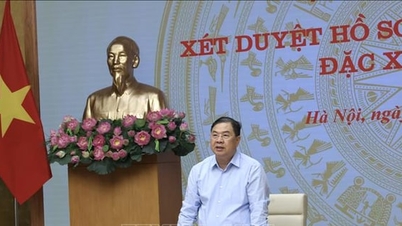
At the conference to disseminate and implement the Action Program of the Standing Committee of the Hanoi City Party Committee to implement the strategic resolutions of the Politburo, Central Committee member, Deputy Secretary of the City Party Committee, and Chairman of the Hanoi People's Committee Vu Dai Thang emphasized the role of communes and wards – which directly manage 4 out of 6 key resources: land, budget, public assets, and public service units. At the same time, Chairman Vu Dai Thang also requested localities to review all resources, complete the implementation plan by March 2026; strengthen land management; decisively address poorly used public assets; develop a medium-term public investment plan; and reorganize public service units to ensure quality service to the people.
It is evident that Hanoi is gradually concretizing Resolution No. 79-NQ/TW through practical actions. If the solutions are implemented synchronously and consistently, especially in reforming governance, effectively utilizing public resources, and improving the quality of the workforce, the state-owned economy will play a leading role, becoming a driving force and creating a new development space. Through this, the capital city will not only affirm its position as the economic locomotive of the country but also gradually rise to the regional level, making a positive contribution to the rapid and sustainable development of the nation.
Source: https://hanoimoi.vn/doi-moi-khu-vuc-kinh-te-nha-nuoc-tu-quyet-tam-chinh-tri-den-hanh-dong-cu-the-741878.html



































































































Comment (0)