Innovations in medication dispensing towards a green hospital.
Following the success of the model utilizing medicine box paper as medicine bags to replace plastic bags, from the beginning of 2026, the Pharmacy - Medical Supplies and Equipment Department of the Ngu Hanh Son Regional Health Center has implemented a new model with many outstanding improvements.
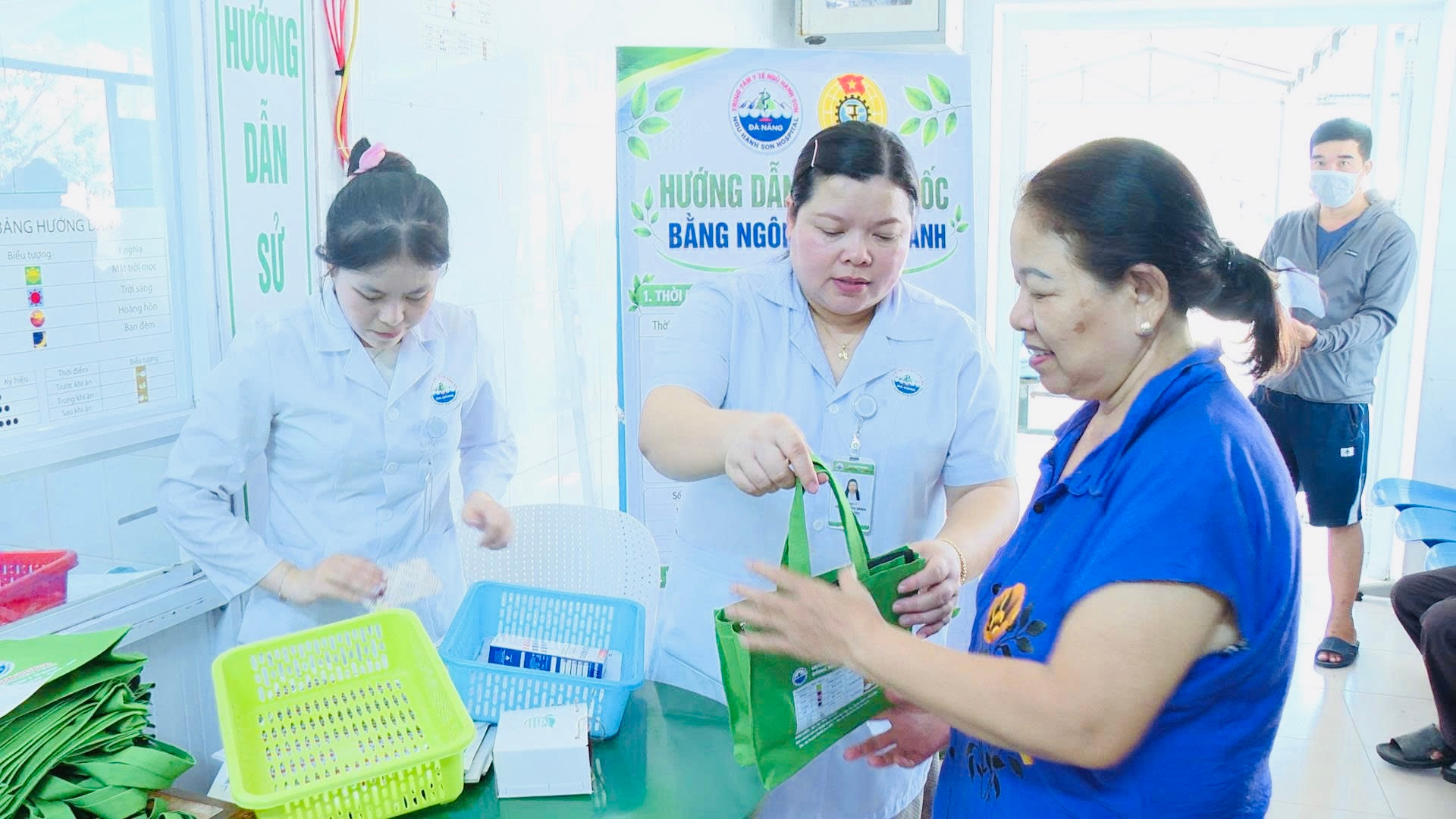
Beyond simply replacing plastic bags with reusable cloth bags, the model also integrates a LASA recognition system and a set of medication instructions using intuitive visual language.
This is seen as a step forward in combining environmental protection goals with improving the quality of treatment and ensuring patient safety.
According to Nguyen Thi Minh, Head of the Pharmacy - Medical Supplies and Equipment Department at the Ngu Hanh Son Regional Health Center, the "Fabric medicine pouch and multi-purpose LASA identification system, standardizing medication instructions using visual language" model was developed to effectively identify and manage high-risk drug groups, especially those drug pairs with easily confused appearances or names (Look-Alike Sound-Alike - LASA).
Standardizing the process using visual symbols helps minimize errors in dispensing and using medications, contributing to the prevention of medical incidents.
In addition, each cloth pouch incorporates a set of medication instructions using visual language, making it easy for the elderly, those with impaired vision, or those with difficulty reading to understand when and how to take their medication.
Instead of long and difficult-to-remember instructions, patients can simply observe color-coded symbols, mealtime icons, and dosage dots to know exactly when and how to take their medication.
The shift from written language to visual language helps ensure the principle of "the right patient, the right medicine, the right dose, the right route of administration, and the right time," as well as enhancing patient adherence to treatment at home.
Another highlight of the model is the complete replacement of single-use plastic packaging with reusable cloth bags made from recycled materials.
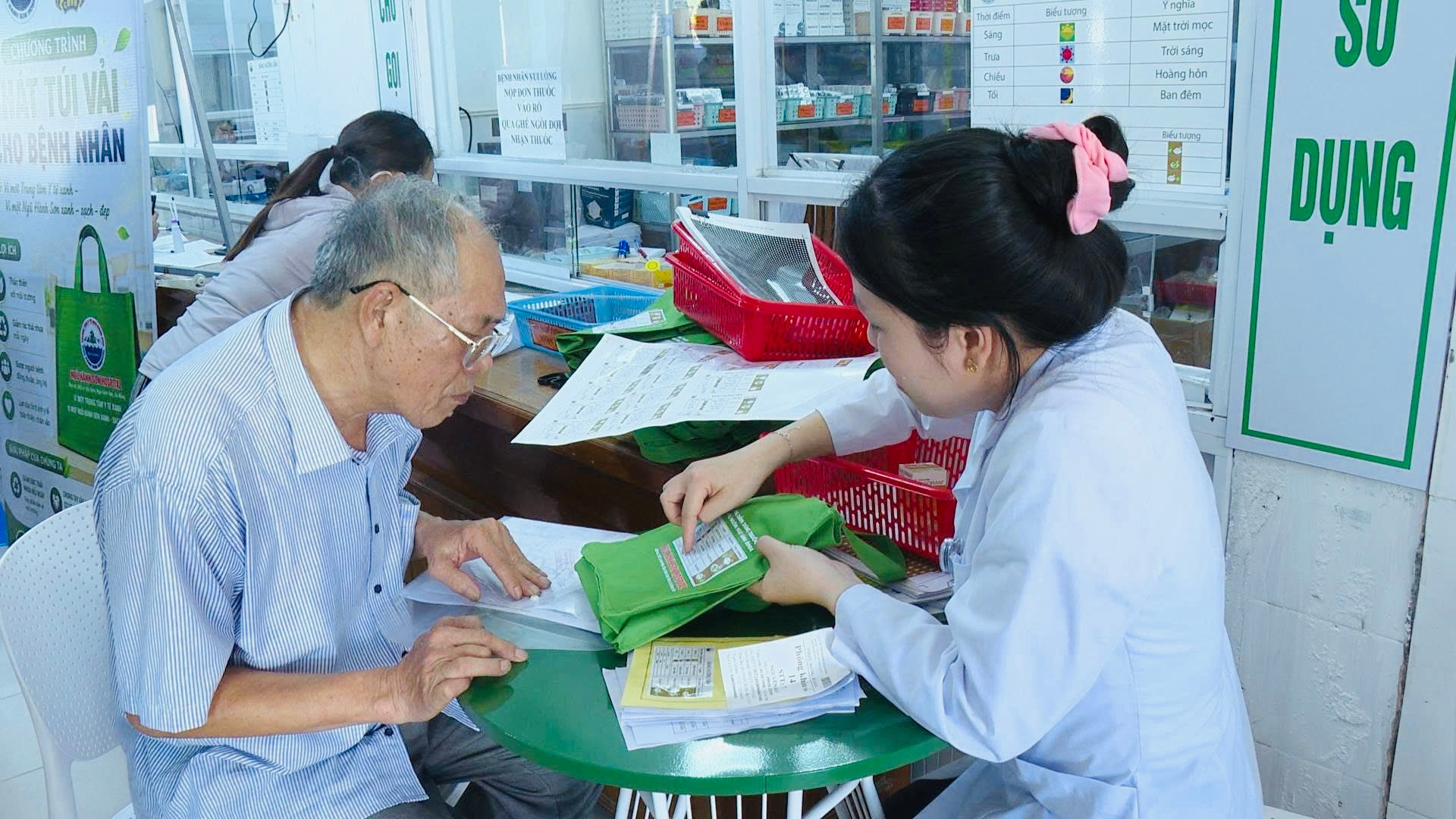



Previously, each prescription used a plastic bag, but now, thanks to these cloth bags, plastic waste has been significantly reduced.
According to the Ngu Hanh Son Regional Health Center, this is also a practical solution that contributes to implementing the hospital quality criteria for building "Green - Clean - Beautiful" medical facilities, while spreading an environmentally friendly lifestyle in daily medical examination and treatment activities.
The patient is satisfied.
The model not only contributes to environmental protection but also receives satisfaction from patients.
After his medical examination, Mr. Le Dang Khoi (Thanh Khe ward) expressed his surprise at receiving his medication in an attractive, environmentally friendly cloth bag from the medical staff.
What impressed him most was the intuitive color-coded medication guide system designed right on the pouch, making it easier to remember the medication schedule.
Meanwhile, Ms. Bui Thi Phuong (residing in Ngu Hanh Son ward) said that in the past, remembering the exact times she had to take various medications always worried her.
Now, simply by looking at the color of the labels on each blister pack and cloth bag, she can easily distinguish whether she needs to take her medicine in the morning, noon, afternoon, or evening without fear of confusion.
Beyond simply handing out medicine bags, healthcare workers also took the time to instruct patients on how to use the signage system and explain the importance of limiting the use of plastic bags.
Through these intimate conversations, many patients gained a better understanding of the harmful effects of plastic waste, and were therefore willing to change their habits and introduce the model to their relatives and friends.
According to Dr. Nguyen Tien Hung, Director of the Ngu Hanh Son Regional Health Center, the model of "Canvas medicine pouches and a multi-purpose LASA identification system, standardizing medication instructions using visual language" will be implemented from January 2026.



Switching to reusable cloth bags not only significantly reduces the amount of plastic bags released into the environment but also improves the effectiveness of medication administration instructions.
According to Dr. Nguyen Tien Hung, the visual color-coded system helps the elderly, those with impaired vision, or the illiterate easily identify when to take medication, contributing to reducing errors in home treatment.
Cloth bags not only contribute to reducing plastic waste but also enhance safety in the use of medicine, gradually forming green living habits and spreading environmental awareness in the community.
Through this, the Ngu Hanh Son Regional Health Center conveys the message: "Do good starting from the smallest things - for the health of today and future generations."
Source: https://baodanang.vn/doi-thay-nhan-thuc-vi-moi-truong-xanh-3342553.html



![[Image] National conference summarizing one year of operation of the overall organizational model of the political system, the three-tiered government model.](https://vphoto.vietnam.vn/thumb/1200x675/vietnam/resource/IMAGE/2026/07/01/1782882811691_ndo_br_1-jpg.webp)