

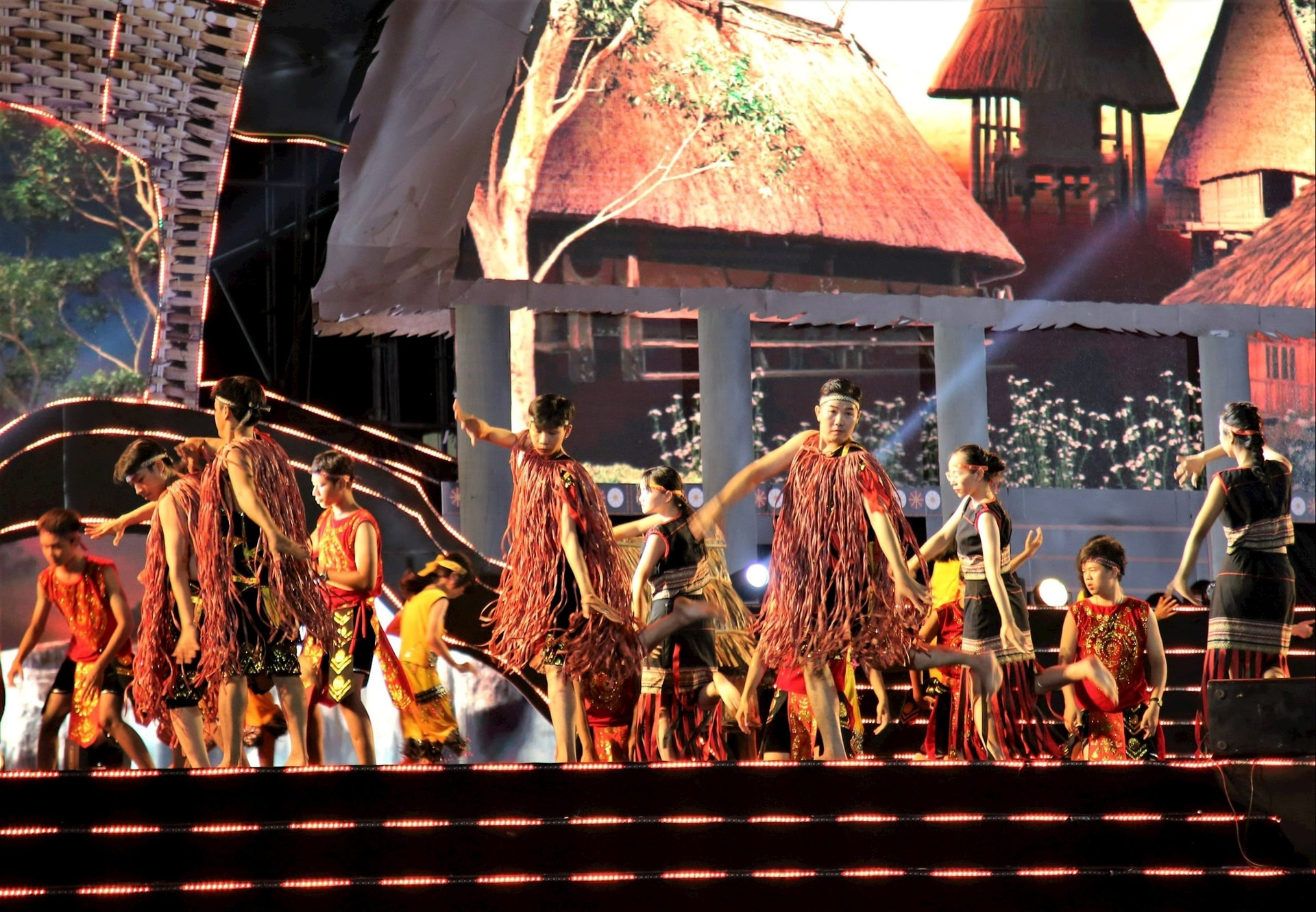
Each traditional costume worn by the people of the highlands is a silent symbol of their regional identity, reminding them of their roots, of the forest, a place that will forever embrace their souls and lives…
From tree bark to colored thread
In the villages of western Da Nang , many "artisans" still preserve the secret of making bark clothing – the primitive attire of the tribe. The mountains and forests taught them how to select climbing plants and how to skillfully strip the bark to make their garments.
The rough bark garment became a cultural symbol for generations of descendants, proving that their lives were inseparable from Mother Forest. Mother Forest provided firewood, food, and the bark garment to wear. Mother Forest gave them life…
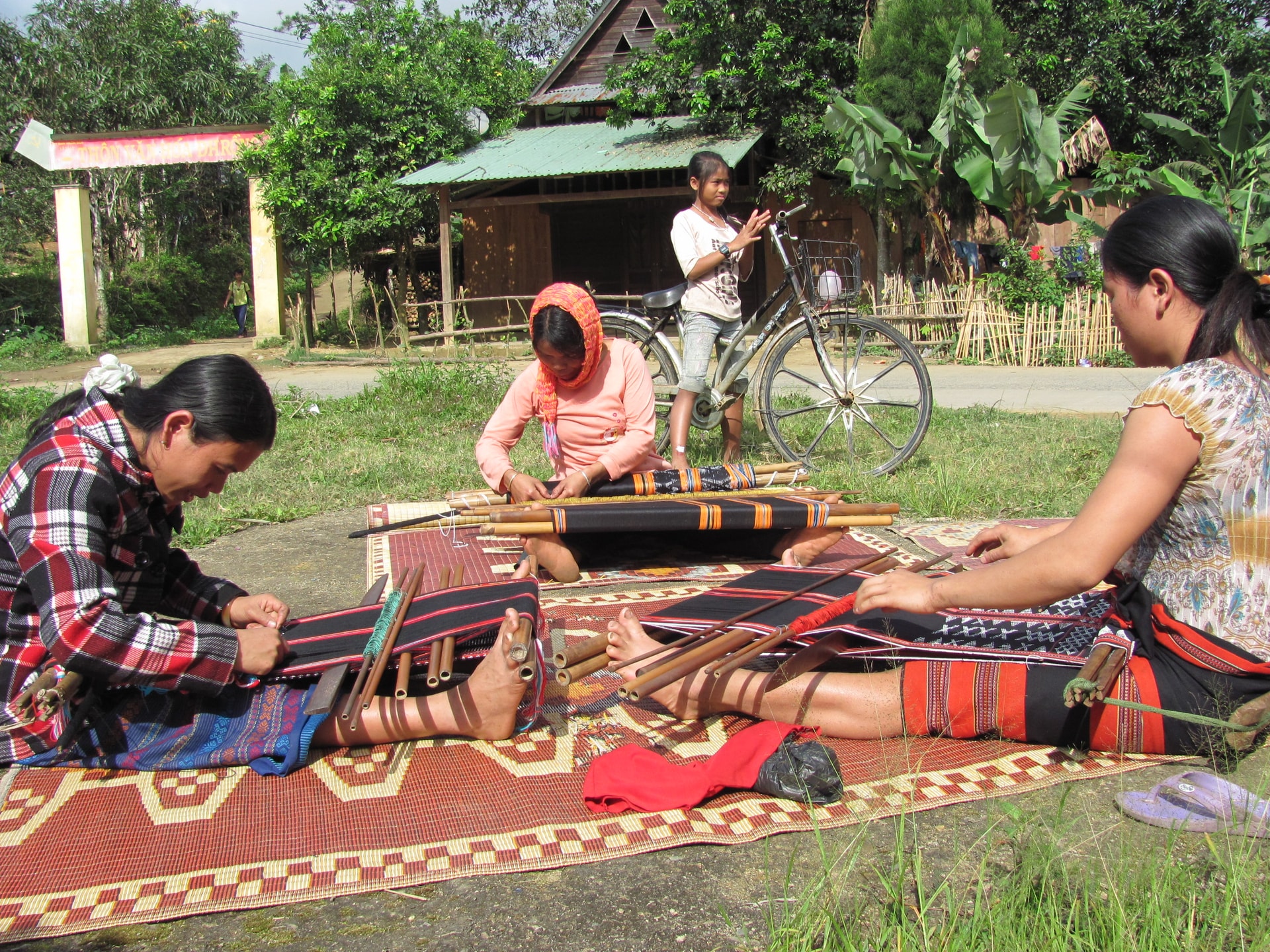
From the forest, the highland people gradually learned many things. The Co Tu, Bh'noong, and Xe Dang people began to learn how to weave. Looms appeared, and from their verandas, the women and mothers diligently worked on brocade fabrics for themselves and their loved ones.
The black threads are like the deep, dark mountain night, the red threads like the warm fire of a hearth, and the white threads like the ethereal mist that envelops the rooftops. All of these elements merge into the brocade fabric, becoming the essence of the ethnic group.
Each ethnic group creates its own unique patterns and motifs, weaving these patterns together using lead beads, forest plants, and glass beads. Identity also originates from this.
According to Elder Clâu Blao (from Hùng Sơn commune), brocade fabric is a treasure, usually kept in jars or wooden cabinets, only brought out to be displayed on important occasions.
The ancient loincloths of the Co Tu people, woven from rare forest tree beads, have been passed down through generations, carrying the scent of wood smoke, the mountain wind, and the fragrance of time, turning the fabric into a family history. In the past, a large tut (a type of shawl) could be exchanged for a buffalo, becoming a valuable dowry item when a daughter got married.
I gazed at the loom, the black threads taut, the patterns silently taking shape like a star map. Horizontal and vertical threads, like lines of longitude and latitude, were meticulously interwoven by the hands of the highland woman, as if strolling leisurely across the loom.
Those hands and eyes silently count the rhythm of the weaving, counting the seasons of the year through each piece of brocade fabric, storing within them their own memories.
Each pattern is a marked "coordinate," holding onto thoughts and reflections on the porch as their hands continue to weave rhythmically. It's a silent dialogue, one that only they, the participants, can understand—the meaning embedded in each design.
Vaguely, one can hear in each piece of brocade the footsteps of Amế (mother) going to the fields, the sound of the A Vương river flowing through the dry season, and the murmuring like the folk songs of the village elders. Brocade, it seems, is not just for clothing. It is a whole chronicle written in patterns and colors.
Dressed up in the courtyard
About ten years ago, in a village in Song Kon commune, I was suddenly disheartened when, during a ceremony celebrating a new communal house, the sparse, out-of-place colors of traditional brocade fabrics stood out among jeans and T-shirts.
That void is not just a visual void, but a void of memory, where young people, instead of wearing traditional attire, choose clothing that doesn't belong to their community. But fortunately, like a smoldering ember in the ashes, just a gust of wind is enough to reignite it. As time goes on, the village festivities increasingly see the return of the vibrant colors of traditional brocade.
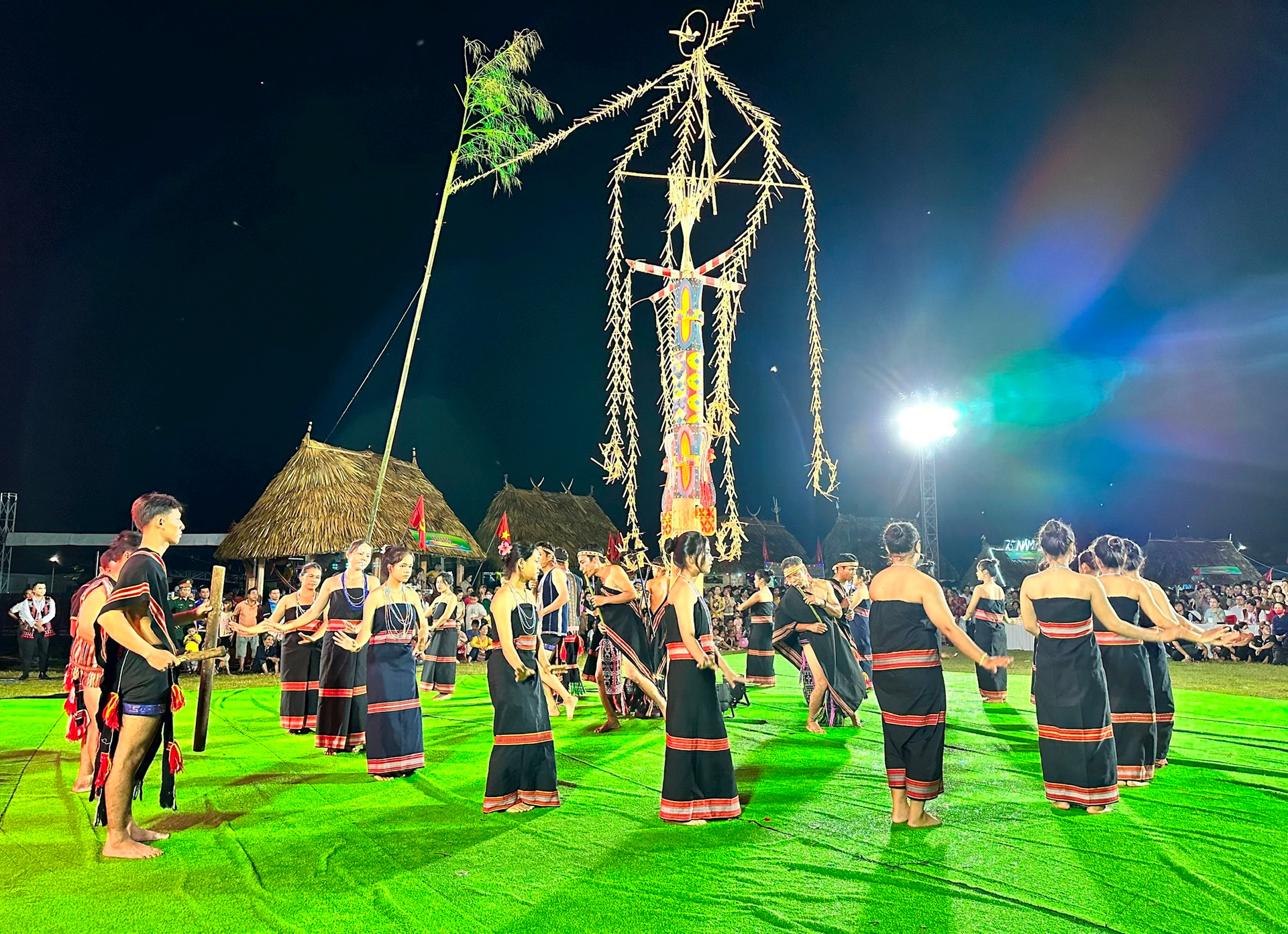
The communal courtyard of A Ró village (Tây Giang commune) is resplendent with brocade fabrics. The women and mothers are dressed in their brocade skirts, while the village elders and young men wear loincloths, showing off their strong, bare backs.
The sound of gongs and drums blends with the barefoot steps of young women, the scent of kitchen smoke mixes with the aroma of rice wine, and the canvas stretched across the communal house opens up like a curtain revealing a stage where the entire community is the performer.
It's not just a nostalgic glance. It's their own space, the villagers' playground, where they live with the joy of the festival, the happiness of belonging to the community. In the village festival, they confidently wear their traditional costumes and showcase their ethnic culture. Drums and gongs, singing and dancing, sharing in the common joy.
The return of brocade colors is a confirmation that identity never goes out of style. It needs life and cultural space to survive. Increasingly, more and more young people in the highlands are choosing brocade for their wedding dresses and gowns.
Images of modernized ao dai dresses made from brocade fabric at a local competition suddenly went viral thanks to their striking beauty. Or the moment Miss International Huynh Thi Thanh Thuy wearing a Co Tu dress in front of a traditional village house went viral on social media; brocade has truly stepped out of the village.
Traditional brocade speaks for young people, showing that they are not detached from modern life, but they still retain their identity of the mountains and forests, and are truly proud of that identity…
Returning to our identity
Many village elders assert that villages with beautiful brocade fabrics are wealthy villages. The older the brocade, the more valuable it is. Its value lies in its preservation, in the fact that generations have carried it as a "symbol" for their community. This value is being continued by many young people today, through their love of culture and the creativity of their generation.
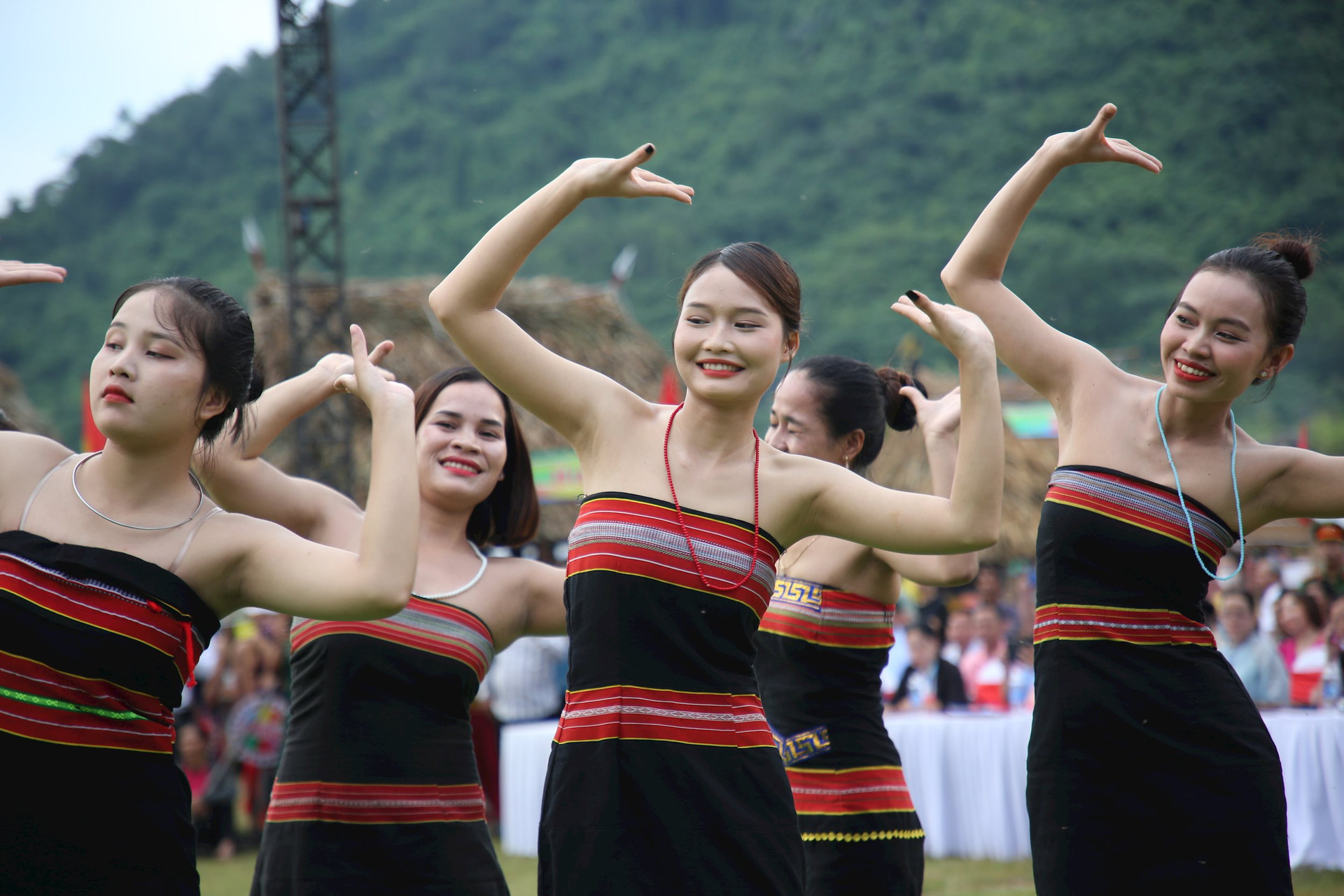
Hoang Kieu, a young woman from Kham Duc commune, said her wish is for more young people like herself to learn about weaving, both to preserve the culture of her Bhnoong people and to contribute to the cultural tourism story she cherishes. Kieu regularly participates in local festivals, actively showcasing the beauty of traditional brocade.
Like Kiểu, Pơloong Thị Lương (from Sông Kôn commune), also a young woman, proudly recounts that in her village, every young girl grows up learning to weave.
“I am very proud to have been taught how to weave traditional brocade fabrics for my own family and relatives to use. Brocade is a characteristic of each ethnic group, the most recognizable feature when appearing in festivals or other spaces, and something to affirm that I am a member of the Co Tu, Bhnoong, or Ede ethnic groups, for example. Preserving brocade is preserving the pride of my bloodline,” Luong shared.
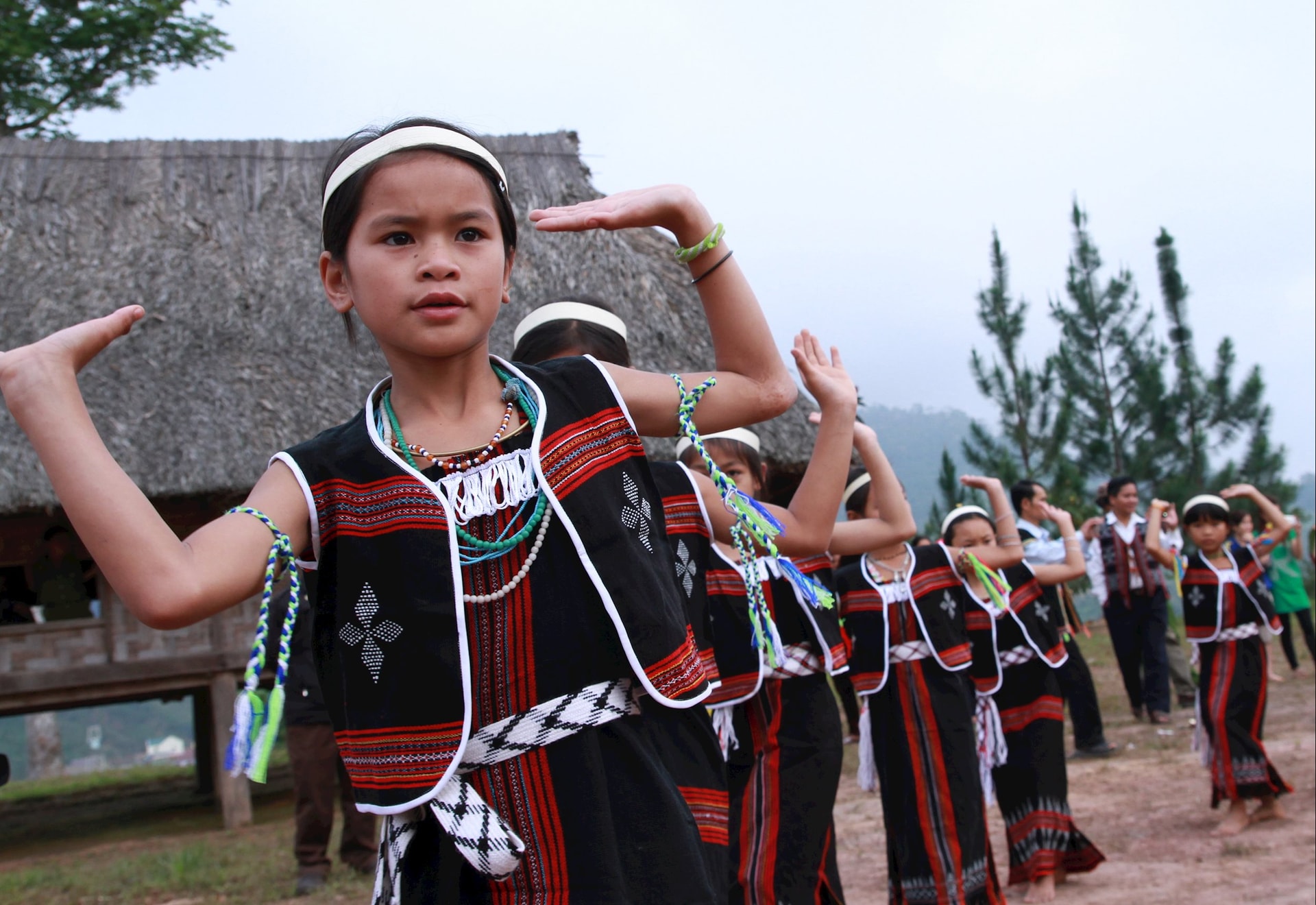
Researcher Ho Xuan Tinh said that the recreation of brocade costumes in festivals and on stage is not just for the viewers' enjoyment. "The community has shown interest in and acceptance of traditional cultural values, and the performers themselves also have a need to promote and introduce the beauty of their ethnic culture."
As awareness of preserving traditional culture increases, the participation of young people will grow, and traditional clothing will have more opportunities to reach a wider audience. Currently, young people are returning to using traditional clothing to a greater extent, with innovations to highlight the beauty of brocade fabrics.
"I've met many young people from the mountainous regions wearing vests, skirts, and traditional dresses made of brocade, which are beautiful and modern, but still retain the unique beauty of their ethnic group. The important thing is to preserve it from the roots, to maintain pride in the cultural identity and traditions of the ethnic group among the younger generation," Mr. Ho Xuan Tinh shared.
From the younger generation's perspective, there is a return to cultural identity, expressed through traditional brocade fabrics…
Source: https://baodanang.vn/doi-thoai-voi-sac-mau-3305228.html

![[Photo] Heartwarming "Journey Home for Tet" in the Year of the Horse at the People's Police Academy](/_next/image?url=https%3A%2F%2Fvphoto.vietnam.vn%2Fthumb%2F1200x675%2Fvietnam%2Fresource%2FIMAGE%2F2026%2F02%2F04%2F1770198043990_hv-cong-an-13-1206-jpg.webp&w=3840&q=75)


![[Photo] Enchanted by the deciduous forest during the leaf-changing season.](/_next/image?url=https%3A%2F%2Fvphoto.vietnam.vn%2Fthumb%2F1200x675%2Fvietnam%2Fresource%2FIMAGE%2F2026%2F02%2F04%2F1770196861704_2066642_8ffd5f25c3c9433be0e644abe71613ae.jpeg&w=3840&q=75)


![[Infographic] - Fireworks display locations for the Lunar New Year 2026 in Da Nang](/_next/image?url=https%3A%2F%2Fvphoto.vietnam.vn%2Fthumb%2F402x226%2Fvietnam%2Fresource%2FIMAGE%2F2026%2F02%2F04%2F1770189941349_buu-thiep-cam-on-hoa-li-mau-vang-va-xanh-1.png&w=3840&q=75)


![[Photo] Enchanted by the deciduous forest during the leaf-changing season.](/_next/image?url=https%3A%2F%2Fvphoto.vietnam.vn%2Fthumb%2F402x226%2Fvietnam%2Fresource%2FIMAGE%2F2026%2F02%2F04%2F1770196861704_2066642_8ffd5f25c3c9433be0e644abe71613ae.jpeg&w=3840&q=75)




Comment (0)