Next to her desk, the notice "Personnel Streamlining and Digital Transformation Plan for the Newsroom - Phase 2," bearing her name, sat precariously on the "pending performance review" list. The decision to merge three industry newspapers into a single multimedia organization had been in place for three months.
Those three months felt like three decades to Nguyệt. From a renowned investigative journalist, she suddenly became an outdated "antique." Her current agency needed "trendsetting powerhouses," thirty-second videos that would grab views, not the lengthy investigative reports, the quiet pursuit of the hidden aspects of human fate by a reporter over thirty-five years old.

She turned her head to look inside. The soft yellow light from the bedside lamp cast a shadow across Hung's figure lying on his side on a thin mattress temporarily spread on the floor. His sun-tanned bare back clearly showed the red marks of the car seat.
Hung was originally a mechanical engineer, but his factory went bankrupt, so he secretly applied to work as a ride-hailing driver. Occasionally, he would startle, his fingers clenching as if unconsciously gripping the steering wheel. At the foot of the bed, his eldest child's school backpack had a broken zipper, revealing several worn-out textbooks. His two-year-old youngest daughter nestled in her grandmother's arms, her long eyelashes fluttering with each breath under the old, creaky fan.
Nguyệt's heart ached. Her journalist's ID card and meager salary, along with Hùng's all-night taxi rides, were the only lifelines keeping their family of six from drowning amidst the city's soaring prices. She bit her lip to prevent a sob from waking her husband, then quietly stepped out onto the balcony.
The night wind blew in from the river, carrying the pungent smell of urban smog. At eleven o'clock at night, the city was still awake, the stream of cars on the road forming a bright red thread that cut across the horizon.
- Having trouble sleeping again?
Hung's voice came softly from behind her. He gently placed his rough hand on his wife's trembling shoulders. Nguyet leaned her head against his shoulder, tears silently streaming down her face, soaking a patch of her husband's worn T-shirt.
"This guy..." Nguyet whispered, her voice faltering, "Maybe I should submit my resignation? The cosmetics media company is still waiting for me. The salary there is double what I earn at the newsroom now, and I don't have to work late nights..."
Nguyệt was speechless. She remembered the project review meeting this morning. Her three-part investigative report on the lives of people eking out a living at an illegal dumpsite – the article she stayed up three nights, wading through knee-deep mud to take photos – had been flatly rejected. The new Head of Content, nearly ten years younger than her, swiped the screen and bluntly stated, "This article has no search keywords, doesn't follow trends, and won't generate any engagement. Instead of going to the dumpsite, try contacting and interviewing that recently divorced model."
Hung silently received his wife's sigh, then slowly spoke:
- You can choose whatever you want, I can handle it. But if you quit writing feature articles, can you really handle sitting in a glass room all day thinking up flowery words to entice people to buy a jar of ice cream? I remember back then, every time you held a newspaper with your name printed under an article about children in the highlands, your eyes would light up. This profession was your aspiration, wasn't it?
"But I'm afraid I can't make it," Nguyet said, pressing her face against her husband's chest. "They measure the value of a journalist by the number of clicks. I feel like a barefoot person left behind on the highway…"



Hung said nothing more, only tightened his embrace and gently patted his wife's back. That hug, heavy with the pungent smell of sweat after a long day of hard work, was enough to lift a soul on the verge of collapse.
After the mandatory video skills and SEO training session ended, it was already pitch dark. When Nguyệt wheeled her motorbike out, she discovered the rear tire was flat. She walked nearly a kilometer before finding a roadside repair shop. While waiting, she sat down on a concrete slab, pulled out the lunchbox she'd brought from noon, and chewed noisily. The salty taste of the cold food mingled with the bitter taste of her tears.
The woman selling iced tea nearby saw this and immediately poured herself a glass of iced herbal tea, then walked over:
- Take a sip of water. These days, everyone struggles to make money. Wipe away your tears and go home to your child.
A sip of cool, slightly bitter herbal tea left a sweet aftertaste on her tongue, but a lingering sweetness in her throat. Her heart felt a little lighter. She looked at the camera in her leather bag. Yes, there were still so many acts of kindness in this life yet to be written down; if she gave up, who would tell the stories of these hardworking yet warm-hearted people?
That evening, Nguyet sat opposite Hung at the small desk and whispered:
- Hey, if I didn't quit my job but started learning from scratch as a probationary reporter, accepting criticism and moving slower than the younger generation, would you be discouraged?
- I'd only get discouraged if you gave up on your passion. But if you're determined to fight, I'd even consider taking on a few extra night shifts worthwhile.
She remained silent, bending down to flip through the worn-out notebook her late father had given her when she first started her career. On the cover, her father's words were still clear: "Journalism is about going out and recording the truth with your heart."
An unexpected opportunity arose. During the monthly briefing, the editorial team proposed a special topic about the fate of migrant workers following urban planning. The topic was so sensitive and unlikely to attract many views that the young reporters immediately avoided it.
The department head glanced at Nguyet and issued a challenge: "This article requires seasoned experience. Would you like to take it, Nguyet? But I'm warning you, the deadline is two weeks, and the article must include high-quality, SEO-optimized multimedia content. If you can't meet the requirements, I'll have to report your incompetence to the board of directors."
Knowing she was cornered, Nguyệt straightened her back:
- I accept!
The following two weeks were a grueling race against time. Nguyet asked her younger colleagues for advice on camera angles, noise reduction recording, and keyword filtering, in exchange for editing and refining their work. Night after night, after her child had gone to sleep, she painstakingly edited and compiled videos. Sometimes, exhausted and dizzy, she would look at her father's handwriting in his worn notebook.



She ventured down to the impoverished slums under bridges, sat down to eat a bowl of instant noodles with them, and listened to their stories about how newly opened roads had pushed them to the outskirts of the city. She wrote with all the empathy accumulated over fifteen years of her career, but in a more concise and direct way. Accompanying her writing were short videos she filmed and edited herself, capturing the wry smile of an old garbage collector and the sigh of a street vendor.
When the series of articles was finished, the Head of Department intended to push it aside. But just then, the Editor-in-Chief walked in, reviewed the series directly, and slammed his hand on the table:
- This is precisely the core identity and credibility that the newspaper is lacking amidst a saturated sea of sensationalist news. Pin this series of articles to the front page for a whole week.
The series didn't explode overnight but steadily gained momentum with thousands of touching shares, creating a wave of donations to help the individuals involved. Nguyet's name was officially removed from the list of those being laid off.
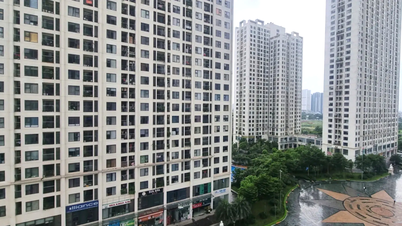
This afternoon, Nguyệt got home early. The summer rain had stopped, and the sun cast shimmering golden rays on the glass high-rise buildings. When she arrived at the gate, her eldest son ran out to greet her, followed by her youngest daughter, who chattered excitedly, "Mommy's home! I got a 'good child' certificate today!" Nguyệt bent down and hugged her two children, the familiar, comforting scent of their sweat filling her arms. Hùng, who was wiping the rearview mirror of his car, looked up at the children's joyful shouts. Seeing the radiant expression returned to his wife's face, he smiled—a warm smile that needed no further words.
After dinner, Nguyet sat at her desk reading reader comments, her father's notebook beside the keyboard. Outside the window, the city lights gradually came on, the yellow lights illuminating the night one by one, as if each house was telling its own story, waiting for someone patient enough to sit down and listen...
Source: https://baotayninh.vn/dong-chay-moi-149980.html
![[Photo] Opening Ceremony of the 13th National Congress of the Ho Chi Minh Communist Youth Union](https://vphoto.vietnam.vn/thumb/1200x675/vietnam/resource/IMAGE/2026/06/24/1782286753905_ndo_br_1-8510-jpg.webp)
![[Photo] General Secretary and President To Lam attends the Central Public Security Party Committee Conference](https://vphoto.vietnam.vn/thumb/1200x675/vietnam/resource/IMAGE/2026/06/24/1782302063612_a1-bnd-9302-9166-jpg.webp)
![[Photo] The 13th National Congress of the Youth Union conducts personnel work.](https://vphoto.vietnam.vn/thumb/1200x675/vietnam/resource/IMAGE/2026/06/24/1782299943080_ndo_br_1-6868-jpg.webp)