According to the U.S. Geological Survey (USGS), a 7.8 magnitude earthquake struck off the coast of Mindanao Island on the morning of June 8th. Immediately after the main earthquake, the Philippine Institute of Volcanology and Seismology (Phivolcs) recorded a series of aftershocks lasting for more than an hour.
The city of General Santos, with a population of 722,000, located in the southern Soccsksargen region, was one of the hardest hit areas. According to Phivolcs' internal scale, the intensity of the tremors in the city reached 7/10 – classified as "very strong".
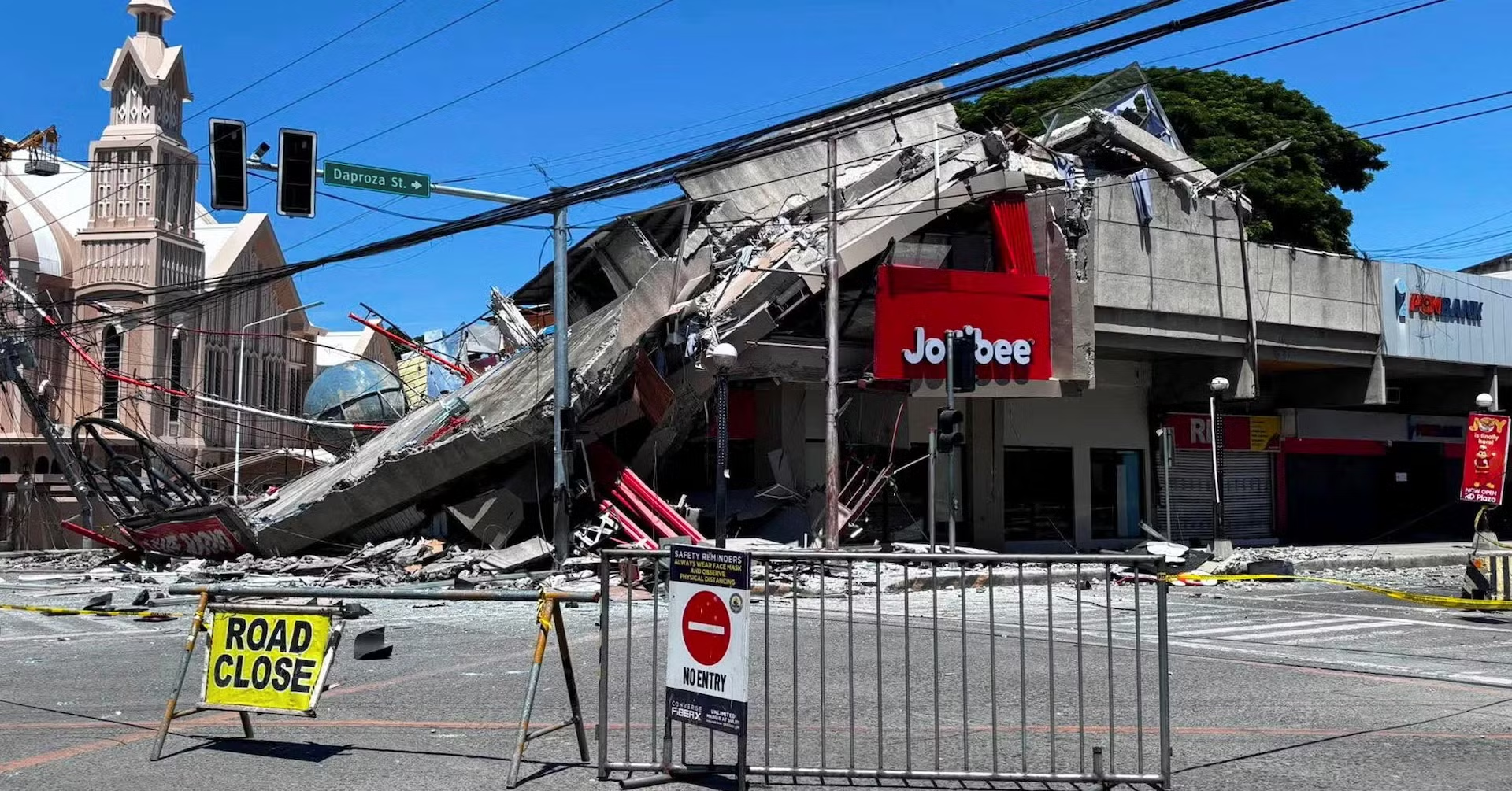
Videos on social media showed a three-story building housing a Jollibee restaurant completely collapsing in a cloud of dust and smoke, causing panic among onlookers. Other images captured shattered windows and collapsed roofs scattered across the city.
City Police Chief Robert Dagun said St. Elizabeth Hospital suffered extensive damage. Patients and medical staff were forced to evacuate urgently, and emergency care and treatment were temporarily provided outside the main building.



Immediately after the disaster, Philippine President Ferdinand Marcos directed the activation of all emergency response agencies, including the Office of Civil Defense and the National Disaster Risk Reduction and Management Council.
President Marcos also issued an order to close all schools in the affected areas. According to the Philippine state news agency (PNA), this decision affected 3.2 million students and 128,000 teachers and staff on what was supposed to be the first day of the new school year.
The earthquake triggered tsunami warning systems in several Asian countries, including the Philippines, Indonesia, and Japan.
In the Philippines, authorities have ordered residents in nine provinces – including Sarangani, Davao Occidental, Tawi-Tawi, and Sulu – to evacuate immediately to higher ground or inland. Phivolcs also warned owners of vessels anchored in ports, estuaries, or shallow coastal waters to secure their boats and move them away from the shoreline.
The US-based Pacific Tsunami Warning Center (PTWC) initially predicted tsunamis as high as 3 meters could hit coastal areas of the Philippines, and waves as high as 1 meter could occur in parts of Indonesia and Malaysia. The highest wave height was actually recorded on the morning of June 8th in North Sulawesi province of Indonesia, reaching approximately 0.83 meters.
Later, the PTWC announced that the tsunami risk had passed. A number of countries and territories, including Indonesia, the Northern Mariana Islands, and Guam, officially lifted tsunami warnings, but still cautioned residents about the risk of strong currents and dangerous beach conditions.



In Japan, a tsunami warning remains in effect for the southern coast and offshore islands. Residents are advised to stay away from river mouths and coastal areas until further notice.
Source: https://cand.vn/dong-dat-tai-philippines-it-nhat-15-nguoi-thiet-mang-post813243.html



![[Image] National conference summarizing one year of operation of the overall organizational model of the political system, the three-tiered government model.](https://vphoto.vietnam.vn/thumb/1200x675/vietnam/resource/IMAGE/2026/07/01/1782882811691_ndo_br_1-jpg.webp)