

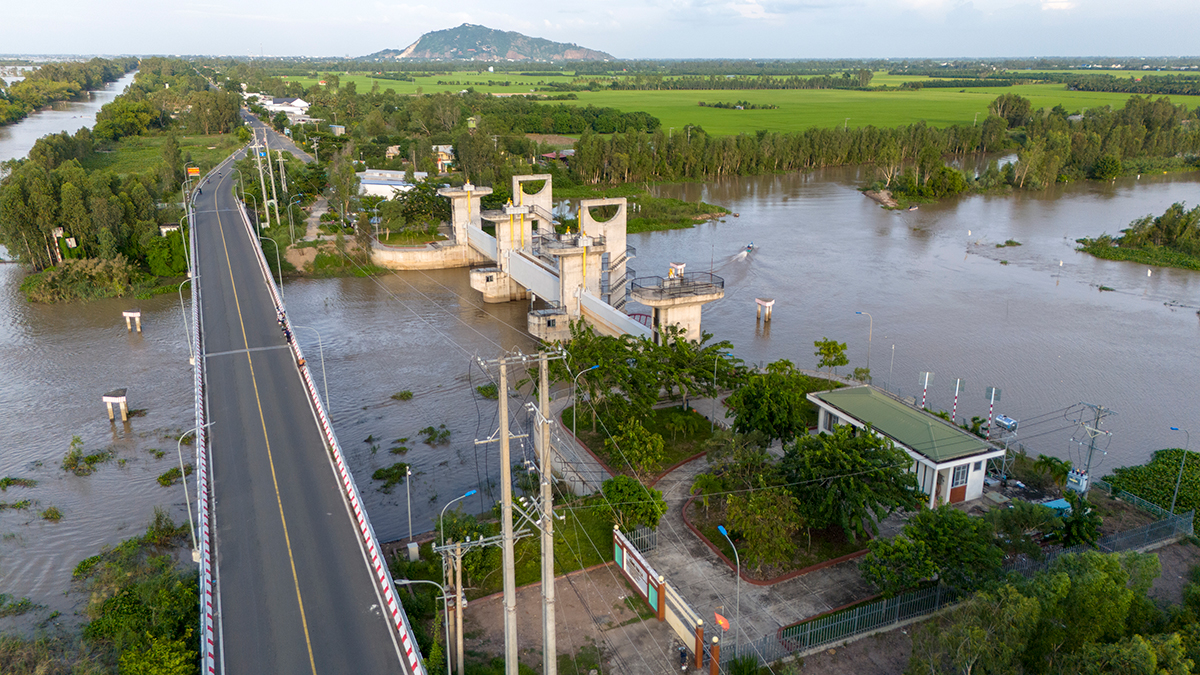
A century-long vision
From 1816, King Gia Long intended to dig this canal to serve land reclamation, trade, and border consolidation. He directed the garrison commanders to survey the terrain and create maps. When the Thoai Ha canal was successfully dug, the king's determination to build the Vinh Te canal was further strengthened by directing detailed surveys and consulting with officials and the King of Cambodia. At the end of 1819, construction began under the command of Garrison Commander Nguyen Van Thoai, Commander Nguyen Van Tuyen, and General Nguyen Van Ton.
Historical records show that the canal digging project faced more obstacles than the Dong Xuyen - Rach Gia canal project. There was a shortage of everything, from tools and equipment to food and medicine. Furthermore, the unpredictable climate and numerous noxious gases greatly affected the progress of the canal digging. However, those in charge assigned tasks very specifically, helping the project to be completed in May 1824.
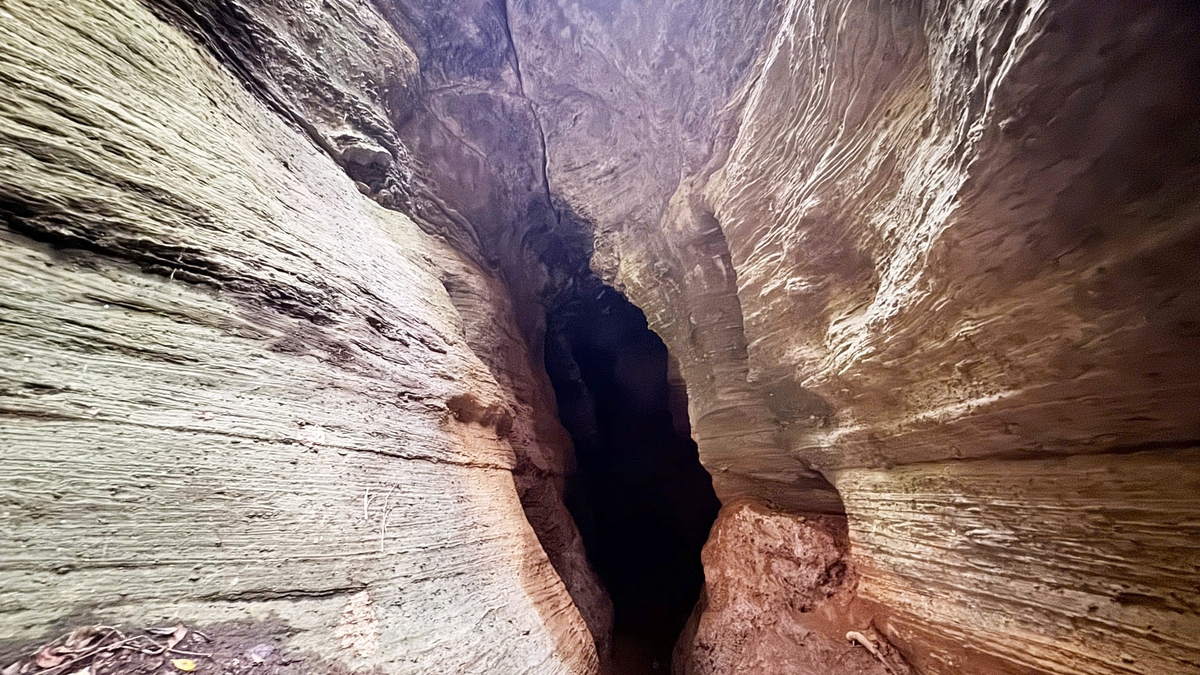
This canal, dug entirely by hand using rudimentary tools and traditional techniques, was nevertheless a monumental national engineering feat in the early 19th century. It held immense economic, political , and military value, particularly in international relations. The canal is 91 km long, 25 m wide, and 3 m deep. The initial section connects to the Chau Doc River and extends through the Giang Thanh River (Kien Giang province). The entire process involved the accumulation of experience, indigenous knowledge, folk wisdom, the intelligence and labor of our ancestors, the unwavering will of the people and soldiers of Southern Vietnam, and the dedication of many militiamen and soldiers… all of which contributed to the completion of this historic canal.
The strategic vision of our ancestors has been put into practice. During the war against the Siamese, the canal clearly demonstrated its crucial role as a vital national defense waterway, protecting the Chau Doc fort. During the resistance against the French, the Vinh Te Canal served as a bridge connecting the battlefields of southeastern Cambodia with the battlefields of southwestern Vietnam, disrupting the enemy's border blockade strategy. During the resistance against the Americans, the Vinh Te Canal was a vital strategic defense line on the western border. In the process of national construction and development, the canal helped form communities along its banks, promoting land reclamation and village establishment. The area surrounding the canal contains a rich variety of cultural, religious, and spiritual heritage.
Preserved for a thousand years
In 2024, the Vinh Te Canal was recognized by the Vietnam Record Organization as the "Longest manually dug canal in the border area of Vietnam". Based on surveys, research, documentation, and assessments, the Vinh Te Canal met the criteria for historical site classification. Therefore, Decision 102/QD-UBND, dated January 22, 2025, of the Provincial People's Committee classified the Vinh Te Canal (Vinh Nguon Ward) as a provincial-level historical site. This joy spread to many local people.
Ms. Tran Thi Thuy Tien (residing in Vinh Nguon ward) shared: “As someone born and raised beside the Vinh Te canal, I, along with many generations, always remember the contributions of our ancestors, especially the renowned figure Thoai Ngoc Hau, who commanded tens of thousands of militiamen to dig the canal amidst countless hardships; and the dedication of Ms. Chau Thi Te. The canal flows through many localities, but the point where it begins, passing through where we live, is classified as a provincial-level historical site, which is a source of immense pride. We are committed to working together with the local government to preserve the value of the historical site; to promote and protect the surrounding environment, as a sacred part of our homeland.”
“The Vinh Te Canal historical site will help present and future generations better understand the past and the contributions of our ancestors in expanding the territory, protecting the borders, and developing the homeland. Hopefully, with close cooperation between the local authorities and relevant agencies, this place will not only become an attractive cultural and historical destination but also contribute to promoting tourism and socio-economic development,” affirmed Mr. Huynh Van Tiep (Head of the Vinh Te Canal Historical Site Management Board).
According to Nguyen Trung Thanh, Deputy Director of the Department of Culture, Sports and Tourism, the Vinh Te Canal, upon becoming a classified historical site, will be further honored for its unique value. It is a powerful testament to the creativity and ingenuity of the Vietnamese people in conquering nature, transforming the wild natural environment of generations into arable land, and creating a stable, long-term settlement space. The Vinh Te Canal has become a sacred river, the main waterway, the central axis of all transportation, irrigation, and land exploitation activities in the Long Xuyen Quadrangle region.
“In the long term, we need to continue researching, exploiting, and maximizing the value of the relic, aiming to build a national-level relic dossier. We hope that the local authorities will pay attention to protecting the relic, complying with the regulations of the law, including the Law on Cultural Heritage; and educating the community to work together to make the Vinh Te Canal increasingly beautiful and worthy of inheriting the heritage values left by our ancestors,” suggested Nguyen Trung Thanh, Deputy Director of the Department of Culture, Sports and Tourism.
Source: https://baoangiang.com.vn/dong-kenh-lich-su-a423036.html

![[Photo] National Assembly Chairman Tran Thanh Man working with the Standing Committee of the Economic and Financial Committee](https://vphoto.vietnam.vn/thumb/1200x675/vietnam/resource/IMAGE/2026/05/20/1779249584387_ndo_br_1-jpg.webp)
![[Photo] General Secretary and President To Lam presides over a meeting on assessing national development resources.](https://vphoto.vietnam.vn/thumb/1200x675/vietnam/resource/IMAGE/2026/05/20/1779253785852_a1-bnd-2943-8519-jpg.webp)
































![[Workers' Month 2026] Spreading love on the Vinh - Dong Hoi frontline: Nearly 1 billion VND spent on caring for the lives of workers.](https://vphoto.vietnam.vn/thumb/402x226/vietnam/resource/IMAGE/2026/05/20/1779237885217_img_8650.jpeg)



































Comment (0)