


 |
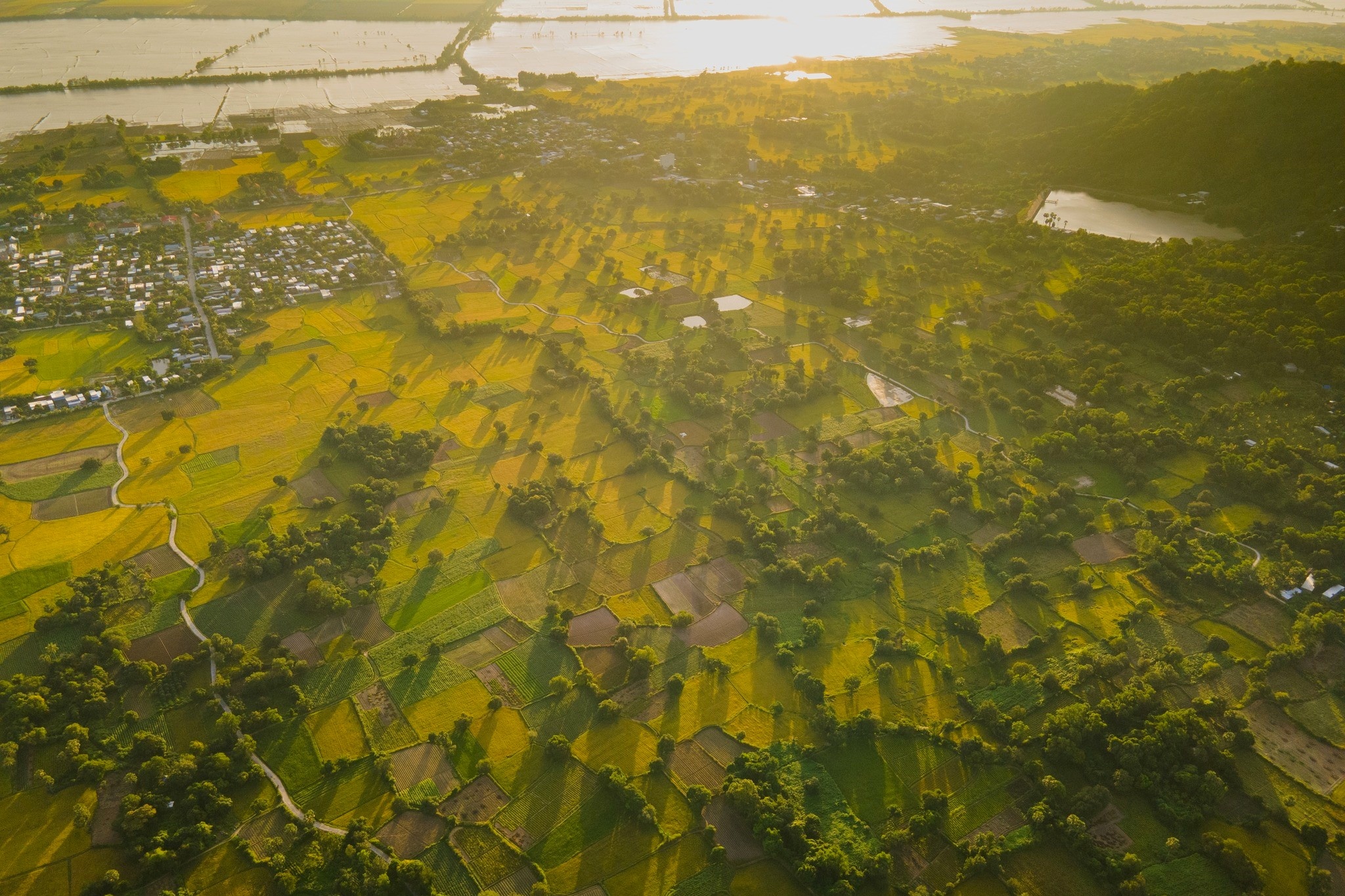
In late November and early December, when the Ta Pa rice fields are ready for harvest, photographer Tran Duc Hoang travels to An Giang to witness the "golden season" of the Mekong Delta firsthand. Having recently moved from Hanoi to Ho Chi Minh City for work, this is his first time admiring such a vast expanse of golden rice fields, like poured honey. The fields are at their most beautiful in the early morning, with the gentle sunlight shining obliquely. |
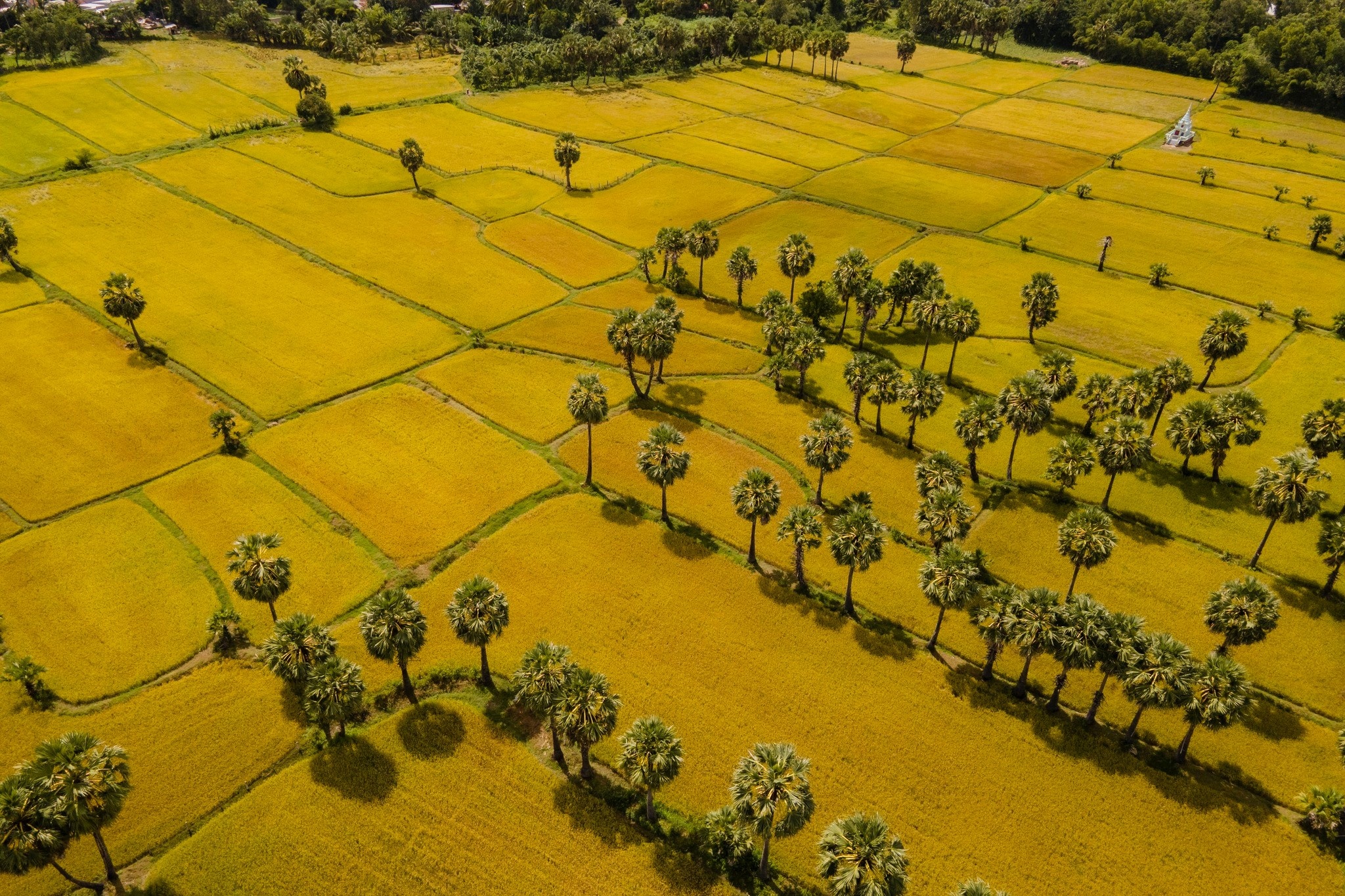 |
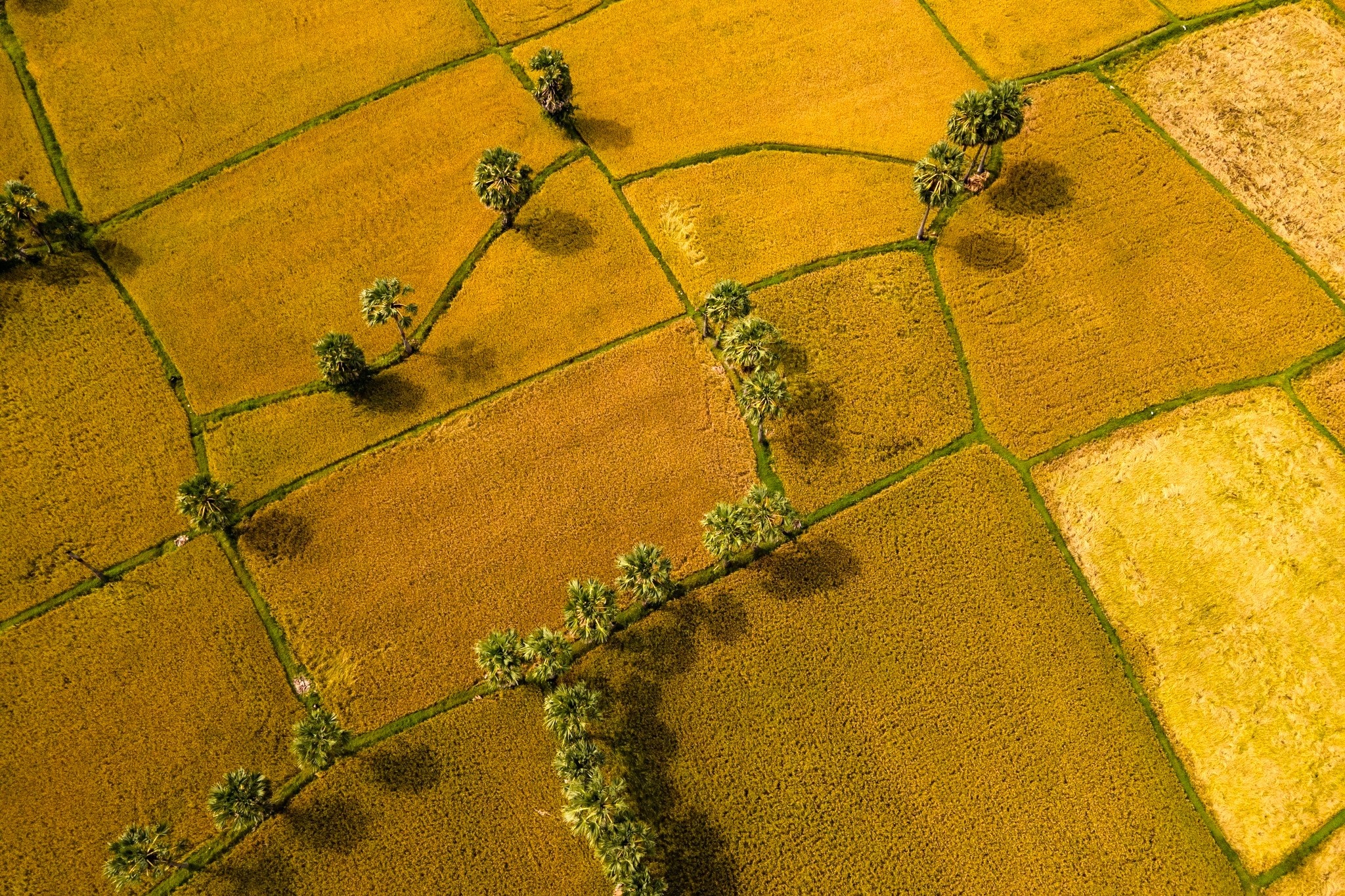
An Giang is one of the key rice-growing provinces in the Mekong Delta, with many large, interconnected rice paddies at the foot of Mount Tô and Tà Pạ Hill. He explained that local people plant tall palm trees interspersed along the small paths between the rice paddies, highlighting the unique beauty of the Tri Tôn area. The total area of the Tà Pạ rice paddies is nearly 1,200 hectares. |
 |
The rice fields turn yellow very quickly. Visiting in early November, you can see patches of green interspersed with milky rice, but after only a few weeks, the entire field is covered in yellow. The farming practice here is to plant rice in seasons, concentrated in adjacent plots stretching to the foot of the mountains. When the rice ripens simultaneously, it unintentionally creates a beautiful scene. The brown patches are the rice stubble after harvesting. |
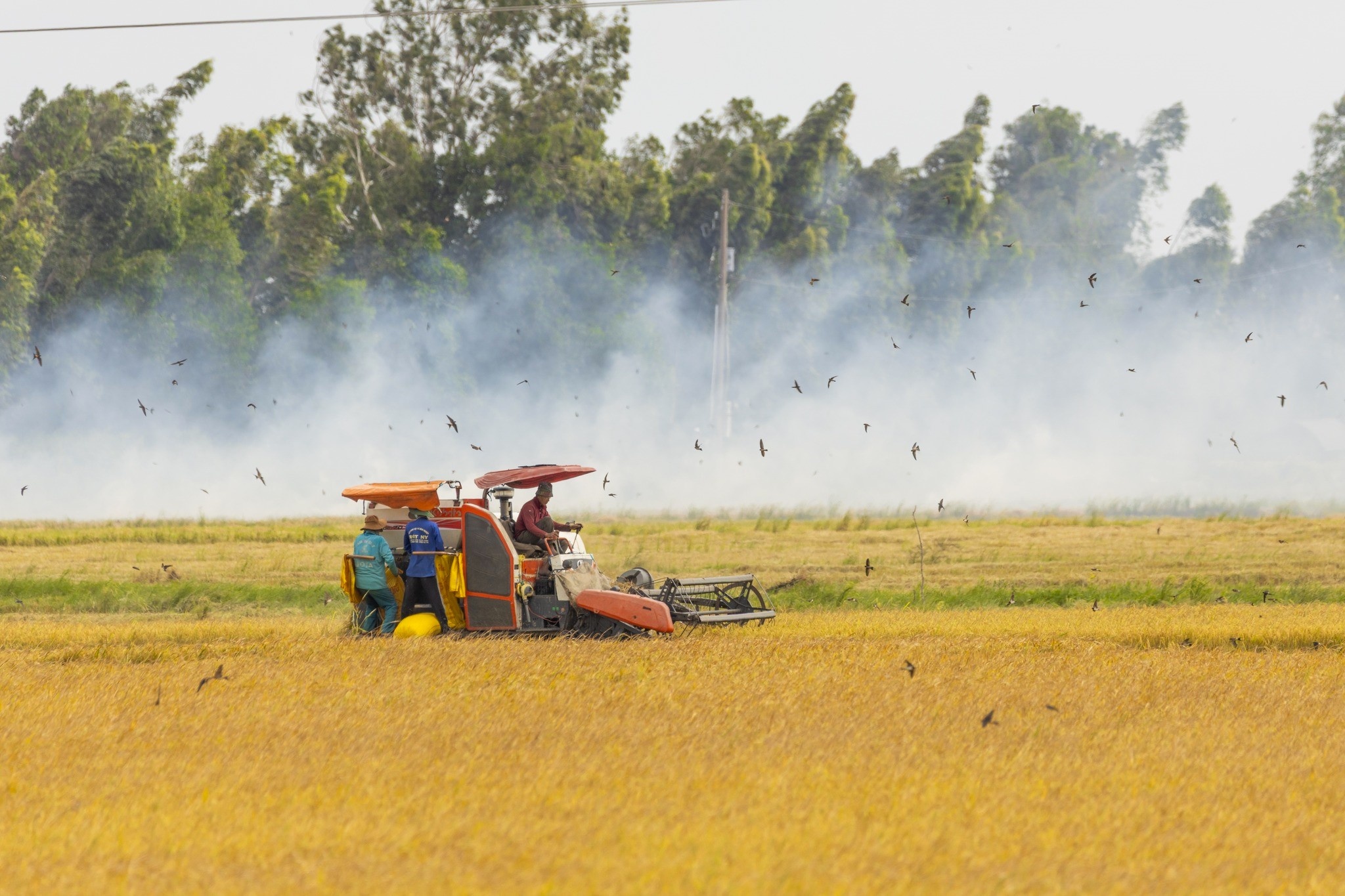 |
Here, over 75% of the population is Khmer, and their economy is primarily based on agriculture, including rice cultivation. Poorer families still harvest and thresh rice manually, while wealthier families use combine harvesters to increase productivity. During the busiest season, they wake up at 3-4 am, donned faded long-sleeved shirts, some leveling the field edges to prepare for the machines, others standing behind, using sacks to catch the golden grains of rice before the scorching sun sets. For Hoang, nothing is more enjoyable than strolling through the rice paddies early in the morning, taking photos and experiencing the rhythm of life of the laborers. |
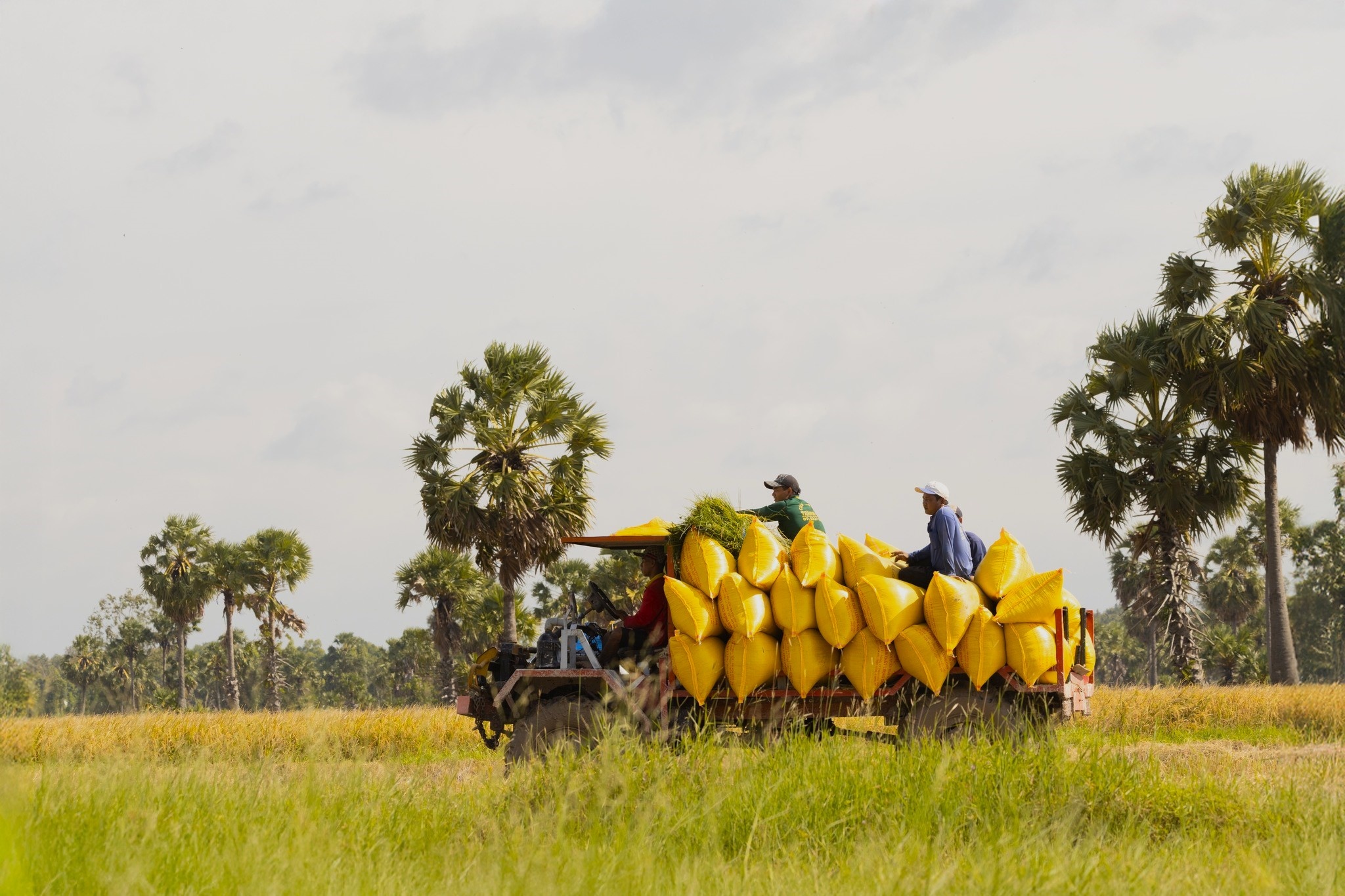 |
After harvesting, the sacks of rice, each full, are tightly tied and brought home, spread out on plastic tarpaulins or in the yard, and left to dry for one to two days to reduce moisture before being sold to traders. From dawn until the sun is almost at its zenith, the farmers work tirelessly. Dozens, then hundreds of sacks of rice are transported in successive loads. |
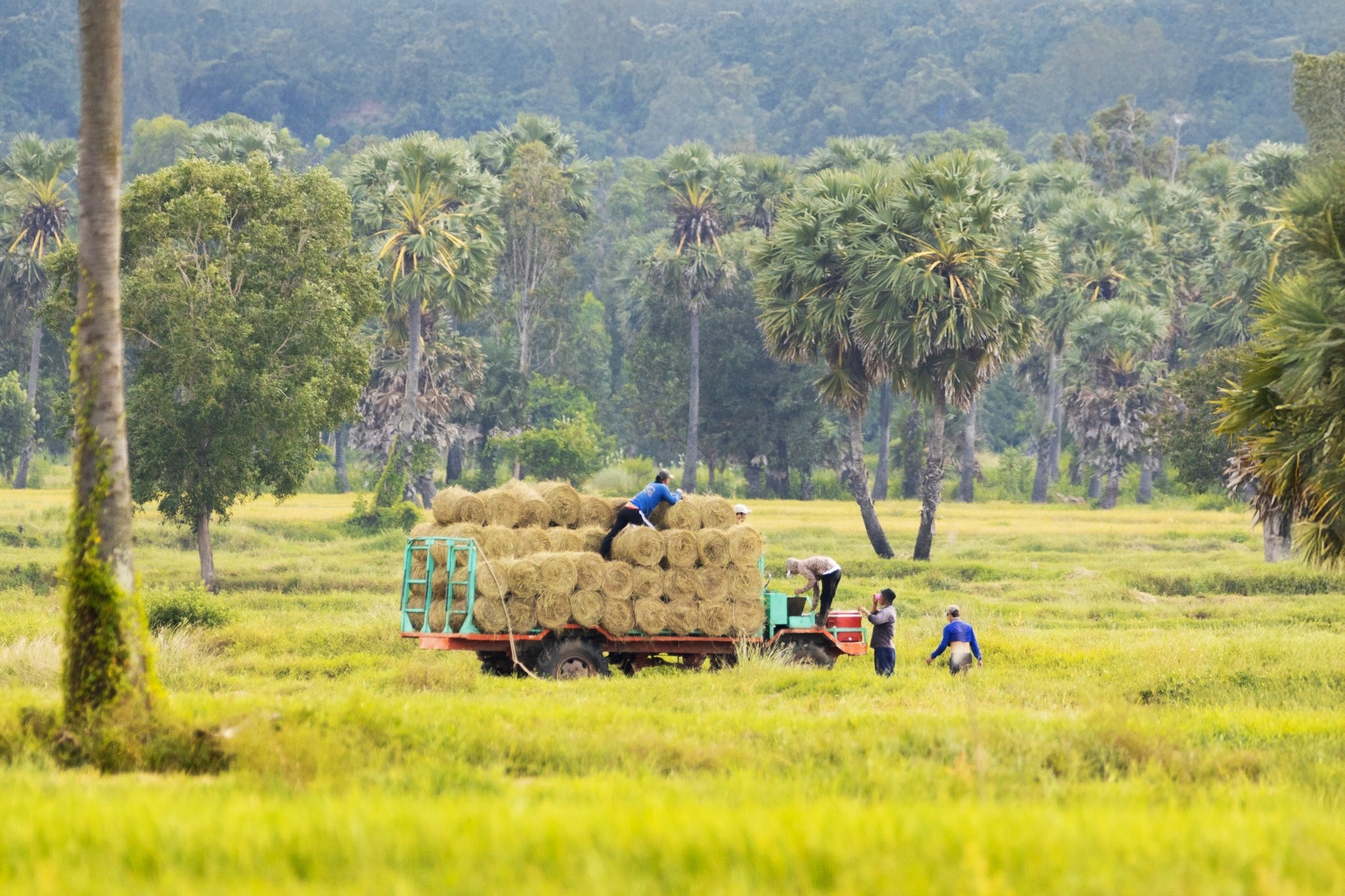 |
Dry straw is braided into bales and used as animal feed, mulch for crops, and fuel... Visiting An Giang this season, it's not difficult to spot trucks loaded with straw driving on the small roads. |
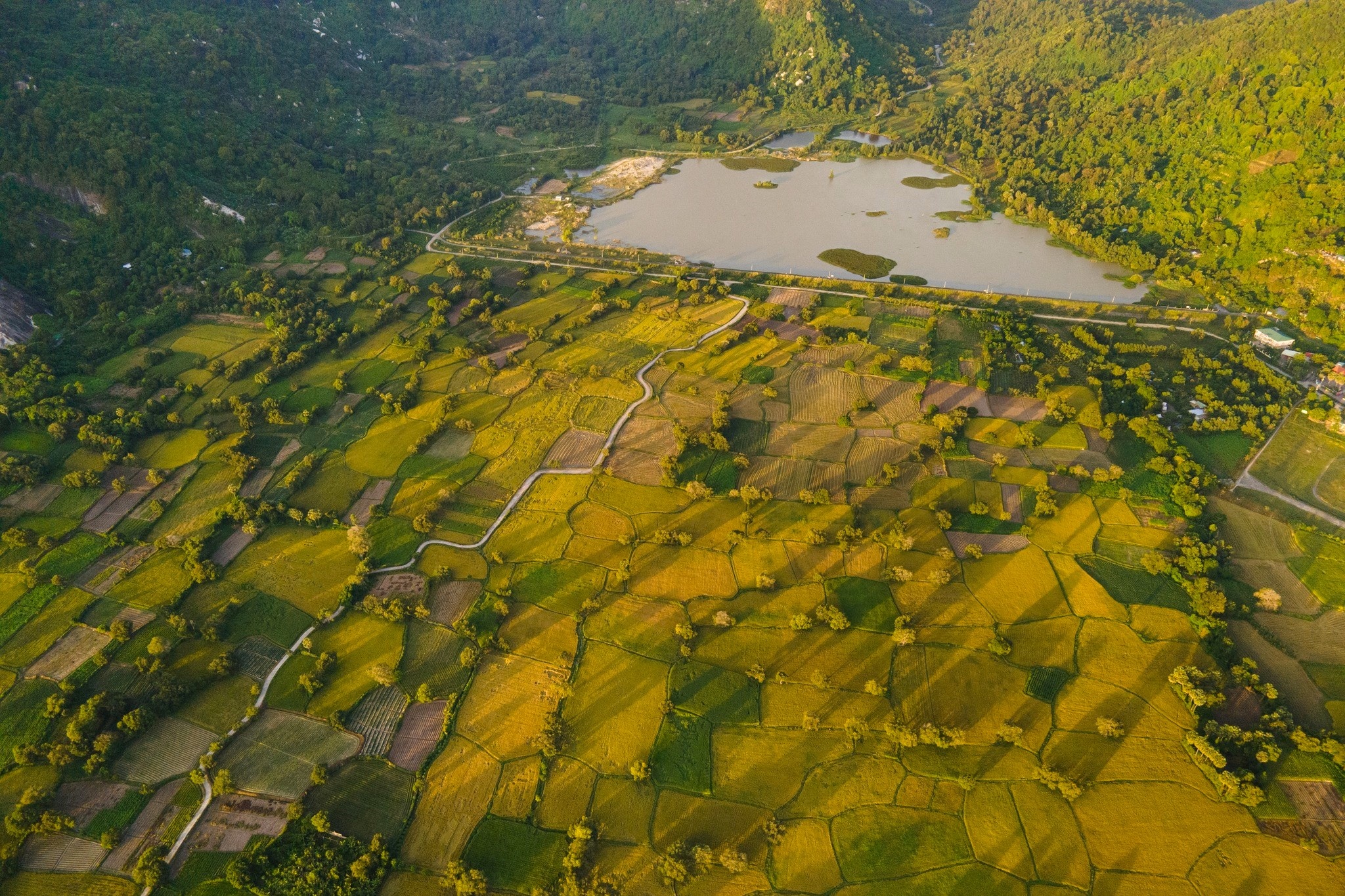 |
Adventure-seeking tourists can climb and camp on Mount Tô and stand at the high point of Vồ Hội to observe the panoramic view of the mountain's shadow cast over the Tà Pạ rice fields and listen to the wind rustling through the remaining rice plants. The wind blowing from Tà Pạ Lake also carries the sweet scent of ripe rice. |
 |
"The harvest season in Ta Pa is not only beautiful, but also embodies the simple, gentle spirit and vibrant labor of the Bay Nui region," Hoang said. Despite their sweat-soaked clothes and continuous work, the farmers still smiled and chatted animatedly. |
 |
Tri Ton commune has great potential for tourism development, thanks to its geographical location, Khmer culture, history, and scenic spots, including the Ta Pa rice fields which attract visitors every harvest season. The An Giang Provincial Department of Tourism, along with the local government, has focused on planning and enhancing tourist sites and routes based on exploiting the potential for spiritual and ecological tourism, coordinating with tourism businesses to organize tours, routes, and unique products. Simultaneously, they are implementing a transportation infrastructure project linking Ta Pa and Soai Chek Lake for tourism. |
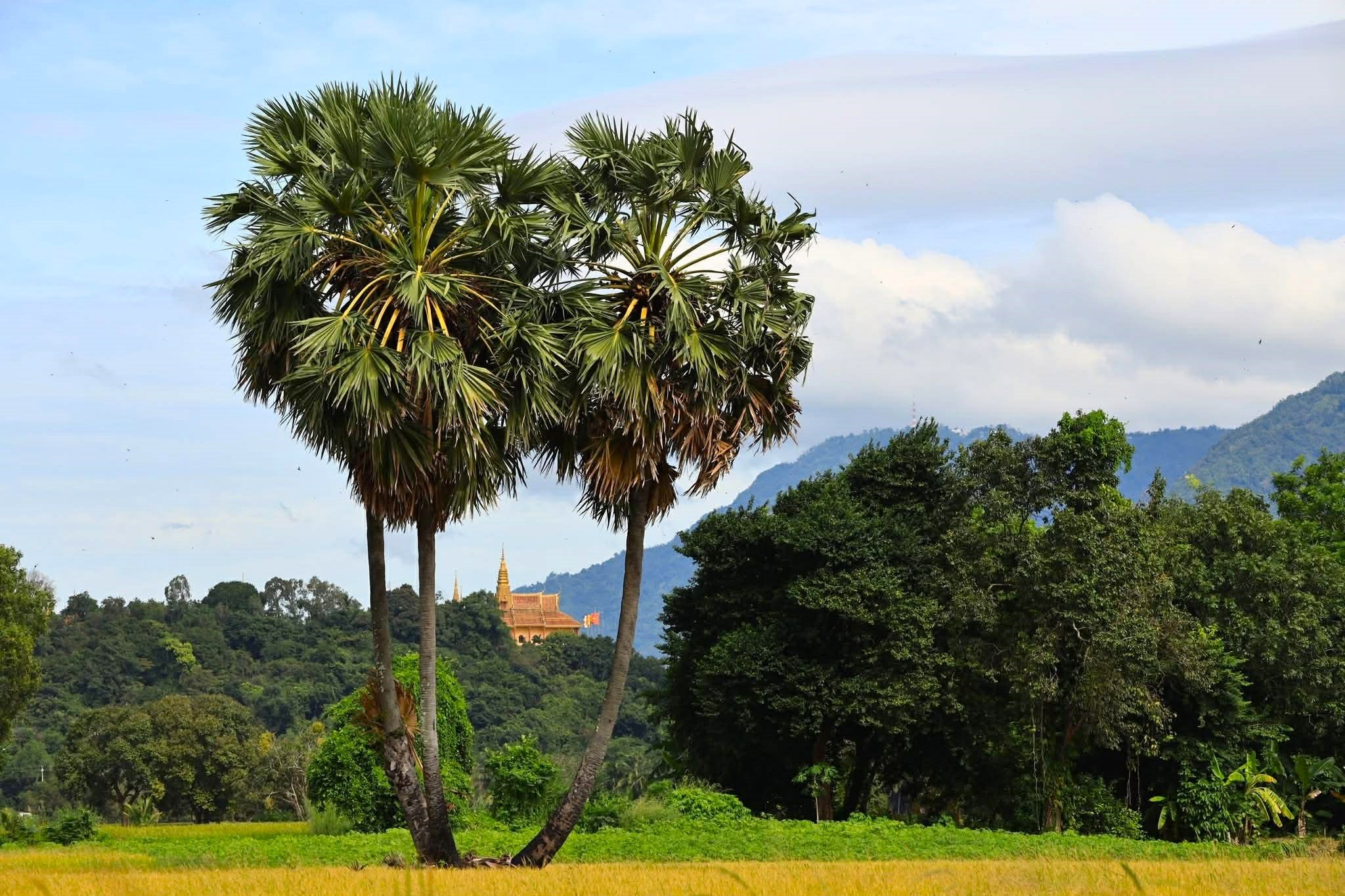 |
A highlight of the landscape is the famous Ta Pa Pagoda of the Khmer people, situated on a high hill. From the pagoda's courtyard, visitors can easily admire the panoramic view of the rice fields. The atmosphere here is peaceful, perfect for stopping to breathe in the fresh air and watch the horizon bathed in the golden light of the setting sun. According to many visitors, just standing at the pagoda for a few minutes is enough to fully appreciate the beauty of Ta Pa during the golden season. |
Source: https://znews.vn/dong-lua-an-giang-dat-vang-mua-gat-post1608772.html


































































Comment (0)