

As of May 2025, the country still lacks more than 100,000 teachers at all levels of preschool and general education compared to the established staffing levels; the shortage is particularly severe at the preschool level and for new subjects in the 2018 General Education Program. This situation is overloading the existing workforce and reducing the quality of teaching and learning.
One of the fundamental reasons for this situation is the inadequate compensation policy. The Party's policy of prioritizing teachers' salaries within the administrative and public service salary scale has not been implemented in practice. Compared to other professions, teachers' salaries are low, especially for newly hired teachers, failing to attract talented individuals and retain staff. Low starting salaries and allowances that do not adequately compensate for the increasing workload lead to many teachers quitting or changing jobs.
In this context, the recently issued important legal documents related to teachers are considered a policy turning point, reflecting the frank assessment and determination of the Party, the State, and the Education sector to adjust based on practical realities. The Law on Teachers 2025, effective from January 1, 2026, introduces fundamental changes to the salary system for teachers. Accordingly, teachers' salaries are ranked highest in the administrative and public service salary scale system.
Preschool teachers; teachers working in ethnic minority areas, mountainous regions, border areas, islands, and areas with particularly difficult socio-economic conditions; teachers teaching in specialized schools; teachers implementing inclusive education; and teachers in certain specialized fields and professions are entitled to higher salaries and allowances compared to teachers working under normal conditions.
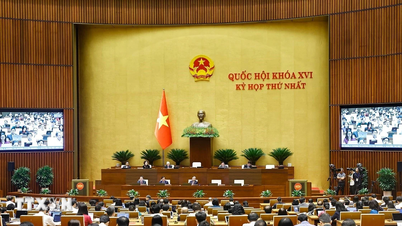
Recently, the National Assembly approved a Resolution on some specific and outstanding mechanisms and policies to achieve breakthroughs in education and training development. The Resolution fully institutionalizes the Politburo 's guiding principles in Resolution 71-NQ/TW, clearly demonstrating innovative and outstanding thinking aimed at promoting education and training development.
One of these is the regulation on preferential professional allowances according to a roadmap, with a minimum of 70% for teachers, a minimum of 30% for staff, and 100% for teachers in particularly difficult areas, ethnic minorities, border regions, and islands; at the same time, it allows vocational and higher education institutions to independently decide on additional income from legitimate non-budgetary revenue sources that are retained...
This is considered a strategic and urgent solution to attract, recruit, and retain a high-quality workforce, gradually addressing the current teacher shortage.
Furthermore, new policies for teachers, if fully and effectively implemented, will have a profound and lasting impact. Adjusting salaries and increasing allowances is not simply a solution to improve income, but carries a deeper meaning: reaffirming the rightful status of teachers; and properly and fully recognizing the efforts, intellect, and responsibility of pedagogical workers.
When teachers' livelihoods are secure, they can truly feel at ease and commit to their profession, dedicating their hearts and minds to the reform of education. Placing teachers in their rightful position is not only an urgent requirement for the education sector, but also a strategic decision, reflecting a visionary investment in the future of the country.
Source: https://giaoducthoidai.vn/dong-luc-moi-post760788.html










































































Comment (0)