

We arrived in Dong Tao on a sunny day, the newly built houses illuminating a corner of the forest, the sounds of children playing and rice being tilled in the yards blending harmoniously. Pouring a cup of tea for his guests, the village head, Ban Van Phuong, shared: "When the government encouraged them, 23 households from the old village, along with more than 10 households from another village, moved down from the mountains. Each household received land to live on, 9 million dong in support for house construction, 300 square meters for tea cultivation, and 7 meters of land per person for growing corn and rice. There was a school for their children to study, a self-flowing water system, and a small hydroelectric power plant. Once the people settled, the government provided livestock, built rural roads, and transferred technology and guidance in agriculture and forestry, leading to economic development and a gradually more prosperous life."
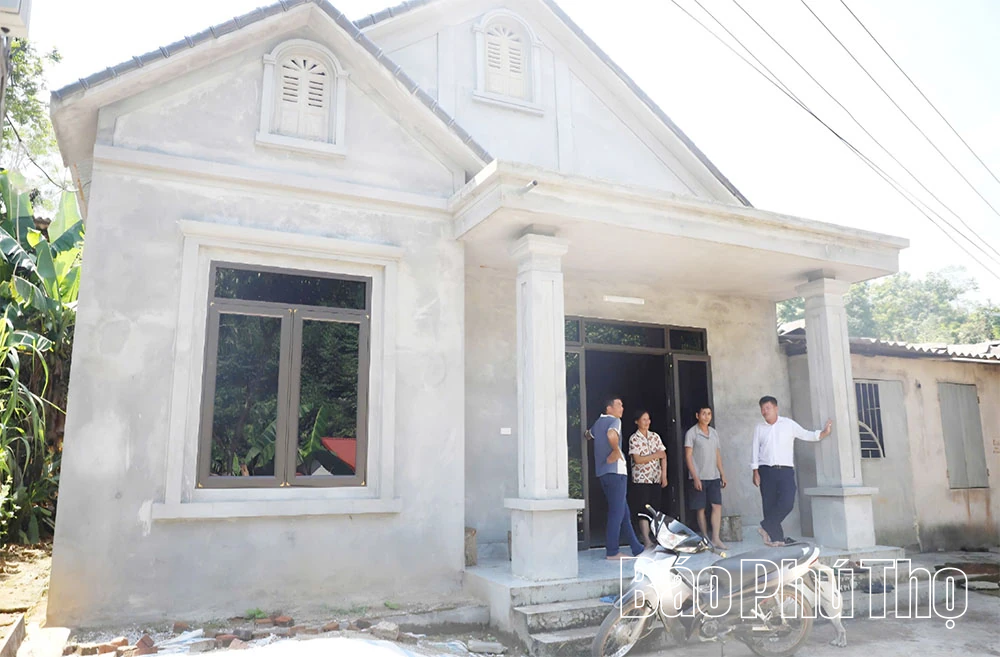
Mr. Ly Van Suoi's new house was built with support from the Government 's Program 1719.
Dong Tao unfolded like a slow-motion film through Mr. Phuong's narration, allowing us to visualize the hardships and struggles of the early days of establishing the village, along with the changes it has undergone. Pointing to the stainless steel water tank, Mr. Phuong said: "That's also a government support under the National Target Program on clean water and rural sanitation. The lives of the people here are getting better and better, clearly shown by the sturdy houses that have replaced the old ones."
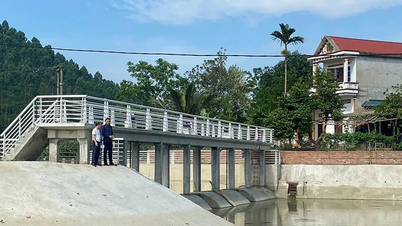
The roads have been paved with concrete, making travel convenient for the people; trade is facilitated for trucks carrying essential goods to serve the community and also transporting local agricultural products to the lowlands. The elderly and children can now go to the health station for check-ups and medication when they are sick. Vaccinations are also easier, no longer requiring a half-day's journey as before. Midway through our conversation, I glanced towards the front of the houses, where patches of golden rice grains lay scattered in the sun.
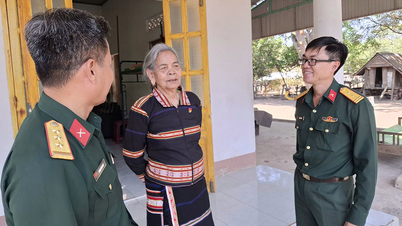
Venturing deeper into the area, we encountered new houses nestled amidst the green mountains and forests. Mr. Ly Van Suoi's house, which had just been renovated at the beginning of the year, was a testament to this. The approximately 70m² single-story house was built with 44 million VND in government support from the Housing Program for Ethnic Minority and Mountainous Households, 40 million VND from the Program to Eliminate Temporary Housing, plus additional money from selling a pair of cows. Although the house didn't have many expensive items, Mr. and Mrs. Suoi were very happy. Mr. Suoi said that without government support, his family probably wouldn't have a solid house to live in until their dying day.
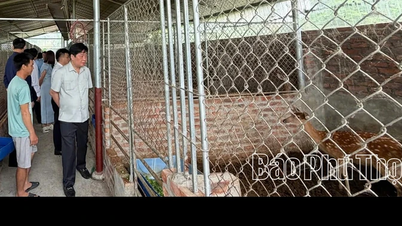
As proof of the changes in Dong Tao, the village head, Ban Van Phuong, led us to visit the family of Ban Van Chu. Chu's parents were among the first families to move down from the mountains when the village was established. Chu finished high school and instead of working far from home, he stayed at home raising livestock and cultivating crops. He participated in several short-term training courses on raising chickens, pigs, and cattle, as well as veterinary medicine. After learning, he applied the knowledge to develop his family's economy, raising buffalo and cattle, and changing the crop structure to increase income.
The Dong Tao area currently has 31 households with 138 people. To date, the entire area has 2.5 hectares of land for growing two crops of rice and corn. In addition, people also work in neighboring provinces to supplement their income. Besides knowing how to grow corn and rice and protect the forest, the people have also changed their livestock farming habits from free-range to enclosed farming, which helps prevent and control diseases and contributes to keeping the environment clean. To date, 100% of households have electricity, people have been issued health insurance cards and benefit from policies for ethnic minorities; they know how to apply science and technology to farming and livestock. Life is prosperous, everyone is happy, and their children attend school regularly.
Another positive development is that the area now has 10 Party members actively participating in the Party branch. This core group actively contributes to building economic, cultural, and social development movements. In particular, during Party branch meetings, the Secretary and Head of the area, Ban Van Phuong, has fully implemented the resolutions, policies, and guidelines of the Party, the State, and the local government to the people, enabling them to access the information. As a result, the people trust and contribute to the development of the area, as well as actively improve their material and spiritual lives.
Despite some changes and developments, Dong Tao remains one of the most disadvantaged areas in Xuan Dai commune, with 21 out of 31 households living in poverty, an income of just over 16 million VND per person per year, and difficult road access. The residents hope for continued attention and investment from the Party and State in road construction and support for production development. They also hope for the implementation of economic development models, especially the transfer of scientific and technical knowledge, and guidance on changing production methods, to improve their lives.
Thuy Hang
Source: https://baophutho.vn/dong-tao-ngay-moi-243865.htm
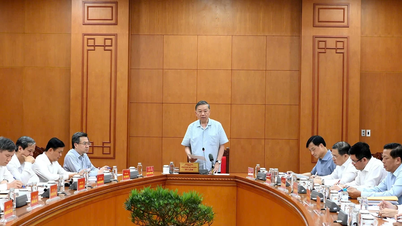
![[Photo] General Secretary and President To Lam presides over a working session with the Central Policy and Strategy Committee on the development of the materials industry.](https://vphoto.vietnam.vn/thumb/1200x675/vietnam/resource/IMAGE/2026/05/21/1779359935432_a3-bnd-3129-1412-jpg.webp)

![[Photo] National Assembly Chairman Tran Thanh Man working with the Standing Committee of the Law and Justice Committee](https://vphoto.vietnam.vn/thumb/1200x675/vietnam/resource/IMAGE/2026/05/21/1779378929214_ndo_br_1-4610-jpg.webp)































































Comment (0)