|
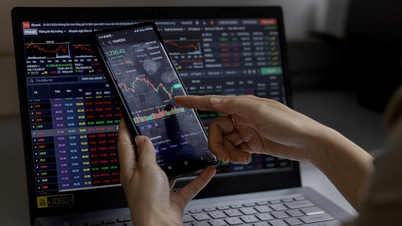
| Investor optimism returned, helping all three major US stock indexes surge on June 29. |
The US stock market closed the trading session on June 29th (US time) with widespread gains across all three major indices, marking a strong return of optimism after a rare week of correction. The main driving force came from easing geopolitical tensions in the Middle East, while money continued to flow back into technology and artificial intelligence (AI) stocks. Notably, the Dow Jones index closed above 52,000 points for the first time in history, setting a new milestone for Wall Street.
At the close of trading, the Dow Jones Industrial Average rose 306.63 points, or 0.59%, to 52,182.74. The S&P 500 gained 86.41 points, or 1.18%, to 7,440.43. Meanwhile, the Nasdaq Composite led the gains, adding 522.53 points, or 2.07%, to 25,820.14. This marked the first consecutive day of gains for both the S&P 500 and Nasdaq after five consecutive days of declines. The Russell 2000, representing small-cap companies, held slightly higher, reflecting the divergence between small-cap stocks and large-scale technology companies.
According to analysts, the most important factor supporting the market during the session was the easing of tensions between the US and Iran following positive signals regarding the maintenance of the ceasefire agreement and the resumption of negotiations. This development helped alleviate concerns about the risk of disruptions to global oil supply, thereby significantly improving investors' risk appetite.
Despite the continued upward trend in oil prices, US Treasury yields have only fluctuated slightly, creating favorable conditions for capital to flow back into risky assets, especially growth stocks.
Besides geopolitical factors, the technology sector continues to play a leading role in driving the market upward after a sharp correction last week. Investors increased their holdings in AI-related companies due to expectations that demand for AI infrastructure investment will remain high for many years to come.



Experts believe that capital is flowing back into growth stocks as the market prepares for the second-quarter earnings season starting in mid-July. Simultaneously, end-of-quarter portfolio restructuring by investment funds is also contributing to increased buying interest in many large-cap stocks.
Among prominent companies, Comcast shares surged after announcing plans to spin off its NBCUniversal and Sky media businesses from its broadband operations. Investors viewed this news as potentially allowing the company to focus more on its core businesses and increase shareholder value.
Notably, SpaceX surged more than 7% after the announcement that the company would officially be added to the Nasdaq-100 index on July 7th. This inclusion in the index prompted many ETFs and index-tracking funds to increase their holdings of the stock, thereby creating strong upward momentum.
Among the "Magnificent Seven," Alphabet surged nearly 5% in its first trading session after being added to the Dow Jones index. Nvidia also extended its gains as expectations for AI chip demand remained high. Meanwhile, Applied Materials rose sharply after Samsung Electronics and SK Hynix announced large-scale investment plans in AI chip manufacturing centers in South Korea, opening up positive prospects for the global semiconductor supply chain.
Conversely, some defensive and telecommunications stocks faced downward pressure. Verizon fell significantly after announcing a $625 million international joint venture. This development reflects a preference for high-growth stocks over defensive companies amid improved market sentiment.
The market also received further impetus from expectations of a week of important economic data. Investors are focusing their attention on the US June jobs report, the consumer confidence index, and the earnings results of a number of major companies such as Nike, Constellation Brands, and General Mills. These data are expected to provide further clues about the health of the US economy and the direction of the Federal Reserve's monetary policy in the coming period.
However, many experts remain cautious. While the US economy continues to show resilience with a stable labor market and strong consumer spending, real interest rates remain high, and the Fed has yet to give clear signals about easing monetary policy. This could put pressure on the valuations of technology stocks in the coming months.



Furthermore, the fact that technology corporations are continuously investing hundreds of billions of dollars in AI has fueled debates about the risk of an investment bubble forming if the rate of profit growth does not keep pace with the scale of capital invested. Nevertheless, in the short term, AI remains the most attractive topic on Wall Street and continues to be a driving force behind market trends.
The trading session on June 29th showed a significant improvement in investor confidence after a period of correction. The Dow Jones setting an all-time high closing price, along with the strong recovery of the S&P 500 and Nasdaq, created a positive foundation for the market entering the second-quarter earnings season, a period expected to determine the trend of US stocks in the early weeks of the third quarter.
Source: https://thoibaonganhang.vn/dow-jones-lap-dinh-lich-su-pho-wall-but-pha-184160.html



![[Photo] Strengthening character and expertise: Intense training for artillery soldiers.](https://vphoto.vietnam.vn/thumb/1200x675/vietnam/resource/IMAGE/2026/06/30/1782815602541_lu-368-1875-4571-jpg.webp)