Leaving Hanoi for Germany during the days when all of Europe was experiencing the vibrant spring season, I enjoyed Vietnamese cuisine as if I had been away from my homeland for a very long time...
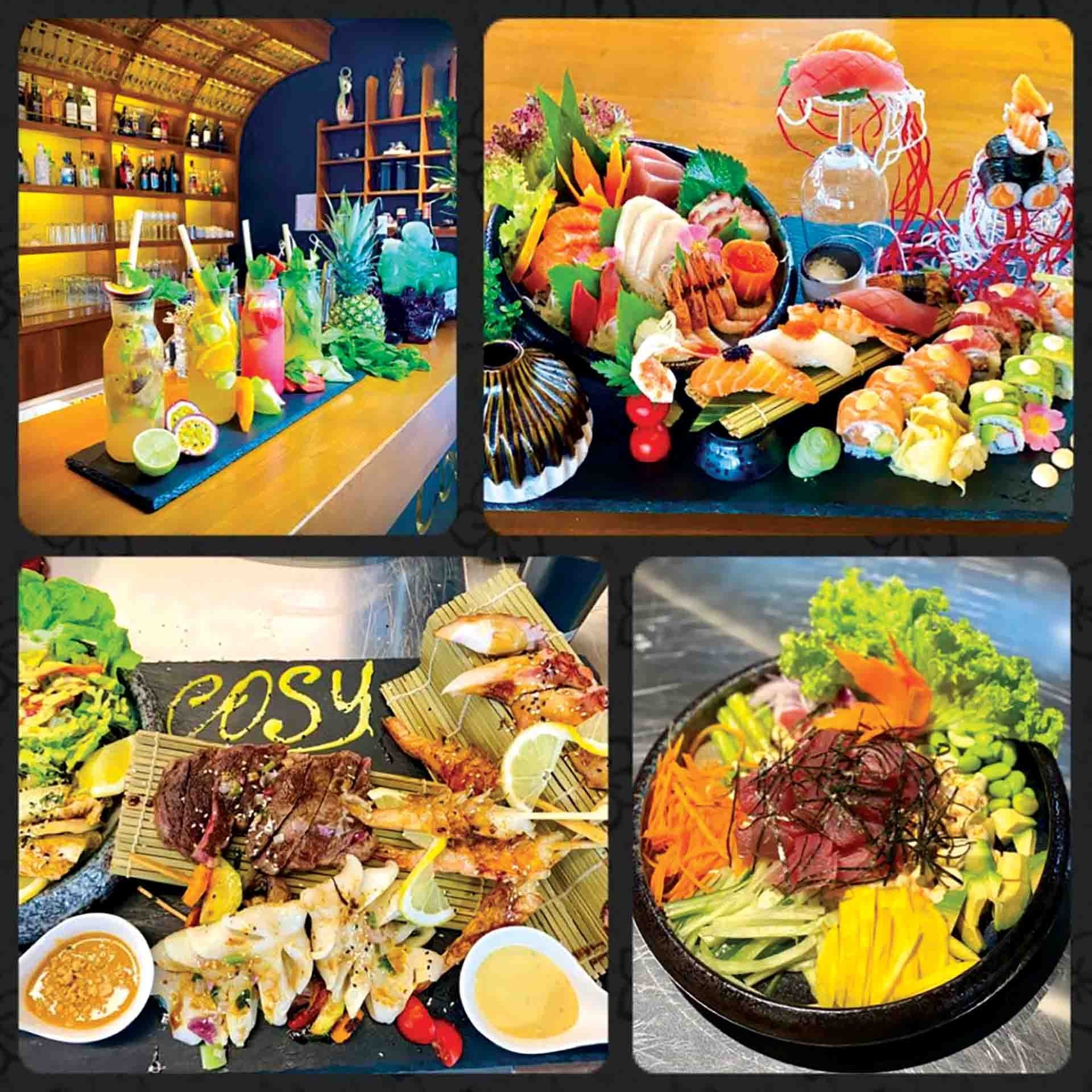 |
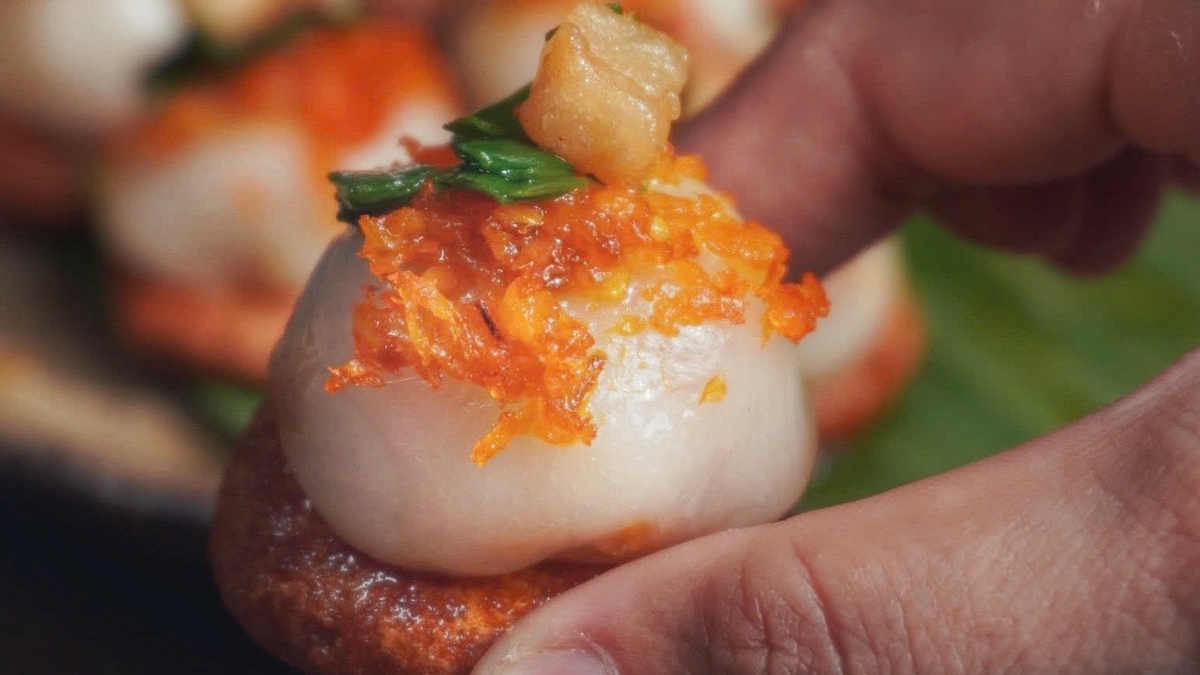
| A Vietnamese-created dish at Cosy – Fine Asia Cuisine & Sushi Bar in Nuremberg, Germany. (Photo: Cat Phuong) |
If 20-30 years ago, Vietnamese people living abroad longed intensely for the flavors of their homeland, now that longing can be eased as Vietnamese restaurants can be easily found throughout Germany.
Spread and become familiar.
Upon landing in Frankfurt, I had the opportunity to meet and chat with Mr. Kambiz Ghawami, President of the World University Service (WUS) in Germany. Unexpectedly, over a cup of hot, authentic Vietnamese coffee, our conversation took a considerable amount of time to discuss Vietnamese cuisine.
Kambiz Ghawami is a German friend with deep ties and a passion for Vietnamese education . Every year, he makes several flights back and forth between the two countries to implement WUS's university support projects. He is also very familiar with his favorite Vietnamese dishes in Germany.
“In my country, more and more Vietnamese families are living here for the second and third generations. Twenty years ago, there were only a few Vietnamese restaurants here, but now, even in smaller provinces, you can find Asian restaurants owned by Vietnamese people. This shows that Vietnamese cuisine in Germany has developed very strongly in recent years,” Mr. Ghawami shared.
With travel becoming increasingly convenient, many Germans are visiting Vietnam and thoroughly enjoying the local cuisine. Therefore, upon returning to Germany, most of them want to savor the food again, making Vietnamese dishes increasingly popular in Germany. Ghawami commented: “Germans like Vietnamese food because most dishes aren’t as greasy or oily as some Chinese dishes, nor are they as spicy as some Thai dishes.”
In Germany, many families have a habit of taking their children out to eat at Vietnamese restaurants. Once the children get used to the taste, they frequently eat there and order dishes for them, and even when the children grow up, their love for Vietnamese food remains. For several decades, this is how Vietnamese cuisine has spread and become familiar to generations of local people.
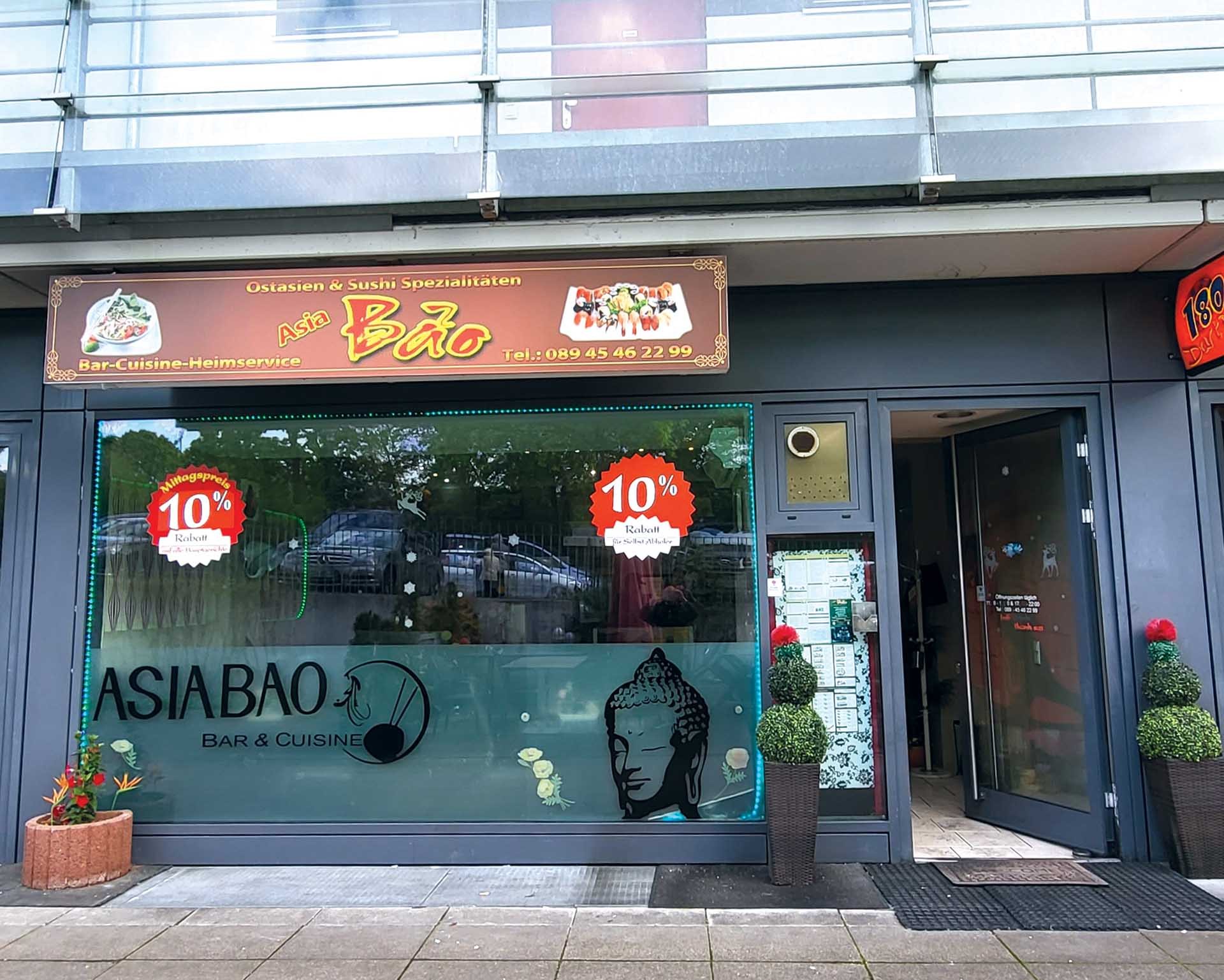 |
| Asia Bao restaurant, owned by overseas Vietnamese businessman Duc Anh Son, is located at the foot of a large building. (Photo: Minh Hoa) |
When in Rome, do as the Romans do...



Chef and restaurant owner Trinh Thanh Son, a Vietnamese expatriate who has lived in Germany since 1990, shared: “I didn't receive formal culinary training, but I lived here and worked in restaurants for many years. When I felt I had enough experience, I opened Asia Bao restaurant in Munich.”
He said: "To open a restaurant, you have to take a food safety course. This issue is very strict here; violations result in heavy fines, and repeat offenses lead to closure. Therefore, opening a restaurant means ensuring food safety and complying with many other regulations."
"In Germany, everything you buy or sell must have an invoice. Whatever you import must be sold back, almost absolutely, so they can calculate the tax. If you don't have the knowledge, dealing with customs duties can be very troublesome," Sơn shared.
He recalled that 30 years ago, Germans knew nothing about Vietnamese cuisine because at that time, only Chinese restaurants existed in Germany. “Now, there are Vietnamese restaurants everywhere; a small village might have one, a larger village two or three, and the city has dozens… Now, when Germans enter a restaurant, they will ask, ‘Are you Vietnamese?’ before deciding on a table and ordering. They are so ‘sophisticated’ that when they order pho to be delivered to their home, they will ask us to keep the broth and noodles separate so they can heat them up themselves and eat them hot.”
Variations
Leaving Frankfurt and Munich, I arrived in Berlin in cool, crisp weather. Stopping at Chickenbuzz for breakfast, I was incredibly impressed with the char siu chicken and especially the salad with its distinctive Vietnamese coconut milk dressing. The owner, Hoang Trong, said: “This is the third restaurant my friends and I have opened, each with nearly 20 employees. We serve Asian chicken dishes as well as European cuisine. We went through a difficult time during the Covid-19 pandemic, but luckily, our regular customers still order food delivery. It’s wonderful when someone calls and asks: ‘Is Trong there? If so, could you cook me a bowl of pho? I’ll come over later.’”
Having moved to Germany in 1990, chef Nguyen Huy Nhu in Berlin has worked as an assistant in various Chinese, Japanese, and Thai restaurants. Each change of workplace was a new "practical training course." He said: "Vietnamese restaurants account for up to 70% of the Asian restaurant market in Berlin today. Vietnamese people are very creative in adapting dishes to suit local tastes. For example, while the Chinese like to use MSG, the Vietnamese use sugar. For the dipping sauce for bun cha (grilled pork with vermicelli), we have to mix dozens of liters every day because Germans eat a lot of dipping sauce. A German friend came to eat and loved the taste of the dipping sauce, but hated the smell of fish sauce. So I came up with a way to make a dipping sauce without the fish sauce smell."
In Germany, many dipping sauces have been creatively developed by restaurant owners to add a unique touch to their eateries. For example, the combination of German mayonnaise, a touch of Vietnamese spices, and a Vietnamese-style preparation has resulted in the spicy and delicious Hai Dang dipping sauce (Hai Dang is the name of the restaurant), which has captivated many Germans.
Besides traditional dishes like vermicelli and pho, Mr. Nguyen Nhu also sells sticky rice with beans, peanuts, corn, and regular sticky rice as set meals, served with Vietnamese sausage and tofu, in a vegetarian style that Germans really enjoy.
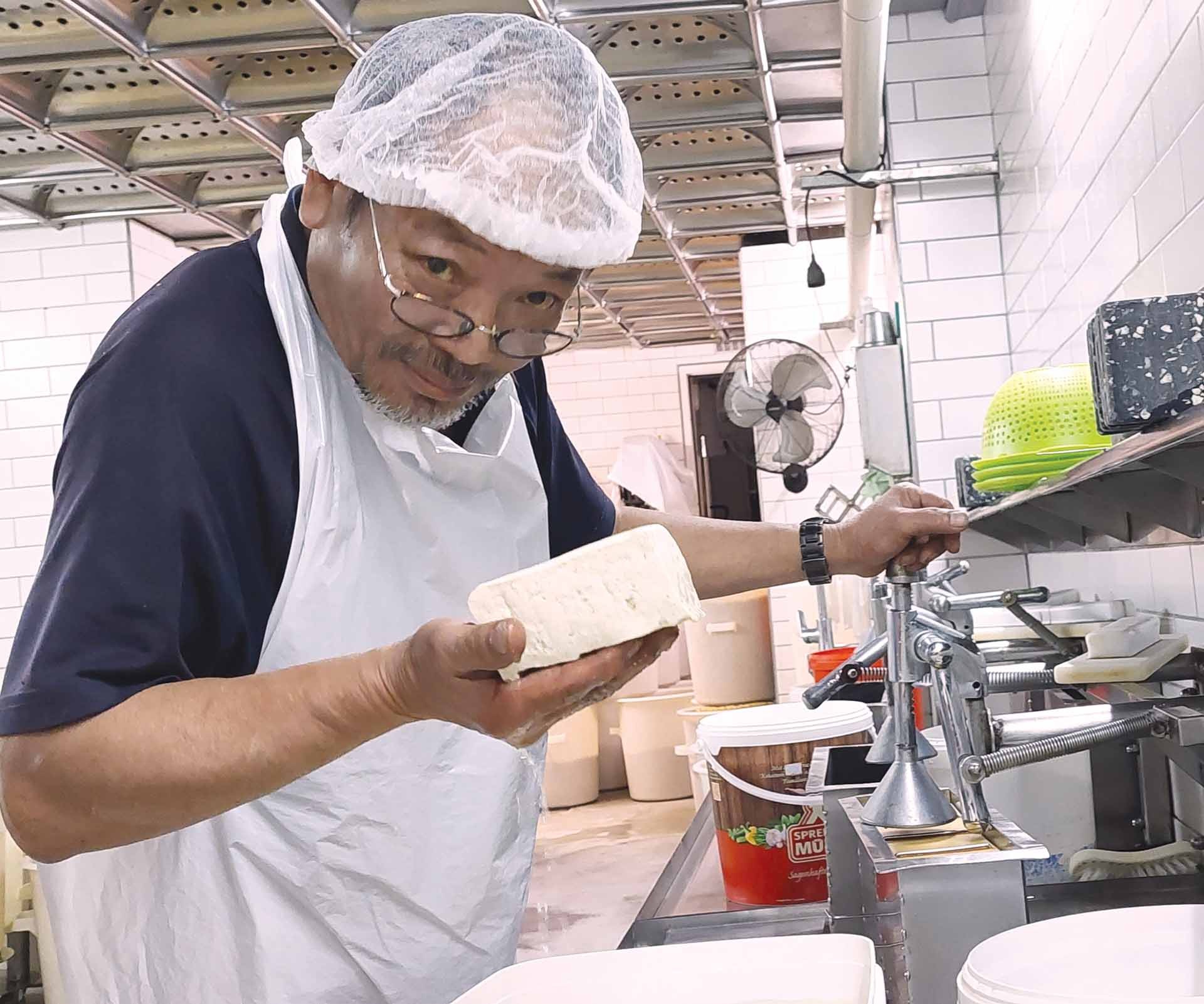 |
| Vietnamese-German businessman Nguyen Quoc Khanh - owner of a tofu production factory in Berlin. (Photo: Minh Hoa) |



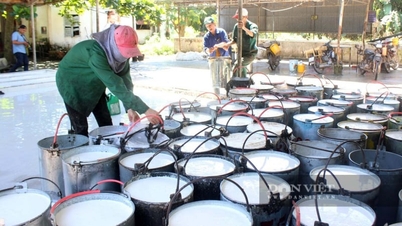
When it comes to tofu, almost every Vietnamese person in Berlin knows Quoc Khanh – who came to Germany in 1999 to start his tofu business and now supplies to almost all of Eastern Germany. Recalling his early days in Germany, he faced many difficulties because not all Germans liked tofu. Gradually, Germans learned to eat tofu and loved it. Vegetarian restaurants sprung up everywhere, and his tofu factory couldn't keep up with demand. On some days, the factory processed tons of soybeans, producing about 3-4 tons of finished tofu. This is a dream figure for even small-scale tofu factories in Vietnam, let alone in Germany.
When talking about delicious and beautifully presented Asian cuisine in Nuremberg, people often mention the Cosy – Fine Asia Cuisine & Sushi Bar restaurant chain and its owners, Vu Tien Thanh and Nguyen Nam Son.
They shared: “The restaurant offers Vietnamese and Asian dishes, from sushi to hot dishes catering to current customer preferences. All are prepared using Asian ingredients according to the restaurant's own recipes, backed by 30 years of experience. For example, the Sommerrolle – Vietnamese spring rolls, a combination with ChefMix Nr 305, is a popular choice among customers.”
Time flies by so quickly; my business trip to Germany has come to an end in the blink of an eye. I regret not having had the chance to fully enjoy the new and exciting Vietnamese cuisine prepared by the Vietnamese-American chefs there. Some might be critical and argue that adapting to new culinary styles means losing the traditional flavors. But perhaps everything in life adapts – and Vietnamese cuisine abroad is no exception. For me, this was truly fascinating.
Source
![[Image] A look back at the capital's preparations for the century-long master plan.](https://vphoto.vietnam.vn/thumb/1200x675/vietnam/resource/IMAGE/2026/06/29/1782750453122_quy-hoach-100-nam-minh-duy-1-2118-jpg.webp)
![[Photo] General Secretary and President To Lam works with the Party Committee of the Government on the work of preventing and combating storms, floods, extreme natural disasters and climate change.](https://vphoto.vietnam.vn/thumb/1200x675/vietnam/resource/IMAGE/2026/06/29/1782729441945_a1-bnd-0385-9454-jpg.webp)
![[Photo] National Assembly Chairman Tran Thanh Man attends the Conference to announce the Master Plan for Hanoi Capital City with a 100-year vision.](https://vphoto.vietnam.vn/thumb/1200x675/vietnam/resource/IMAGE/2026/06/29/1782709639728_ndo_br_1-jpg.webp)