


I first learned about the "vờ vờ" (a type of floating fish) when I accompanied a friend to Chau Ninh commune in late spring. The weather was humid and muggy, when suddenly a thunderstorm struck. The villagers rushed to the river from dawn. "There's a 'vờ' today!" a fisherman said, his voice a mixture of excitement and urgency. I followed them onto the boat, my heart filled with curiosity.
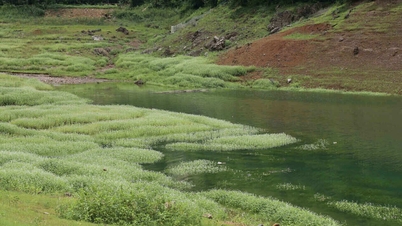
As dawn broke, the entire river was covered in a thin layer of white. The wrens surfaced, bobbing gently on the water's surface. They appeared for only a few short hours before disappearing as if they had never existed. The fisherman explained that wrens, like the river worms, only appear for one season a year, from February to April in the lunar calendar. The wren is an insect that usually nests on the riverbanks, where there is fertile soil and clear water. Between February and April in the lunar calendar, they break out of their nests and fly to the river surface to molt in the early morning. After molting, the wren lays eggs and then dies. The eggs hatch into larvae, which are carried by the current to the riverbanks, where they build nests and begin a new life cycle.
In the past, people only used nets to catch clams, and they were happy to get a few kilograms each time. Now, with motorboats and nets, the clam yield is no longer as high as before. Some days fishermen catch a few dozen kilograms, but other days they only catch a few kilograms, or even come away empty-handed. Therefore, this profession depends on the weather, the river, and a bit of luck.
Looking at those tiny, grasshopper-like creatures with their thin shells and long antennae, I could hardly imagine they could become a sought-after delicacy. But when I got home and witnessed the preparation, I understood why people are willing to spend several hundred thousand dong for a kilogram of these creatures. Locals prepare them in many ways: stir-fried with pumpkin leaves, sour soup, or as patties… but the most impressive dish for me was the hot pot of these creatures with snakehead fish, a dish that truly captures the flavors of the riverine region. The snakehead fish is cleaned, marinated with fermented rice paste, turmeric, tomatoes, and garlic, then stir-fried until firm. The creatures are also marinated and stir-fried to enhance their rich, savory flavor. When the two ingredients are combined in a pot of boiling water, steam rises, carrying the pungent aroma of galangal, turmeric, and fermented rice paste – a very unique flavor of the countryside.
I sat at the table, in the small house overlooking the riverbank, dipping spoonfuls of tender pumpkin leaves and shredded banana blossoms into the simmering hotpot. The rich, creamy texture of the tender, fatty meat, mixed with the firm sweetness of the catfish, surprised me. The taste was unlike any other dish, both familiar and strange, as if it gathered the essence of many other specialties; once you taste it, you'll never forget it. Indeed, it's not just the flavor, but also the story behind it—about the mornings spent waiting by the river, about the short lifespan of an animal, about the people's careful nurturing of nature's gifts.
That afternoon, as I left Chau Ninh, I glanced back at the Red River, heavy with silt, flowing silently. The fleeting season would pass as quickly as it arrived. But for those who had once tasted it, the rich, savory flavor and fragrant aroma of the dish seemed to linger, like a part of the memory of this simple yet profound riverside land.
Source: https://baohungyen.vn/du-vi-kho-quen-mon-an-con-vat-vo-3193958.html

















































































Comment (0)